

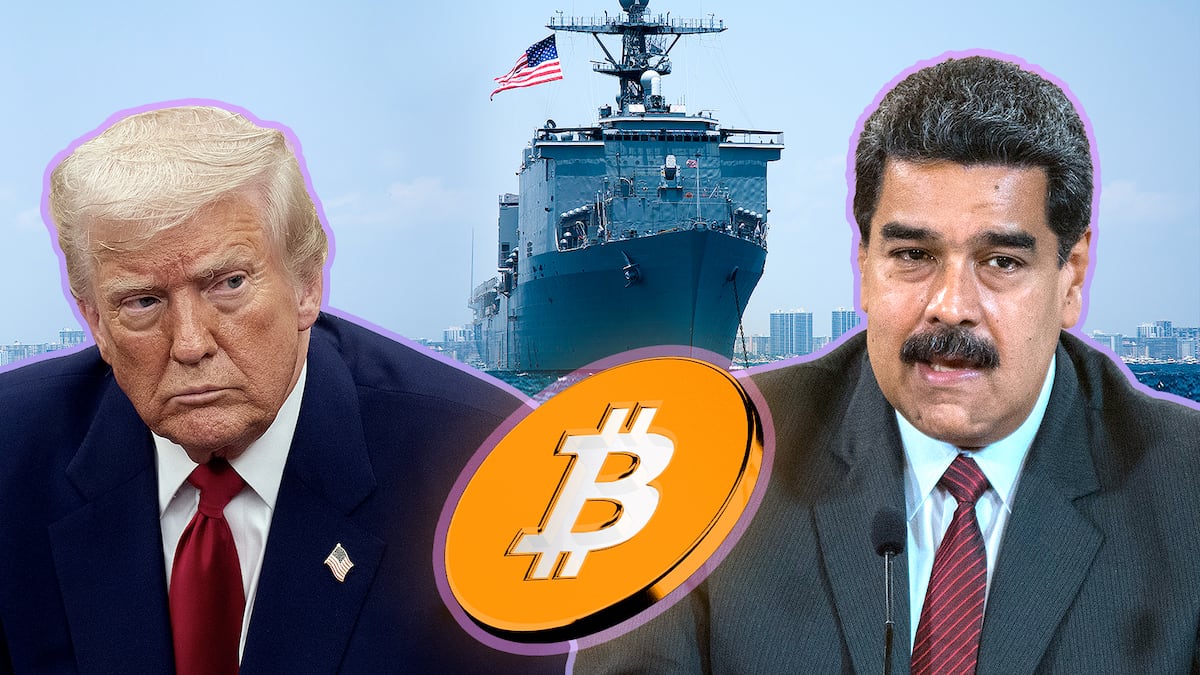
- Venezuelans punch above their weight when it comes to stablecoin adoption.
- The South American country has risen to 11th place globally for crypto usage.
Venezuela surged to 11th place globally for crypto adoption in 2025 as citizens turn to digital assets to survive economic and political turmoil.
The South American nation of 27 million rose from 14th place in 2024, according to the latest TRM Labs Country Crypto Adoption Index.
It’s a big jump for a small economy battered by hyperinflation.
The country’s gross domestic product per capita is just $3,100, according to the International Monetary Fund’s 2025 indicators.
By contrast, the United States’ GDP per capita is $89,000.
Venezuela is now “among the world’s highest-adoption countries despite its relatively small formal economy,” Ari Redbord, global head of policy and government affairs at TRM Labs, told DL News.
“That ranking reflects substantial crypto usage in relative and functional terms, particularly for payments, remittances, and value preservation,” Redbord said.
Nuclear-powered submarines
The rise highlights how crypto, particularly dollar-backed stablecoins, has become a parallel financial system in Venezuela, linking everyday survival to a geopolitical landscape haunted by instability.
It comes as US President Donald Trump intensifies pressure on Nicolás Maduro’s government after accusing the strongman leader of heading a drug cartel.
The Pentagon has deployed a nuclear-powered submarine, surveillance aircraft and about 15,000 troops to the Caribbean in a show of force. On December 10, US forces seized the oil tanker Skipper off the coast of Venezuela, which Washington says was involved in Caracas’s efforts to support Cuba. The White House has signalled it is preparing to seize more ships.
Meanwhile, US Secretary of War, Pete Hegseth, authorised lethal strikes on alleged drug boats, which killed dozens of people.
The attacks triggered both Democrats and Republicans to condemn the strikes as war crimes.
Trump has justified the campaign as essential to combating fentanyl trafficking.
“In the wake of the tanker seizure, it is clearer than ever that the United States is focused on stopping Venezuelan oil and financial flows — using every available tool to disrupt sanctions evasion and financial crime networks — and crypto is one piece of that puzzle,” Redbord said.
Stablecoin adoption
For ordinary Venezuelans, decades of hyperinflation and banking collapse have eroded trust in the bolívar, the local currency, leaving millions reliant on US dollars, cash, and informal payment networks.
This is driving Venezuelan crypto adoption.
Stablecoins offer relative price stability and access to global value. Crypto is now used extensively for remittances, salary payments, and peer-to-peer transfers, primarily through informal markets and local fintech platforms that operate alongside major exchanges, according to TRM Labs.
Onchain data cannot precisely measure crypto’s share of Venezuela’s economy, but its role is growing fast.
“Our analysis indicates that crypto plays an increasingly meaningful role relative to the overall economy,” Redbord said.
Ítalo Atencio, president of The National Association of Supermarkets and Self-Service Stores, told the national broadcaster Noticiero Venevision in November that Venezuelans are now regularly paying for their groceries in crypto at stores “across the country.”
Geopolitical risks
When asked about the Trump administration’s crypto initiatives aimed at onshoring crypto to the US and bringing it under the regulatory purview of its agencies, Redbord said that it will indirectly make it harder for Venezuelans to access digital assets in the future.
“As more crypto liquidity, infrastructure, and enforcement capability concentrates in well-regulated jurisdictions, it becomes harder for sanctioned actors to rely on loosely governed offshore platforms to move value at scale,” he said.
Redbord said that increased coordination between US regulators, law enforcement agencies, and crypto companies “increases the risk and cost of sanctions evasion.”
“For Venezuela, this doesn’t eliminate crypto usage domestically, but it does narrow the pathways for converting crypto into usable cross-border value without exposure to enforcement.”
Lance Datskoluo is DL News’ Europe-based markets correspondent. Got a tip? Email atlance@dlnews.com.