
- Naver plans to integrate stablecoin with its e-commerce and webtoons networks
- Kakao wants to let K-pop fans use stablecoins
- Government keen to let firms launch KRW-pegged coins, despite existing ban
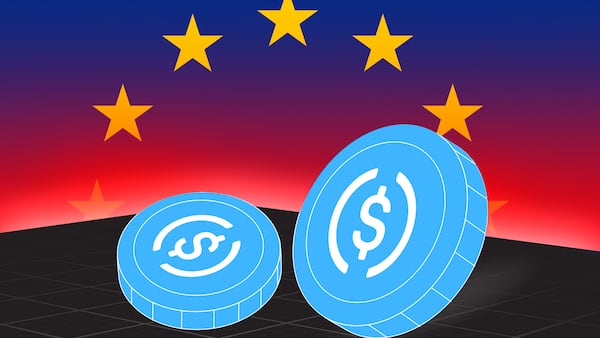
South Korea’s tech titans Naver and Kakao will “go to war” over stablecoins, with K-pop, e-commerce, and webtoons, or web-based cartoons, set to drive adoption.
That’s according to South Korean tech industry experts, who say that the two firms will leverage their crypto connections to their own advantage and issue their own KRW-pegged coins.
“The competition for won-denominated stablecoin supremacy between South Korea’s two biggest tech giants has officially begun,” the South Korean newspaper Seoul Kyungjae reported.
South Korean firms are not currently allowed to issue stablecoins or cryptocurrencies. But the government has pledged to change that.
Yoon Seung-sik, a senior analyst at the IT intelligence provider Tiger Research, told the newspaper that prevailing winds are blowing in Naver’s favour. “Naver’s acquisition of Upbit will clearly give it an advantage,” Yoon said.
Stablecoin war to shape 2026
Naver is South Korea’s biggest search engine operator, and could soon also become Asia’s biggest crypto company.
However, it is yet to obtain regulatory permission to merge its e-pay subsidiary Naver Financial with Dunamu, the operator of the market-leading Upbit crypto exchange.
If it succeeds, Naver will be able to combine its existing e-pay platform Naver Pay with Upbit’s exchange platform, as well as Dunamu’s Giwachain blockchain network.
Naver says it will begin using Giwachain blockchain technology-powered AI chatbot services on its search and shopping platforms from the first quarter of next year.
A Naver stablecoin could launch on the same blockchain protocol to let users pay on Naver’s shopping and webtoon platforms, Seoul Kyungjae explained.
The firm will also look to integrate its stablecoin with its video streaming service CHZZK, allowing creators to sponsor videos and viewers to access paid content.
And it will also seek to use the coin as a currency on the Zepeto metaverse platform, with its global community of over 400 million people, and the Snapchat-like image messaging service Snow.
Upbit has around 10 million users and an average daily trading volume of around $1.8 billion. And that could help it provide “the optimal distribution platform” for Naver’s expansion plans, the newspaper explained.
Kakao eyes K-pop success
Kakao is the firm behind KakaoTalk, a chat app with over 49 million monthly active users. Like Naver, Kakao also operates a popular e-pay platform. And its banking affiliate, Kakao Bank, is one of South Korea’s largest neobanks.
Kakao Bank already has a partnership deal with the Upbit rival Coinone, which experts think it could seek to leverage if it wants to issue a stablecoin. Unnamed insiders told the newspaper that Kakao may be considering a takeover deal for Coinone.
However, Coinone’s trading volumes and user base are considerably smaller than those of Upbit.
The newspaper wrote that Kakao has created a stablecoin task force that comprises several of its affiliates. This task force is already discussing business models with domestic and overseas companies.
Insiders say that Kakao will target K-pop fans, noting that KakaoPay’s overseas payment volume in the first three quarters of 2025 rose year-on-year by 47.5%.
The Kakao task force has reportedly spoken to a range of international banks to “explore the possibility of collaborating by converting overseas currencies into stablecoins.”
Regulatory hurdles remain. While the government is keen on letting big tech companies issue stablecoins, the central bank is opposed to the idea.
Furthermore, under the terms of the Virtual Asset User Protection Act, which came into force last year, domestic crypto exchanges cannot trade in coins “issued by exchanges themselves or by affiliated parties.”
However, if the government gets its way, a forthcoming stablecoins bill will likely address this matter.
Kim Min-seung, head of the research center at the crypto exchange Korbit, told Seoul Kyungjae that Naver and Kakao’s “success or failure” in the stablecoins arena would “depend on the kind of product they can create.”
Tim Alper is a news correspondent at DL News. Got a tip? Email at tdalper@dlnews.com.