
- US war with Iran continues to rattles markets.
- Neither Bitcoin nor gold is safe.
- Both will struggle to rally while oil prices remain elevated.
Traders are struggling to find safe places to park their capital as the US and Israel’s war with Iran continues to rattle the global economy.
Over the past week, gold has shed almost 10% of its value, while Bitcoin has dropped over 7% from its midweek high.
Gold is typically seen as a hedge against inflation, currency devaluation, and geopolitical and economic uncertainty.
Bitcoin, on the other hand, acts broadly as a risk-on asset, and tends to do well when there is excess money in the financial system.
But a perfect storm of economic issues brought on by the escalating conflict in the Middle East is putting pressure on both assets, despite their differences.
‘Oil-driven inflation spike’
The root problem, analysts say, is the surging price of oil.
Iran’s blockade of the Strait of Hormuz, a vital shipping lane that oil produced in the Middle East must pass through, has caused the price of oil to soar as high as $119 a barrel in recent weeks.
Brent crude futures jumped 8% over the past seven days as fears that elevated oil prices will weaken the global economy pervade. Oil prices are roughly a third higher than when the conflict started almost three weeks ago.
Gold usually performs well under such conditions. But not this time.
“Geopolitical tensions are usually good for gold, but given the big rally we’ve seen earlier in the year it makes sense that it needs to cool off a bit for now,” Laurens Fraussen, a research analyst at Kaiko, a crypto data firm, told DL News.
Fraussen isn’t the only one to notice gold’s uncharacteristic weakness.
“Counterintuitively, this has been bearish for gold, because the oil-driven inflation spike has pushed Fed rate cut expectations from June out to October, with 10-year yields climbing to 4.24%,” Ben Harvey, a research analyst at crypto market maker Keyrock, told DL News earlier this week.
“Higher real yields raise the opportunity cost of holding non-yielding gold, overpowering its traditional safe-haven bid.”
Interest rate reaction
With oil on a tear and fuelling inflation concerns, investors are watching the reaction from the Federal Reserve closely.
Yesterday, the US central bank held interest rates at 3.5% to 3.75% — a broadly expected outcome.
But the event rattled markets for other reasons.
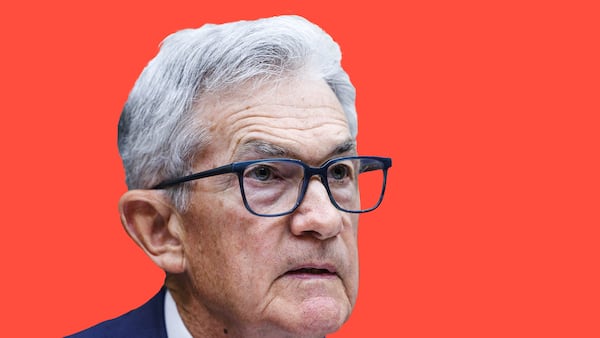
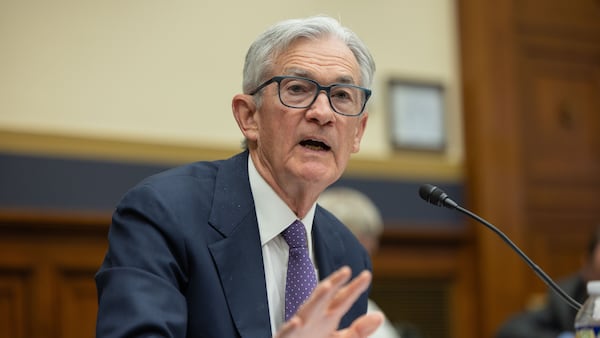
“Powell’s tone was a lot more hawkish than people anticipated,” Fraussen said. At a press conference following the decision, Fed Chair Jerome Powell said that the central bank is making progress on lowering inflation, but not as much as it had hoped.
Those comments came as a signal that the Fed plans to keep rates higher for longer to tackle rising prices, causing the US dollar to strengthen against other currencies. In fact, some analysts are now even expecting a rate hike as early as April.
“A potentially strong dollar and longer than anticipated elevated rates usually don’t do well for gold, nor for risk assets,” Fraussen said.
Bitcoin’s fake rally
To be sure, Bitcoin is still trading higher than it did before the US and Israel attacked Iran on February 28.
But analysts aren’t convinced the rally is anything for investors to get excited about.
They’ve attributed it to traders opening shorts on Bitcoin in the hope that the war would drive prices down further.
When that didn’t happen, those traders were forced to close their shorts, fuelling a temporary rally.
“It’s not real buying pressure,” Fraussen said. “You can see open interest and funding is just oscillating between short covering, longs being off-side.”
Fraussen predicts that if Bitcoin settles back below $70,000, it will eventually return to trade at its pre-war price at around $60,000.
Still, there is a glimmer of hope for Bitcoin bulls.
Bitcoin exchange-traded funds have registered seven consecutive days of inflows, adding $9.5 billion.
That brings the total amount of funds locked in the financial products to some $96 billion, the highest since the start of February.
Tim Craig is DL News’ Edinburgh-based DeFi Correspondent. Reach out with tips at tim@dlnews.com.