


- Law classifies crypto as a form of intangible property.
- Russia is accelerating new crypto legislation.
- Moscow thinks citizens spend $650 million per day on crypto.
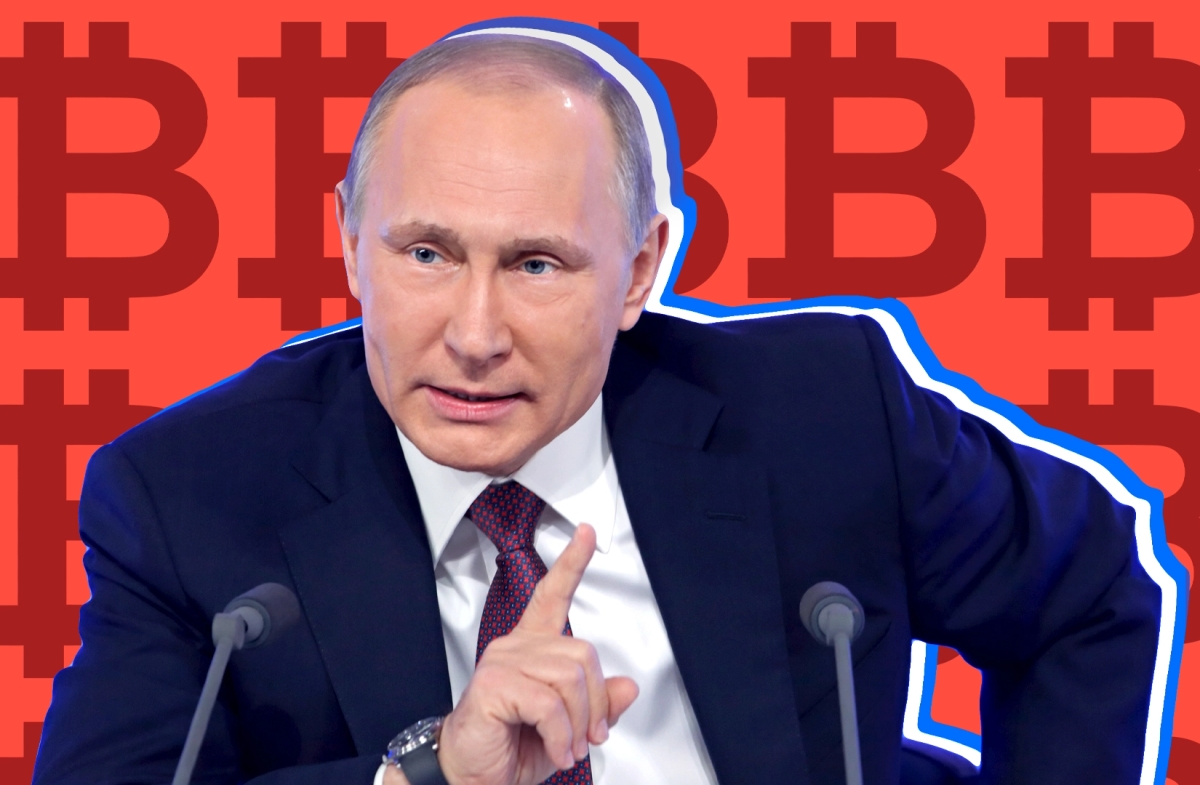
President Vladimir Putin has handed Russian courts new powers to seize cryptocurrencies during criminal investigations.
Putin signed a new law that will amend the country’s Criminal Code, and recognise cryptocurrencies as a form of intangible property, Russian newspaper Kommersant reported.
The law codifies existing protocols for seizing digital assets, Deputy Justice Minister Elena Ardabyeva told the newspaper. But instead of relying on legal precedent for Bitcoin, Ethereum, and the confiscation of various altcoins, these protocols are now enshrined in Russian law.
The law also provides legal avenues for cooperation with foreign crypto exchanges, Ardabyeva said.
The development comes as Russia tries to bring order to its largely unregulated crypto sector.
Experts say the Kremlin could even begin to block citizens’ access to overseas crypto exchanges this year, amid government claims that citizens spend a collective $650 million a day on crypto trades.
Courts’ new powers
The law stipulates that police or prosecutors’ requests to confiscate crypto must include details on the type and quantity of the token in question, as well as wallet addresses.
The law also allows bailiffs to transfer crypto to government-controlled wallets.
The State Duma is working on a raft of new crypto laws this year. Moscow wants to force traders to use domestic platforms or crypto exchanges that have a physical presence in Russia.

The Kremlin is also set to change the way it taxes and polices Bitcoin miners.
And the Russian legal system is struggling to keep up. Crypto-related crime is “becoming one of the key challenges now facing the judiciary,” Olga Tisen, rector of the V.M. Lebedev Russian State University of Justice, told Russian newspaper Vedomosti on February 24.
“Currently, Russia has virtually no systematic programs to train lawyers to work with digital assets and cryptocurrencies in civil and criminal cases,” Tisen explained.
Tisen said the university has responded by creating the nation’s first master’s program in cryptocurrency law.
Russia, North Korea, and Iran are collectively responsible for conducting $100 billion worth of sanctions-evading trade transactions, the blockchain analytics firm Chainalysis claimed in January.
Tim Alper is a News Correspondent at DL News. Got a tip? Email him at tdalper@dlnews.com.