
- Ripple CEO predicted new all-time highs for the crypto market this week.
- Regulatory wins will buttress these new highs.
- Still, Clarity Act remains in limbo after Coinbase pulled its support last-minute.
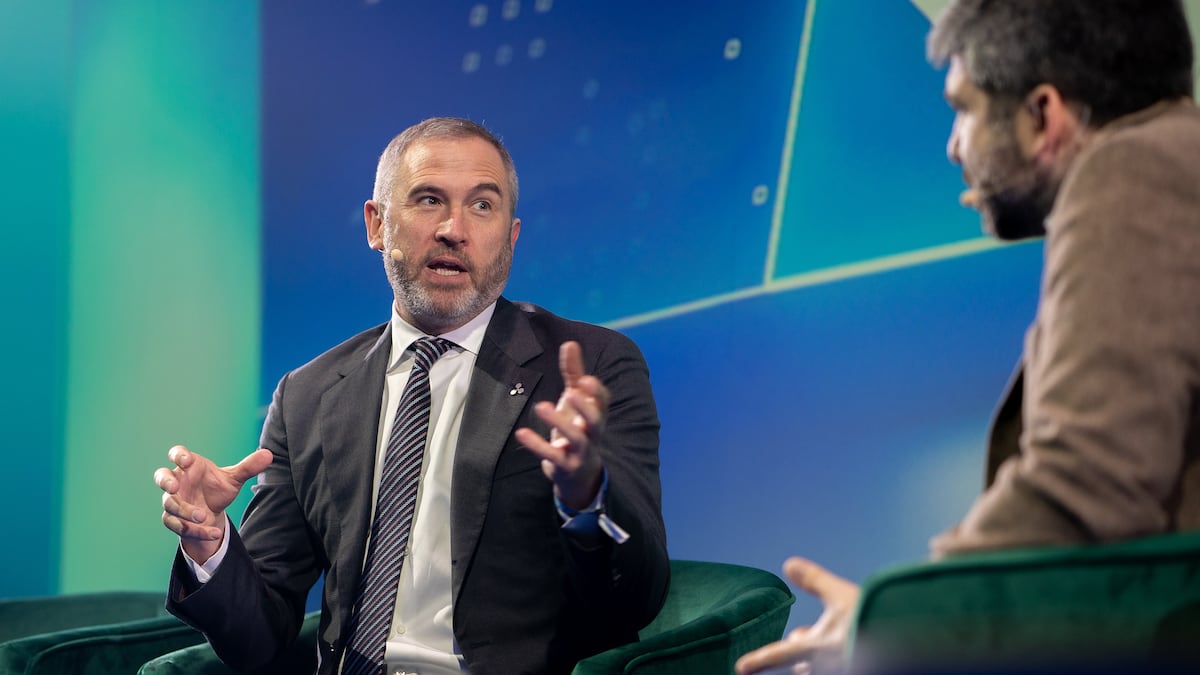
Brad Garlinghouse issued yet another bullish prediction for 2026 at this year’s World Economic Forum in Davos.
On Tuesday, the Ripple CEO said he expects crypto markets to hit a new all-time high over the next 12 months, thanks to new US legislation to regulate digital assets.
“I’m very bullish, and yes, I’ll go on record as saying, I think we’ll see an all-time high,” he told CNBC.
He suggested that many still underestimate the importance of the US, the world’s largest economy, transitioning from its “war on crypto” to embracing the industry.
Under US President Donald Trump, the crypto industry enjoyed a heady year in 2025.
It involved the Securities and Exchange Commission halting or slowing its legal pursuit of high-profile crypto firms, including Coinbase, Binance and Ripple.
The most important win for the industry, however, was signing landmark stablecoin legislation into law via the Genius Act.
The law defined which businesses, financial or otherwise, could issue dollar-pegged stablecoins and under what conditions.
It sparked fintech firms and Wall Street stalwarts to take a second look at launching their own stablecoin, including Robinhood and Bank of America.
Ripple launched its own stablecoin, RLUSD, in 2024. It’s now worth $1.4 billion, according to CoinGecko.
Garlinghouse told CNBC that Wall Street paying attention to crypto is a “massive sea change.”
“I don’t think that’s priced into the crypto market as much as I would have expected right now,” he said.
Still, the industry is waiting on another key piece of legislation: The Clarity Act.
When Clarity?
After crypto exchange Coinbase pulled its backing from a draft version of the latest Clarity Act on January 14, political momentum to get the bill across the line has entered limbo.
The Clarity Act defines which regulatory agency would oversee the crypto industry.
The current draft would define all cryptocurrencies as securities — subject to SEC oversight — unless projects can prove they are sufficiently decentralised. At that point, they fall under the purview of the Commodity Futures Trading Commission.
“We appreciate all the hard work by members of the Senate to reach a bi-partisan outcome, but this version would be materially worse than the current status quo,” Brian Armstrong, CEO of Coinbase, wrote on X.
“We’d rather have no bill than a bad bill.”
Garlinghouse, as well as many other industry members, didn’t share the same view.
The Ripple CEO celebrated the “long-overdue” move by Senator Tim Scott and the Senate Banking Committee to advance the legislation.
“Ripple (and I) know first hand that clarity beats chaos, and this bill’s success is crypto’s success,” he said on January 14.
“I remain optimistic that issues can be resolved through the markup process.”
Liam Kelly is DL News’ Berlin-based DeFi correspondent. Have a tip? Get in touch at liam@dlnews.com.