
- Chainalysis reported a surge in crypto volume tied to human trafficking.
- This rise has occurred in tandem with the spread of scam compounds in parts of Asia.
- Cracking down on illicit activity has been a challenge.
A version of this story appeared in The Guidance newsletter on February 16. Sign up here.
Crypto transactions tied to alleged human trafficking surged by 85% in 2025, according to a February report by crypto compliance firm Chainalysis.
The firm identified hundreds of millions of dollars in volumes linked to illicit escort services, prostitution networks, and child sexual abuse material vendors.
“The dollar amounts significantly understate the human toll of these crimes, where the true cost is measured in lives impacted rather than money transferred,” the report read.
Chainalysis added that much of the latest growth lies in Southeast Asia’s booming scam economy.
The firm unveiled the critical role that so-called labour placement agents play in these schemes. Labour placement agents are individuals who were offered a fake job before being forced into scam compounds.
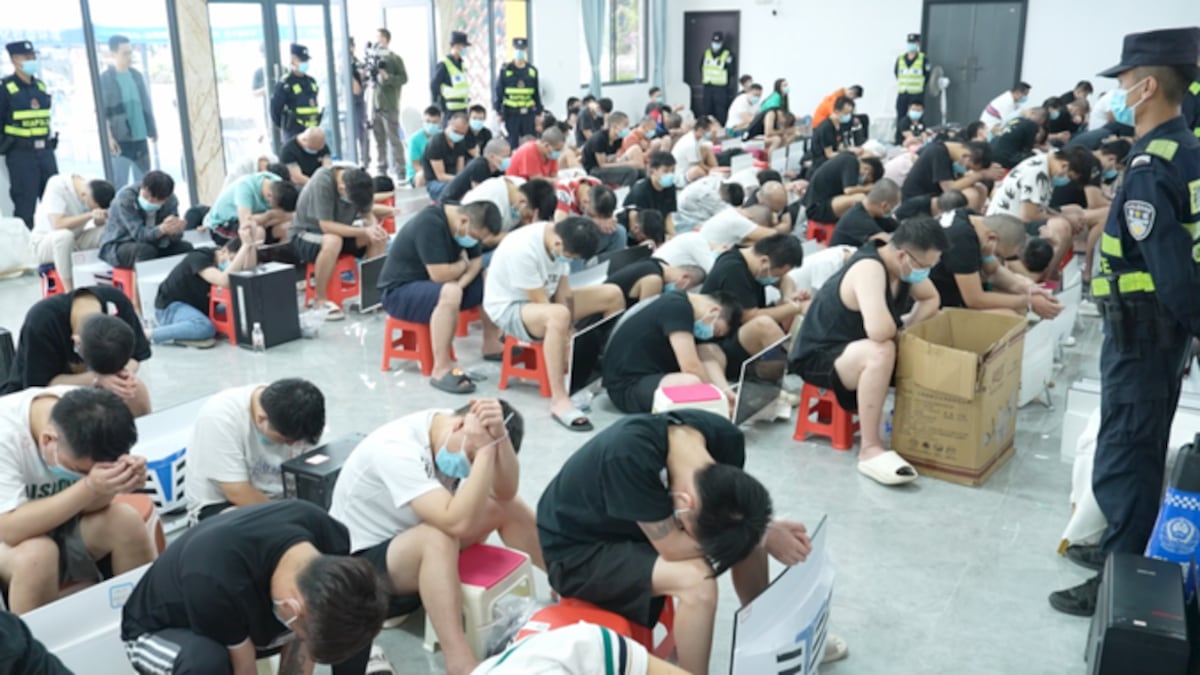
These compounds are often monolithic buildings complete with food halls, dorms, and even gyms. They host labour agents who conduct a range of cyber scams.
Estimates suggest that fraudulent activity and scams — ranging from pig butchering to illicit gambling — now make up an enormous chunk of the region’s gross domestic product, or GDP.
More than 30% of Cambodia’s GDP was generated by cyberscam revenue, according to the 2023 annual estimates. Cambodia isn‘t alone either. Countries in East and Southeast Asia have lost an estimated $37 billion to cybercrime, according to an April 2025 report from the United Nations Office on Drugs and Crime.
And with it, very legitimate political concerns for the countries within the scam empire.
When the conflict between Thailand and Cambodia erupted late last year, it appeared to be another example of simmering geopolitical tensions coming to a head.
That was largely true.
Ambiguities over the countries’ shared border, the two nations‘ growing nationalist tendencies, and territorial claims to oil and gas reserves in the region have stoked tensions.
But as crypto intelligence firm Inca Digital pointed out, another key element played a role.
Conflict erupted again shortly after Thai authorities seized over $300 million in December, including cryptocurrencies, from Cambodian elites tied to large scam networks.
Indeed, the seizure has become a defining chapter of the current conflict.
“The Thai-Cambodia border is emerging as the first military flashpoint shaped in real time by the political economy of crypto-fraud, where pressure on illicit revenue streams produces
measurable shifts in state behaviour, including escalation incentives,” Inca Digital wrote in December.
While authorities in many countries are working to crack down on illicit activity, the results have been mixed.
“Every time we think we have found the scam compound we are looking for, emerging out of the darkness is a scam compound that is even bigger than we thought,” Erin West, founder of Operation Shamrock, said on Monday.
“There is no end to the construction in Cambodia right now.”
Liam Kelly is DL News’ Berlin-based DeFi correspondent. Have a tip? Get in touch at liam@dlnews.com.