Real-world finance adoption is increasingly seen as something entirely distinct from traditional DeFi. Fuelled by the need for compliance, capable infrastructure, and institutional-grade security, the ecosystem is on the cusp of bringing real economic value onchain.
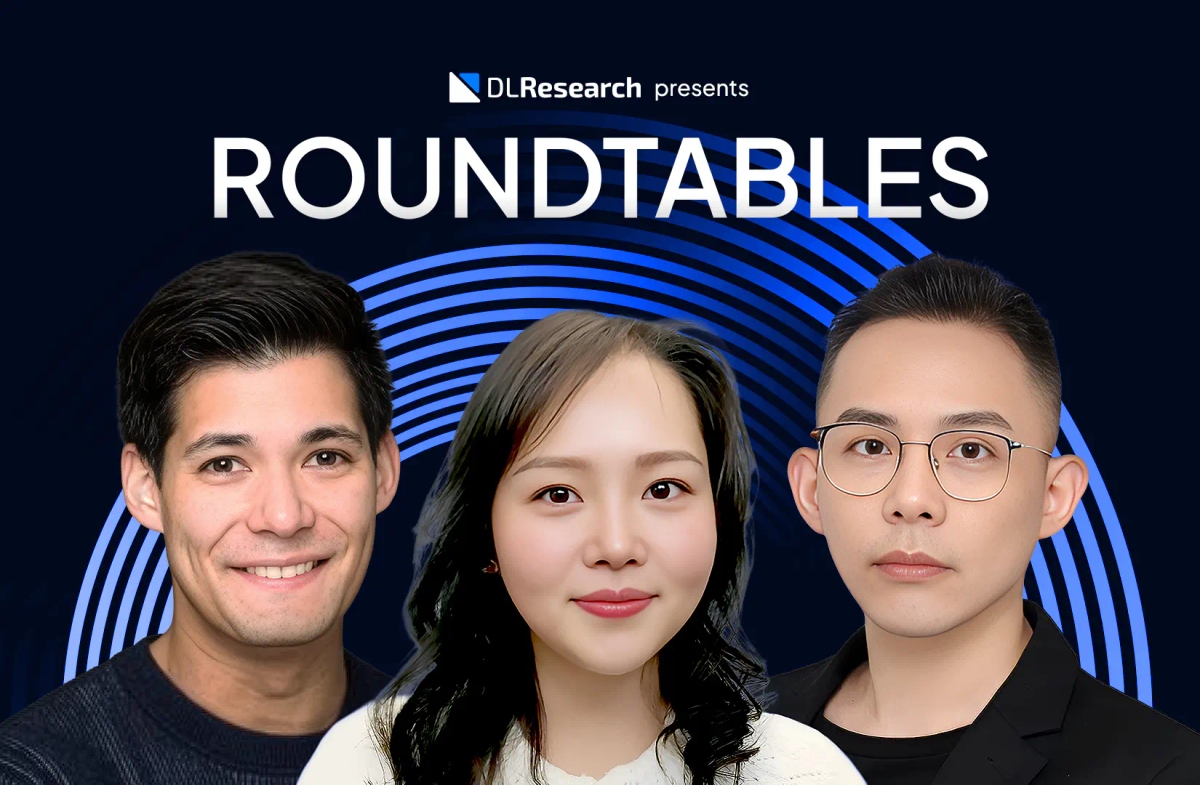
To explore this evolution, we brought together Wish Wu and Michelle Kang from Pharos Network, alongside Spencer Jaffe from Circle, at EthCC. Together, they discussed what the industry urgently needs to make RealFi work at scale and how their partnership is laying the foundation.
Interviewees:

Wish leads the development of the Pharos decentralised protocol stack and drives key industry partnerships. Formerly CSO at ZAN, the Web3 arm of Ant Group, he brings deep expertise in distributed systems and network security to build scalable, cross-chain infrastructure for real-world assets.

A crypto marketing professional since 2016, Michelle is the Pharos’ Chief Marketing Officer and has a proven track record of launching data-driven strategies. She has successfully led marketing and growth for six major layer 1 and layer 2 networks, driving visibility and real adoption across various blockchain ecosystems.

Spencer leads blockchain partnerships at Circle. Prior to joining, he was Chief of Staff at Polybase and founded Commonvest. He brings a wealth of experience in scaling growth platforms, having spent nearly three years at YouTube in product marketing and growth roles.
Defining RealFi and the missing links
While the industry is eager to attract institutional capital, the underlying infrastructure must catch up first. Wish noted that RealFi is fundamentally about engaging Web2 institutions, which requires entirely different foundational layers.
"First, compliance infrastructure," Wish explained. "Whether on the regulatory or technology side, how do you handle AML onchain in a way that is as seamless and efficient as what institutions do in Web2 today?"
Beyond compliance, he emphasised the crucial need for data sovereignty and high throughput. Traditional finance requires exceptionally fast infrastructure for activities like high-frequency trading. This is exactly why Pharos built a high-performance Layer 1 dedicated to institutional workloads.
Spencer agreed that the industry is at a transformational moment where real institutions are finally recognising the value of blockchain technology.
"Regulators are paying close attention and beginning to set clearer guidelines, and I actually think that is a good thing," Spencer said. "Having a blueprint to work towards creates more certainty for builders."
Walking in the front door
A recurring theme throughout the discussion was the absolute necessity of regulatory compliance. Spencer outlined Circle's rigorous approach to working with governments globally. The company currently holds 55 licences across major jurisdictions, including Canada, Japan, the UAE, and the EU under MiCA.
"Our approach, as our Chief Strategy Officer Dante always puts it, is that we walk in the front door," Spencer emphasised. "We never try to work around regulations. We go to governments and say we are here, we want to be regulated, tell us how to build in a way that your citizens feel safe."
He noted that institutional capital demands this specific level of security. Institutions have strict fiduciary responsibilities to safeguard user funds, making regulatory credibility an essential prerequisite for participation.
Wish agreed that traditional finance and governments tend to move slowly by nature. He actually views this patience as a major advantage for the blockchain sector. A longer runway gives builders plenty of time to iterate and refine the infrastructure before large capital flows in.
Building the Pacific Ocean
On April 28, Pharos launched its mainnet, aptly named "The Pacific Ocean." The launch marks a significant milestone for the team, turning months of testnet activity and years of hard work into a live financial network.
"Pharos is the Greek word for lighthouse, so the maritime theme runs through everything we do," Michelle explained. "The Pacific Ocean is the largest ocean in the world, and it reflects both our ambitions for scale and our roots."
Wish elaborated on his vision of Pharos as a vibrant on-chain financial city. The core infrastructure is now backed by top-tier providers, forming the physical fabric of this digital metropolis.
To support the city's growth, Pharos has implemented a comprehensive incubator programme. This initiative offers funding for emerging projects, technological assistance, go-to-market advice, and listing support. A dedicated VC fund is also in place to back these projects from early stages to significant scale.
The RealFi Alliance and asset evolution
A core issue in onchain finance is the absence of a unified environment where tokenised assets can truly scale. Wish mapped out the evolution of real-world assets to illustrate this exact problem.
Early on, assets such as tokenised US Treasuries or gold were simply held passively by Web2 investors onchain. Nobody was actively using them as composable financial tools. Wish noted that true utility requires integrating these assets into lending protocols, derivatives, and structured products.
This specific need directly prompted the formation of the RealFi Alliance. The alliance aims to create a unified environment with shared infrastructure and standards. This interconnected network will enable tokenised assets to operate as a complete financial system rather than merely serving as a registry of ownership.
The institutional talent gap
Another major obstacle to wider adoption is the persistent hesitation caused by a substantial skills gap in the market.
"When you are working at the intersection of TradFi and DeFi, you need people who understand both worlds deeply," Wish said. "Right now, there are not enough of them."
He explained that crypto-native developers often lack understanding of how to engage with institutional counterparties. Conversely, traditional finance professionals frequently aim to simply replicate existing systems onchain. This inevitably fails due to completely different risk and permission models.
Circle’s role as the liquidity backbone
As a key partner, Circle provides native USDC and CCTP to Pharos from the outset. Spencer described exactly what Circle looks for before committing to a native deployment on any new network.
“We first examine use cases," Spencer explained. "With Pharos, what immediately attracted me was the AI-first approach, building a network purpose-built for agentic payments and AI-native finance.”
Spencer explained how USDC functions as essential infrastructure rather than merely an asset. Its built-in interoperability enables USDC to move seamlessly across different blockchains. Additionally, the capability to transfer funds into protocols with a single click via CCTP hooks makes it an ideal settlement layer for real-world assets.
Foundations for the AI future
Looking ahead, the collaboration between Pharos and Circle signifies a significant mutual commitment to the future of finance. Both teams are actively setting the stage for a future led by autonomous AI agents and institutional flows.
"Circle is the currency, the blood, of the ecosystem," Wish noted. "Without it, the body cannot function. Having USDC in place before mainnet means Pharos has everything it needs to move freely from day one."
Wish pointed out that Circle's X402 protocol is uniquely positioned to support upcoming AI agent payment flows. Pharos aims to be the most reliable infrastructure for this future, ensuring that when AI agents transact at scale, both the network and the settlement asset are fully prepared.
"More flows will move onchain," Spencer concluded. "AI agents will transact onchain. New products that institutions want to invest in or tokenise will live onchain. Pharos is a place where that can happen."