

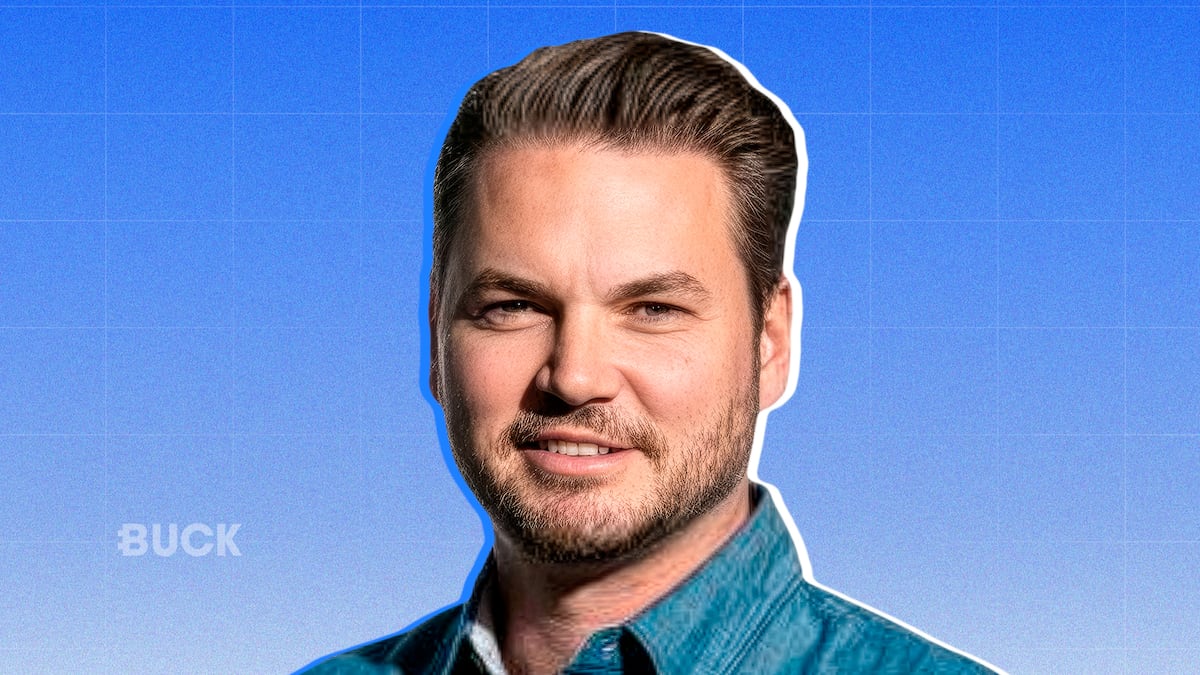
Travis VanderZanden is a veteran technology and transportation entrepreneur, best known as the founder and former CEO of Bird. Earlier in his career, he held leadership roles at Lyft and Uber, where he helped scale consumer platforms used by millions globally.
Buck launched on January 6, 2026, positioning itself as a “Bitcoin Dollar” that offers savings-style rewards, continuous accrual, and full liquidity without staking or lockups. Designed to reframe digital assets around long-term saving rather than speculation, Buck introduces a governance-driven model that separates treasury strategy from the token itself.
We recently spoke with Travis VanderZanden, Founder of Buck, about his shift from high-velocity transportation tech to building a calmer, long-term savings infrastructure for the crypto market.
Read more about Buck’s approach to “guided decentralisation” and the emergence of the SavingsCoin asset class in the interview below.
What lessons from Bird, Uber, or Lyft most directly influenced how you designed Buck as a calmer, savings-oriented product?
My experience scaling companies like Bird, Uber, and Lyft was defined by high-velocity growth and the complexity of moving people and things through physical space. While those industries are inherently chaotic, they taught me that for a product to achieve true mass adoption, it must solve a fundamental human need with extreme simplicity.
In the “blitzscaling” era, the focus was on movement, getting from point A to point B as fast as possible. In crypto, stablecoins have already mastered that “movement” phase. They are the checking accounts of the digital world. With Buck, we wanted to build the “calm” counterpart, which is the savings account.
We have designed Buck to be a “set-and-forget” product that handles complexity under the hood, allowing users to move away from high-stress, speculative trading cycles and toward a more disciplined, predictable way to grow their wealth.
Buck deliberately avoids being a stablecoin or a pegged asset. What risks did you see in stablecoin models that pushed you toward a market-priced, governance-driven token instead?
Traditional stablecoins were built to be digital versions of the dollar. They are static, fiat-backed, and purely transactional. The risk we saw in that model is two-fold. First, you are inherently tied to the inflationary risks and centralised banking dependencies of fiat currency. Second, traditional stablecoins are “dead” assets. They sit in your wallet, doing nothing for you, while the issuer earns the yield.
We designed Buck as a SavingsCoin to break that mould. Buck is indirectly backed by Bitcoin via Strategy’s STRC rather than a pile of dollars in a legacy bank. This allows us to pass rewards directly to the holders, something a traditional stablecoin is not designed to do.
We believe the future of the “Bitcoin Dollar” is not just about maintaining a price. It is about ensuring the user’s capital is actually working for them, governed by a transparent community rather than a black-box centralised issuer.
Buck separates the treasury strategy from the token itself and holds assets at the issuer level rather than directly backing the token. How does this separation enhance flexibility, resilience, and long-term sustainability?
This separation is a deliberate choice to ensure Buck functions as a governance token, not a security. Value is managed through the Buck DAO. This structure gives us the best of both worlds: institutional-grade resilience at the issuer level and a community-led ecosystem where the DAO decides on reward distributions.
Buck balances community input via a DAO with foundation and issuer oversight. How did you design this governance structure to drive participation without compromising system stability?
We believe in a “checks and balances” model of governance. Many DAOs fail because they are either too decentralised to be efficient or too centralised to be trustworthy. Buck uses a tiered approach. The DAO gives the community a direct voice in reward distributions and supply decisions, but this is balanced by the Foundation and Issuer’s role in ensuring regulatory compliance and system safety.
This “guided decentralisation” protects everyday users from the risks of governance attacks or irrational voting while still ensuring the community has a tangible economic stake in the system. It is about creating a transparent, participatory environment that does not sacrifice the security and predictability that a savings product requires.
Buck rewards accrue in real time, but distributions occur monthly and require governance approval. How should users understand the difference between economic performance tracking and actual reward distribution?
The best way to think about it is like a high-yield savings account or a corporate dividend. The “accrual” you see in your dashboard is a real-time reflection of the economic value being generated by the treasury’s STRC holdings. It is transparency in action. You can see your rewards growing minute-by-minute.
The “distribution” is the formal event where that value is realised and moved to your wallet. By moving to a monthly distribution cycle governed by a DAO vote, we introduce a layer of professional oversight and institutional-grade accounting. This ensures that every reward paid out is verified and sustainable, providing a level of “financial discipline” that is often missing in the “move fast and break things” world of crypto.
Buck’s initial focus is EEA retail users under MiCA. How did regulatory clarity in Europe shape the product’s structure? Given recent developments in US stablecoin regulations, do you see a future for Buck or SavingsCoins’ offerings?
Europe’s MiCA (Markets in Crypto-Assets) regulation provided the clear “rulebook” we needed to build a compliant retail product from day one. By defining the categories for tokens so clearly, MiCA allowed us to structure Buck as a non-stablecoin, governance-driven asset that fits neatly within the legal framework of the EEA.
Regarding the US, we are very optimistic but remain cautious. The “Bitcoin Dollar” is a concept that naturally resonates with the American market, especially as Bitcoin becomes a more mainstream reserve asset.
As the US moves toward its own regulatory clarity for digital assets, we absolutely see a future where “SavingsCoins” become a standard offering for US users who want to save in a dollar-denominated asset backed by the world’s hardest currency.
What behaviour do you hope changes for everyday crypto users over the next few years with Buck, and where do you see the project in five years?
Today, the average crypto user is often caught between two extremes: holding volatile assets in hopes of a “moon” shot, or holding stablecoins that lose purchasing power to inflation. We want to change that by making “consistent saving” a core function of the crypto experience.
In five years, I see Buck as the global standard for the “Bitcoin Dollar.” I want it to be the default “savings account” for the digital generation, a tool as intuitive as a banking app yet powered by the transparency and upside of the Bitcoin ecosystem. Success for us means “SavingsCoins” is recognised as a new asset class, with Buck as the cornerstone of that category.