

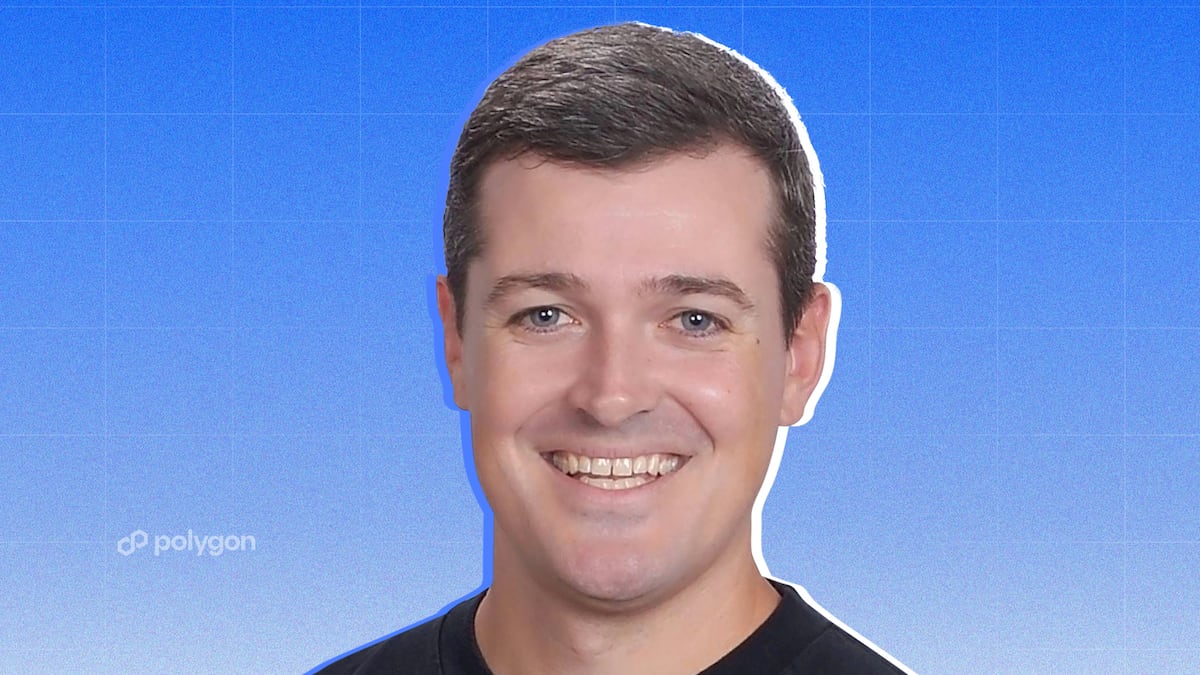
Marc Boiron’s background spans M&A, corporate and securities law, and high-stakes protocol leadership. Before joining the builder side of crypto, he acted as external counsel to early blockchain teams and later became Chief Legal Officer at dYdX, where he steered the protocol through complex regulatory challenges.
He joined Polygon Labs in 2022 as Chief Legal Officer and became CEO the following year, steering the ecosystem towards becoming a leading payments-focused blockchain while developing an internet of interoperable blockchains via the AggLayer.
As a contributor to Katana, Boiron concentrates on developing innovative models for liquidity, governance, and chain-level coordination. Katana aims to support the next generation of sector-specific chains within the Polygon ecosystem by tackling intra-chain fragmentation and establishing a unified liquidity layer.
We recently spoke with Marc Boiron, CEO of Polygon Labs and a core contributor to Katana, about the challenges of DeFi fragmentation and how chain-level liquidity engines can solve them.
Read more about Katana’s role in the AggLayer and the future of specialised chains in the interview below.
Your background spans M&A, corporate and securities law, and now, protocol leadership. Which early experiences influenced your perspective on decentralised systems and their governance?
I started on the legal side. That meant being called in when situations were unclear and complicated. Two lessons stayed with me. First, incentives outweigh intent. If code and economics indicate one direction, policy and prose won’t protect you. Second, good governance is swift and transparent.
You need the ability to iterate and the right brakes for emergencies. You cannot hamper your ability to execute with slow, group-based decision-making. That’s why I prefer structures with a clear leader and decision-making authority.
In your years advising crypto companies as external counsel, what patterns did you observe that made you realise the industry needed more than just legal frameworks and prompted you to build within it?
I watched the same actions repeat themselves. Firstly, when one leader takes action, others tend to follow. However, they often fail to realise that individuals’ circumstances vary and require different strategies. This applies not only from a legal standpoint but also in business and technical execution. Being behind the scenes enables a much more effective and differentiated approach.
Second, teams believe creating a valuable product is simple. One team shipped excellent technology, and then ten nearly identical deployments were produced as forks but lacked the qualities needed to succeed.
Overall, there has been insufficient focus on developing excellent products, mainly due to fear of regulatory scrutiny, leading to suboptimal product development. Collaborating more closely with product teams internally enables better interactions and more appropriate risk-reward assessments.
Your time at dYdX placed you inside one of the earliest high-stakes DeFi regulatory battlegrounds. What did leading legal strategy at a global derivatives protocol teach you about how decentralised systems evolve under pressure?
There is a clear distinction between decentralised systems and decentralised organisations. It has become quite evident that achieving success for a derivatives exchange with decentralised components is highly beneficial. However, operating and competing in this space as a decentralised organisation remains highly challenging.
You mentioned that Ethereum was what first attracted you to the space and that real scaling caught your attention at Polygon. What problem did you believe Polygon was uniquely able to address when you joined the team?
I love big dreams and huge potential. Polygon has always pursued those dreams and that potential: scaling Web3 to internet size, not with one chain, but with many chains that feel like one to users.
Polygon faced two tough challenges early on: creating zero-knowledge proofs that compress trust into math, and developing an aggregation layer to coordinate state across chains for a seamless user experience. That combination is why I joined and later became the CEO.
You assumed the CEO role during a crucial transition for Polygon. What vision of the ecosystem convinced you it was the right moment to take on that responsibility?
The vision was simple: make Web3 feel like the internet. Users don’t think about “which chain.” They simply get what they want, quickly and safely. My initial steps were cultural and product-centric. We needed to sharpen focus, align incentives, and shift from “announce, then build” to “ship, then talk.”
On the product side, we narrowed Polygon PoS toward payments and RWAs where we were already strong, and we poured energy into the AggLayer so specialised chains can interoperate like one network.
Having mentioned that general-purpose chains and sector-specific chains both have a place in DeFi, where do you see specialisation making the most sense?
Specialise when your users value one aspect so highly that everything else should adapt to it. For DeFi, that’s deep liquidity, predictable execution, and genuine sustainable yield.
The underestimated trade-offs are fragmentation and governance overhead. Each additional venue divides liquidity and focus. Every new control surface introduces potential failure points. If you specialise, commit fully and design your incentives to concentrate activity rather than disperse it.
Katana introduces a new approach to liquidity, governance, and chain-level coordination. What issue in the market convinced you that Katana was necessary?
DeFi’s main issue extends beyond cross-chain fragmentation to include intra-chain fragmentation. You have 30 DEXes and 10 lending markets on a single chain, resulting in shallow books and volatile rates. Katana addresses this by providing a single spot DEX as the default platform for swaps and a unified lending market as the foundational layer for credit.
Then thousands of apps are built on top of those “money legos.” Pair that with a yield that grows with real usage, not emissions alone. Sequencer fees, VaultBridge L1 yield, and AUSD revenue all flow back to users through those core apps. That’s how you turn TVL into productive TVL and keep the flywheel spinning.
One of Katana’s promises is to create better execution environments for liquidity for all users. How do you see execution flow evolving as Katana scales?
A chain-level liquidity engine should perform three key functions for the network. First, concentrate depth where it matters so that a million-pound swap feels like a normal trade, not a slippage nightmare. Second, generate real revenue for the users and LPs who genuinely create that depth. Third, integrate seamlessly with interoperability to allow other chains and projects to access it without overhauling their entire setup.
Katana achieves this by enshrining core apps, recycling sequencer fees into chain-owned liquidity, and employing AggLayer’s VaultBridge to generate revenue for DeFi users from what would otherwise be idle assets on Ethereum. Users perceive one market, not multiple venues.
How does Katana fit inside the broader Polygon ecosystem? What does it unlock that the existing stack, including the AggLayer, could not achieve on its own?
The AggLayer connects many chains into a single network. Katana gives that network a DeFi heartbeat. For the AggLayer, Katana is the place to access deep books, stable credit rates, and higher sustainable yields without rebuilding DeFi from scratch.
For the AggLayer chains, Katana addresses the cold-start problem by providing concentrated liquidity that each connected chain can access through the unified bridge, with state verification via ZK. For users, it simply offers better execution and higher returns that benefit them over time.
As Polygon moves deeper into its vision of an internet of blockchains, where do you see Katana’s role one to two years from now?
In 12 to 24 months, which is a long time in crypto, success looks like this: Apps on other chains route to Katana by default for size. Borrowing and swap rates on Katana are noticeably less volatile because CoL provides a baseline liquidity that never leaves, even in bear markets.
VaultBridge deposits and AUSD usage increase the real-yield returns for users as activity expands. The typical user doesn’t think, “I bridged.” They think, “I got the best execution and the best price/returns.” When these outcomes are reflected in the data, Katana has established itself as the centre for DeFi within the wider crypto ecosystem.
What motivates you today, and what challenge in the next stage of the multichain future keeps you energised?
Fixing what’s broken in DeFi and enabling users to benefit from the upside. We aim to make the internet of value genuinely feel like the internet. The main challenge is coordination at a large scale. Incentives, settlement, and user experience need to align across thousands of chains. That’s difficult. It’s also why I’m here.