




Executive Summary
The AI Infrastructure Challenge
Artificial intelligence has become the defining compute market of the next decade. Transformer architectures and scaling laws turned progress into an infrastructure race, not a search for a single breakthrough algorithm. Training cycles now consume millions of GPU hours, while inference has shifted demand from periodic spikes to an always-on tide of queries embedded in daily workflows.
Even as the cost per query has fallen, usage has compounded faster, pushing aggregate spending higher and stressing the entire supply chain from silicon and packaging to networking, storage, and power. Hyperscalers have responded with unprecedented capital programs, but the result for builders is a landscape that is powerful yet closed, efficient yet opaque, and optimised for central platforms rather than open markets.
0G addresses this gap by treating AI infrastructure as a coherent operating system rather than a stack of disconnected services. It brings storage, data availability, compute, and consensus into one modular environment that can scale horizontally and verify outcomes at every step.
The goal is not only to lower costs or increase throughput, but to make AI infrastructure auditable, programmable, and open to permissionless participation. That combination is what turns infrastructure from a black box into a public good.
Data Architecture and Storage
The architecture starts with data. 0G Storage separates immutable archives from fast, mutable state so that the same system can serve training corpora and live application backends without trade-offs. Proof of Random Access requires providers to retrieve specific chunks quickly and reliably, so rewards are paid for useful I/O, not just raw capacity.
This aligns incentives with what AI workloads need in practice: persistence with provenance for large files, and low-latency reads and writes for agent memory, indices, and application state.
Data Availability and Verification
On top of storage, 0G builds a data availability layer that treats publication and persistence as one continuous guarantee. Data is erasure-coded and sampled by quorums selected with verifiable randomness, then finalised by validators that anchor security at a root layer.
Because availability checks operate against data that is actually stored, retrieval is as trustworthy as publication. This matters for AI because models do not only post data once. They fetch, update, and verify repeatedly across training, evaluation, and deployment.
Privacy-Preserving Ownership (ERC-7857)
Beyond the core layers, 0G extends trust to the ownership of digital and AI assets. ERC-7857 introduces on- chain privacy and verifiability by embedding encrypted metadata and secure transfer logic directly into the token standard.
It enables AI models and datasets to be exchanged securely, preserving both confidentiality and authenticity through trusted execution and zero-knowledge proofs. Unlike frameworks such as x402, ERC-8004, Virtual ACP, Google A2A, or Stripe ACP, which focus on payments or identity, ERC-7857 protects the data layer itself. Integrated with 0G Storage and Data Availability, it provides sub-second, encrypted asset transfer for secure and scalable AI ownership.
Compute Marketplace
Compute is organised as an open marketplace. Developers fund workloads for inference, fine-tuning, and eventually training. Providers register GPU capacity and receive jobs that settle through smart contract escrow once proofs confirm correct execution.
Trusted execution and zero-knowledge techniques allow verification without exposing inputs. The marketplace aggregates everything from enterprise clusters to independent operators and pays for validated work rather than promises. This widens supply, reduces lock-in, and lets applications scale without a single vendor gate.
Consensus and Security
Consensus ties the system together. Rather than forcing every function through a single chain, 0G runs many parallel networks that share security through a common stake anchored to Ethereum.
Misbehaviour anywhere is slashable at the root, so guarantees are uniform across storage, availability, and compute. CometBFT provides deterministic finality with sub-second latencies, and the roadmap moves toward parallel confirmation to match the micro-transaction patterns of agent ecosystems. The result is a coordination fabric that grows horizontally while keeping one trust model.
Position in the Market
This design positions 0G clearly within the current market. General-purpose chains deliver either high throughput or deep liquidity, but they externalise the heaviest data flows. Rollups increase capacity, but each one must assemble its own availability and storage, which fragments guarantees.
Dedicated DA layers confirm publication efficiently, yet they stop short of persistence and mutable state. Storage protocols excel at permanence or addressing, but they do not natively provide fast updates or verifiable retrieval tied to a global security model. 0G consolidates these functions in one place and aligns them with the realities of AI workloads.
For developers, the practical advantages are straightforward. Training datasets can be anchored immutably in the same system that serves low-latency key-value access for live applications. Availability is not a temporary property of blobs but a durable property of stored data.
Compute is procured from a global pool and paid only when outputs verify. Coordination is fast enough to support agent networks that read, write, and transact continuously. The net effect is lower integration risk, clearer performance envelopes, and a simpler path from prototype to production.
For users and enterprises, the benefits are clarity and control. Provenance is observable rather than implied. Data can be segmented by policy and location while still participating in a shared marketplace. Pricing can clear in real time, and rights can be enforced with decentralised identity and programmable governance. This is how an open AI economy gains the reliability required for adoption in regulated and mission-critical contexts.
Taken together, these properties show why 0G is more than just another infrastructure option. It offers a unified foundation where data, compute, and availability work as one system. In doing so, it reduces the compromises developers face, provides the assurances enterprises demand, and ultimately sets the standard for decentralised AI infrastructure.
Market Opportunity: AI x Crypto
The AI Market
The Technical Breakthrough
The current wave of AI is powered by a combination of technical breakthroughs and massive capital inflows. In the late 2010s, researchers introduced transformer architectures and discovered scaling laws showing that model performance improves predictably with more parameters, larger datasets, and greater compute. This insight changed the nature of progress in AI: instead of relying on novel algorithms, advancement became a question of who could marshal the most infrastructure.
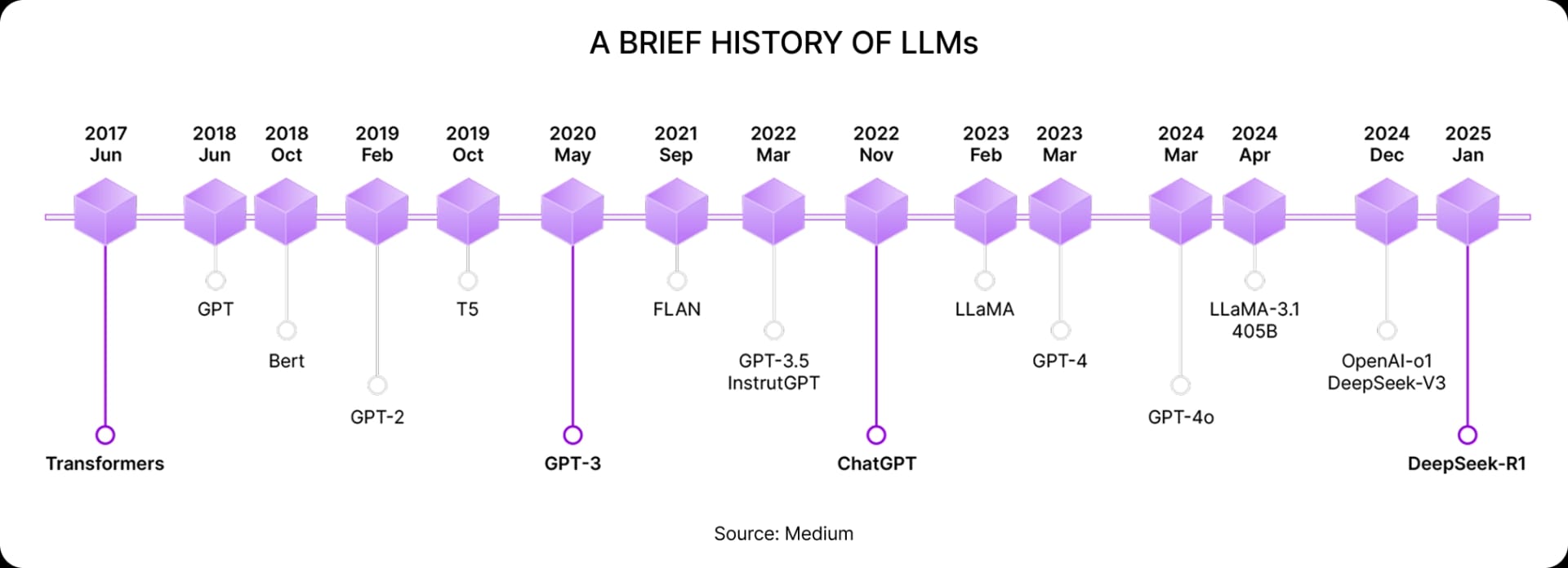
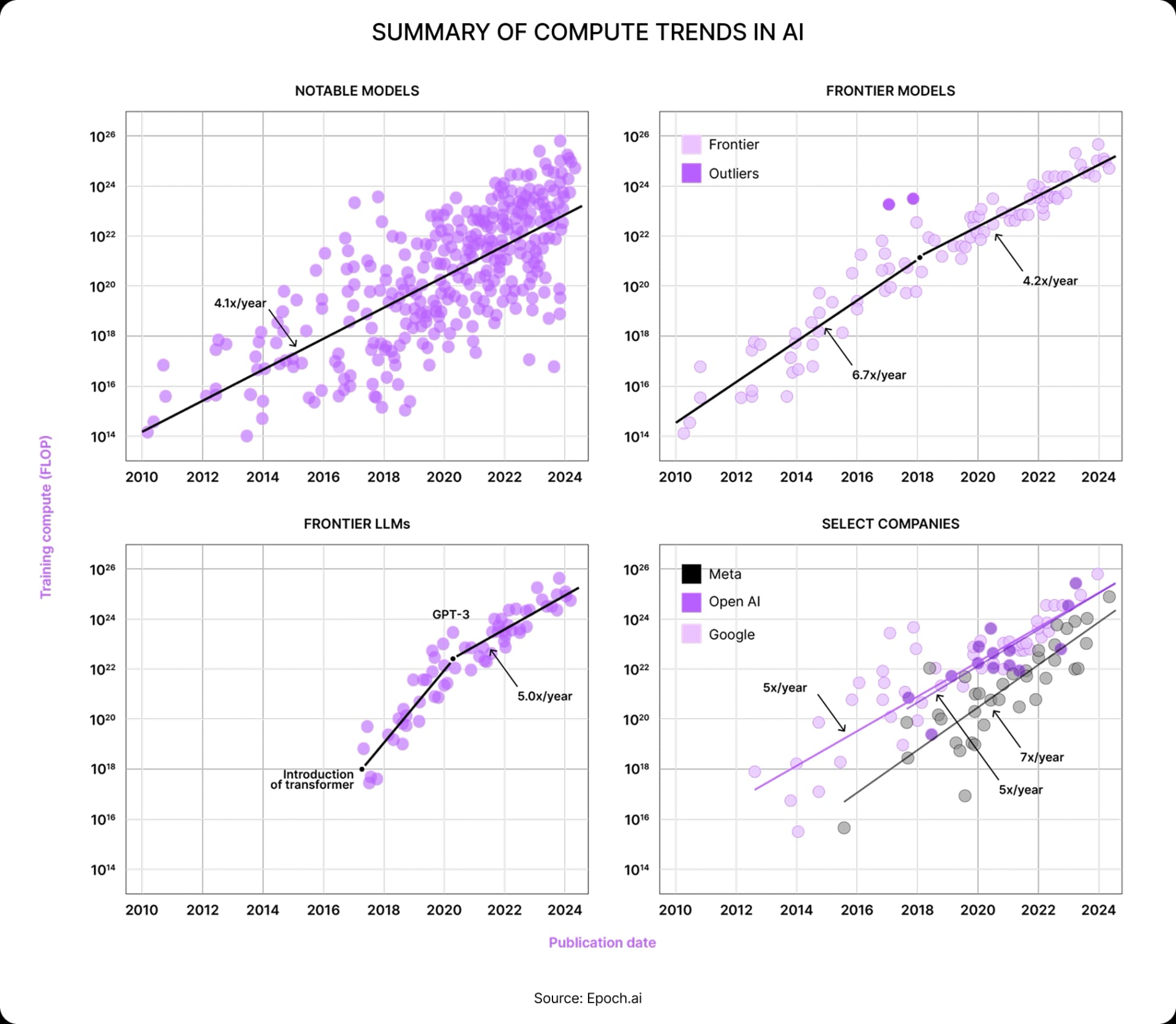
The pattern since then has been clear. Each new frontier model has been larger, trained on more data, and delivered stronger capabilities. But with every leap in performance, the resource requirements have expanded just as dramatically. Training runs now consume millions of GPU hours, with total compute needs rising four to five times per year through 2024.
Once these systems left the lab and entered products, the pressure on infrastructure only intensified. Training occurs in large but occasional cycles, while inference, the act of serving outputs to users, is relentless.With tools like ChatGPT, Claude, and Gemini embedded into consumer apps and enterprise workflows, every email drafted or line of code generated becomes another inference call. Billions of these queries now take place daily, translating into a constant, compounding demand for compute.
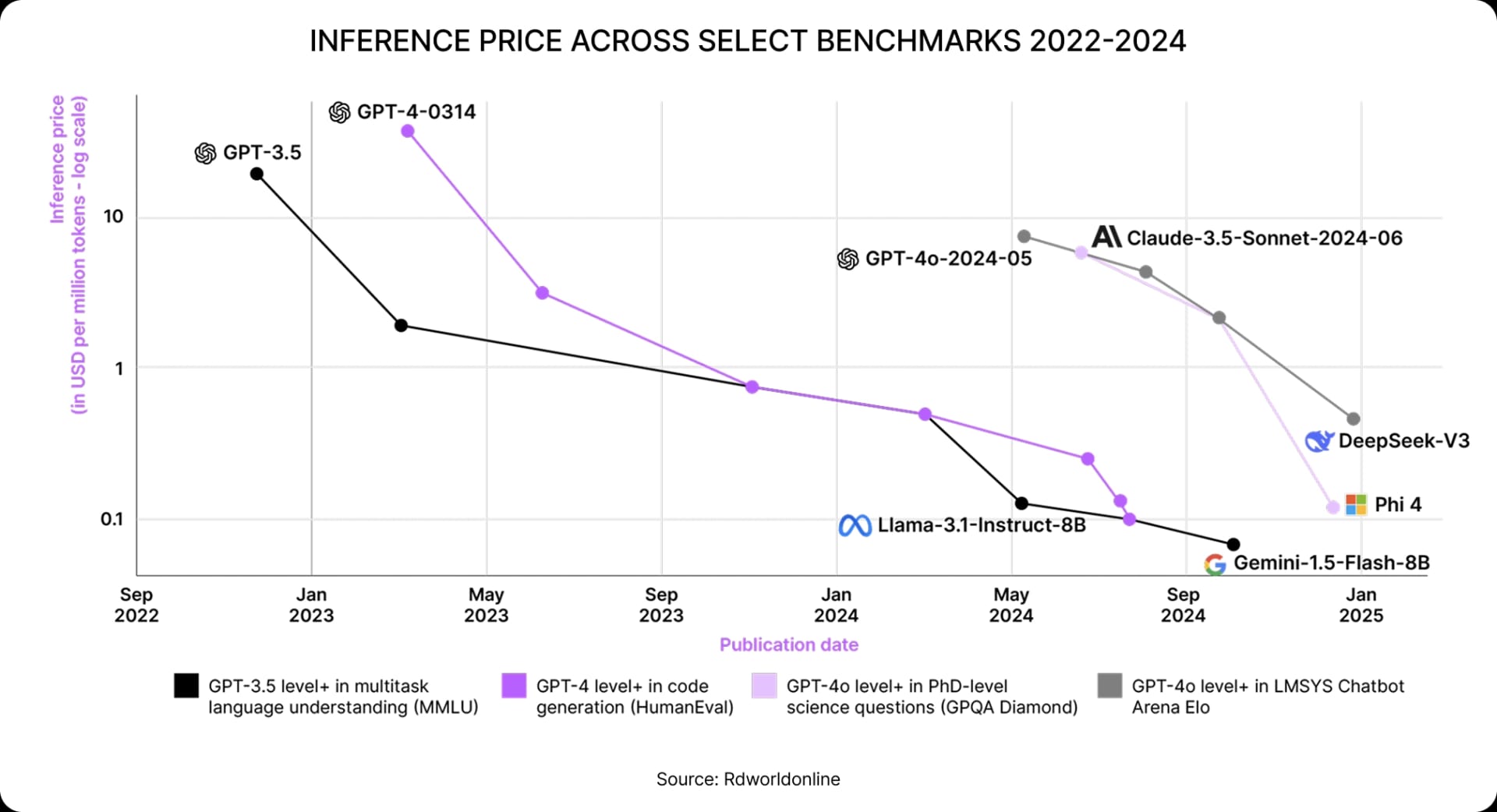
Although the cost per inference has fallen dramatically, with Stanford’s AI Index reporting a more than 280-fold drop in the price of GPT-3.5-class queries between late 2022 and late 2024, these efficiency gains have been overwhelmed by rising demand.
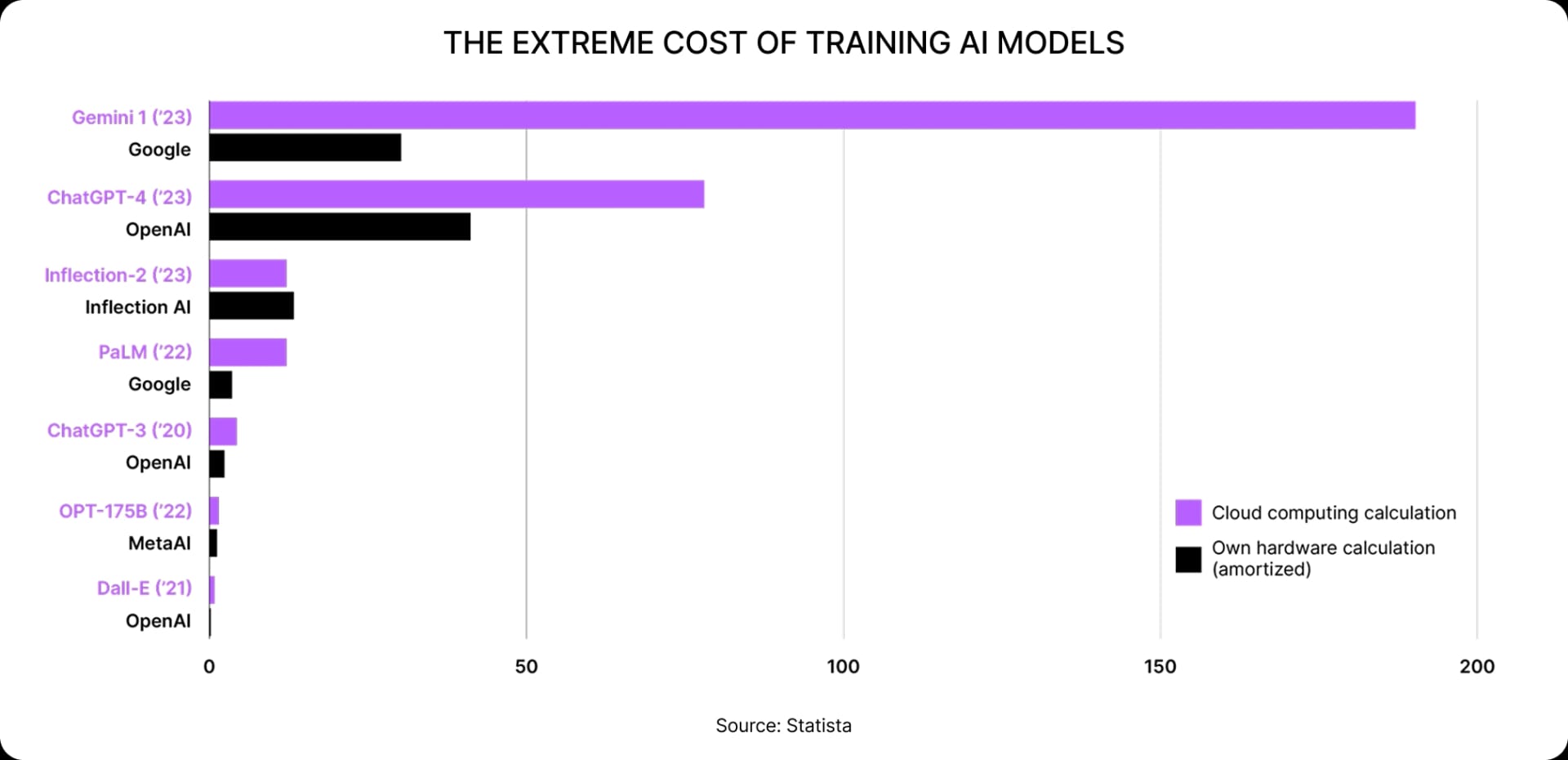
The result is that aggregate spending on AI infrastructure continues to rise. Training clusters remain indispensable for each new generation, but inference fleets now account for the larger and faster-growing share of budgets, exerting increasing pressure on the AI supply chain.
The Capital Response and Market Bottlenecks
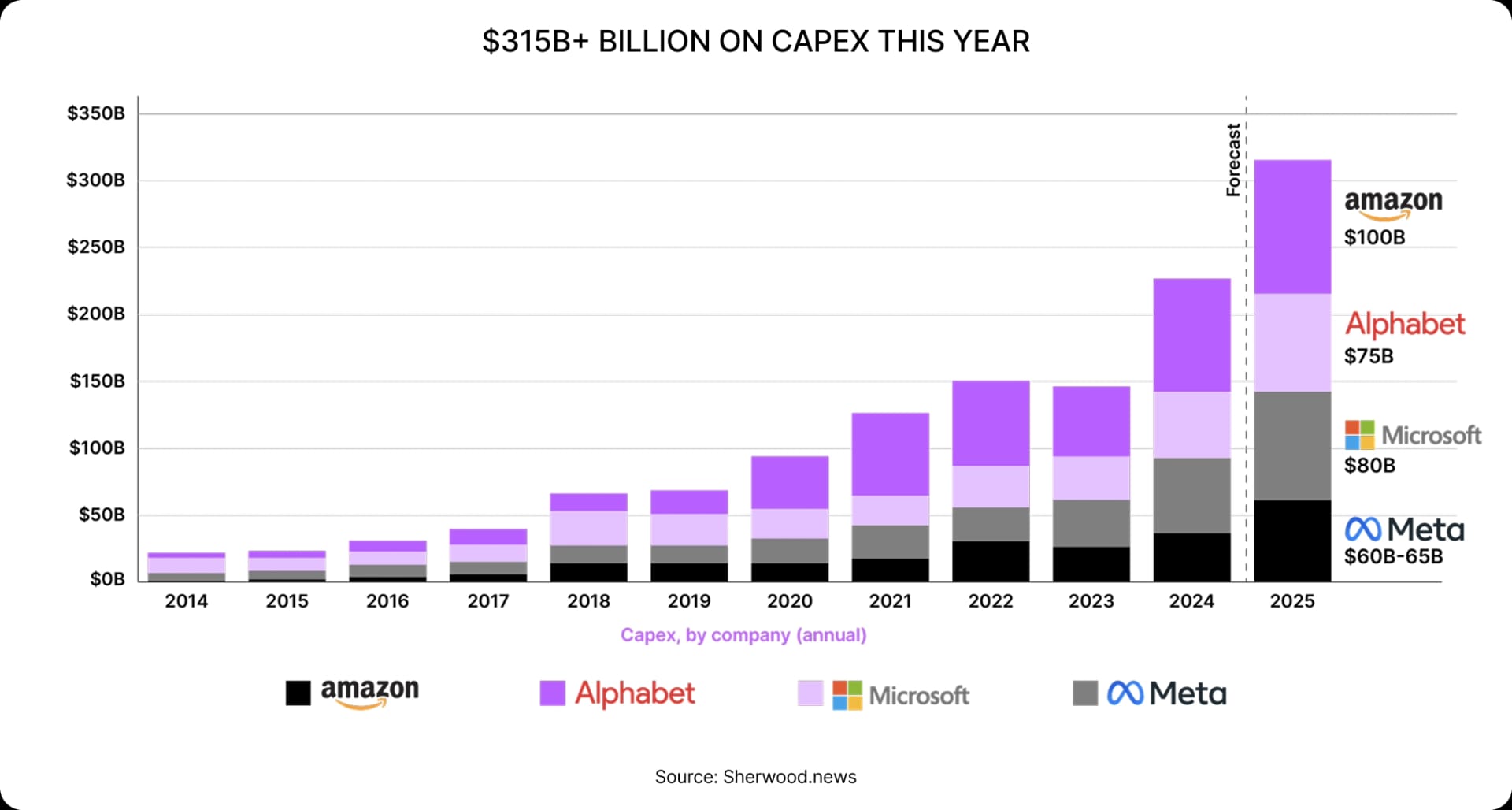
The scale of the response is most visible in capital expenditure. In 2025, Microsoft, Amazon, Google, and Meta together are guiding more than 300 billion dollars of capex, the majority directed toward AI-specific data centres.
Microsoft has signalled roughly 80 billion, Alphabet 75 to 85 billion, Amazon more than 100 billion, and Meta 60 to 65 billion. These are not short-term IT budgets, but multi-year programmes designed to secure leadership in compute, networking, memory and power.
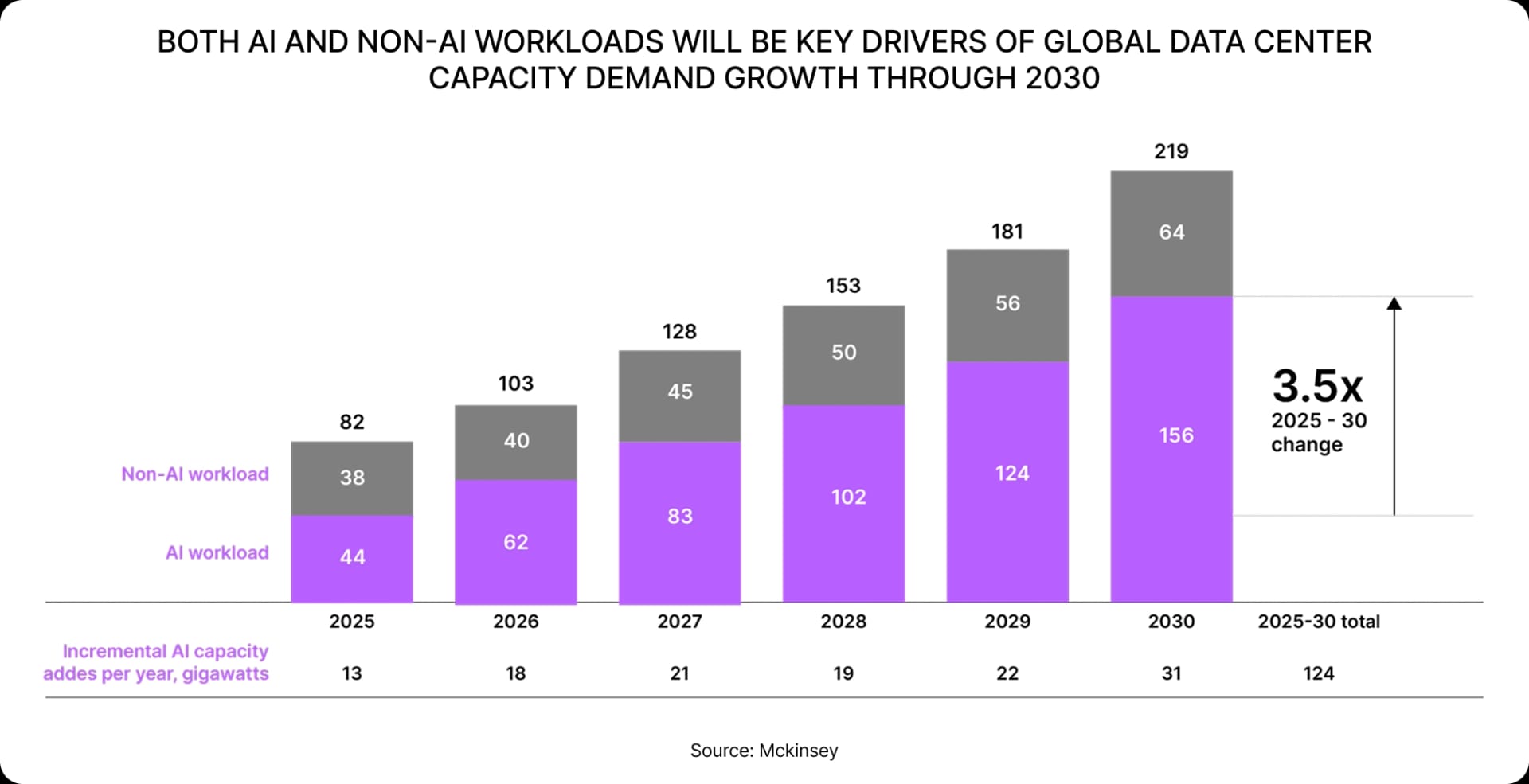
Storage and networking are also scaling rapidly. AI-related storage demand is projected to exceed 240 billion dollars per year by 2030, while high-performance networking for GPU clusters and retrieval systems is expected to surpass 100 billion.
These numbers also reveal the bottlenecks. At the silicon layer, supply is concentrated in TSMC’s advanced nodes and packaging capacity, both of which remain constrained. Power is another critical limit. The International Energy Agency projects that global data-centre electricity use will more than double by 2030 to roughly 945 terawatt hours, with AI-optimised facilities driving most of the increase.
The structure of the market makes these constraints even harder to manage. A small group of hyperscalers such as AWS, Microsoft Azure and Google Cloud, together with Nvidia’s DGX Cloud, controls most of the available capacity. Their pricing models, reservation systems and proprietary APIs make switching costly and keep customers locked into their ecosystems. Regulators are starting to respond.
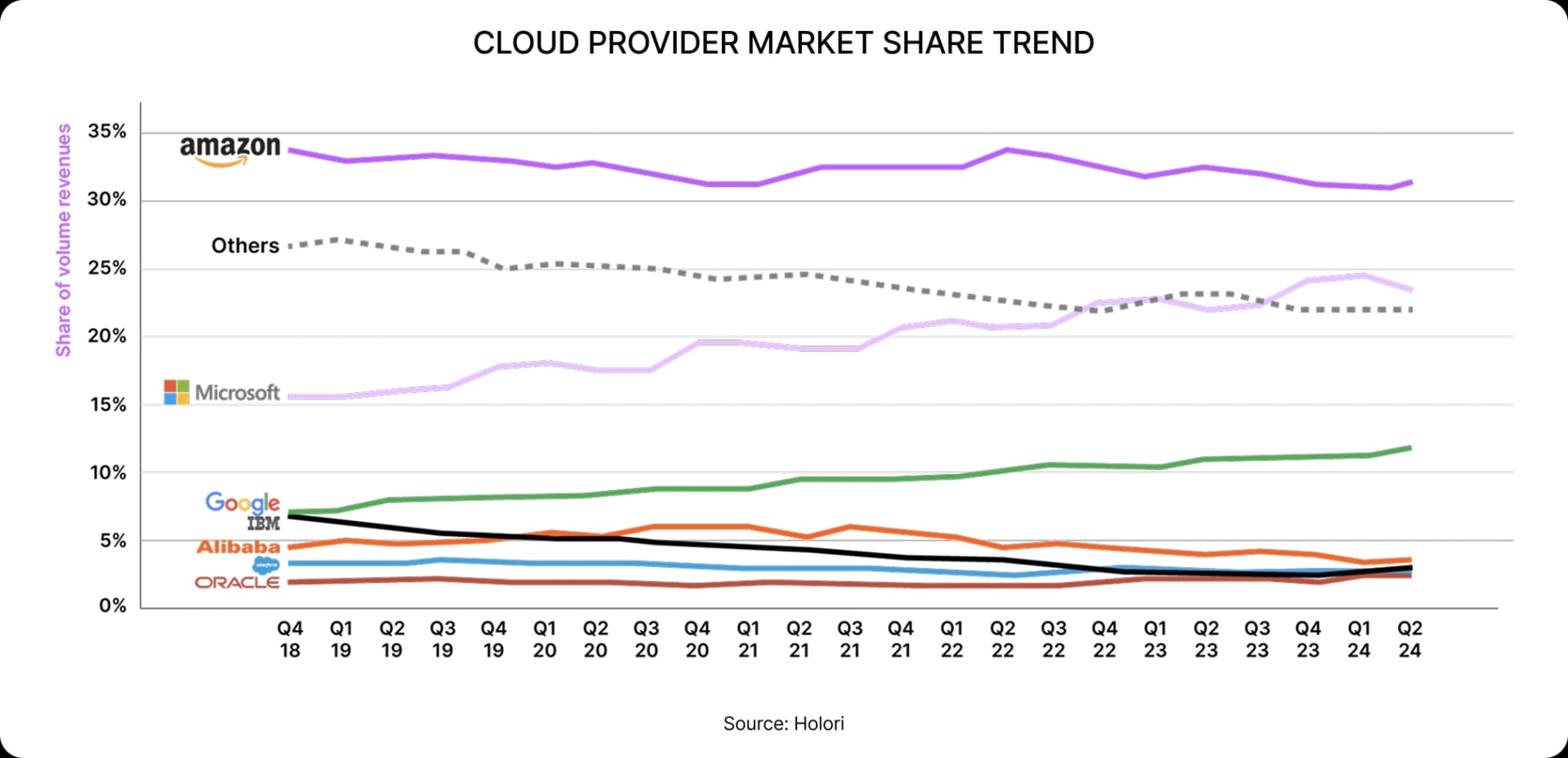
The UK Competition and Markets Authority has found that cloud infrastructure competition “is not working well,” citing egress fees, bundled services and long-term discounts as barriers to choice. The US Federal Trade Commission has raised similar concerns about preferential partnerships in the AI supply chain.
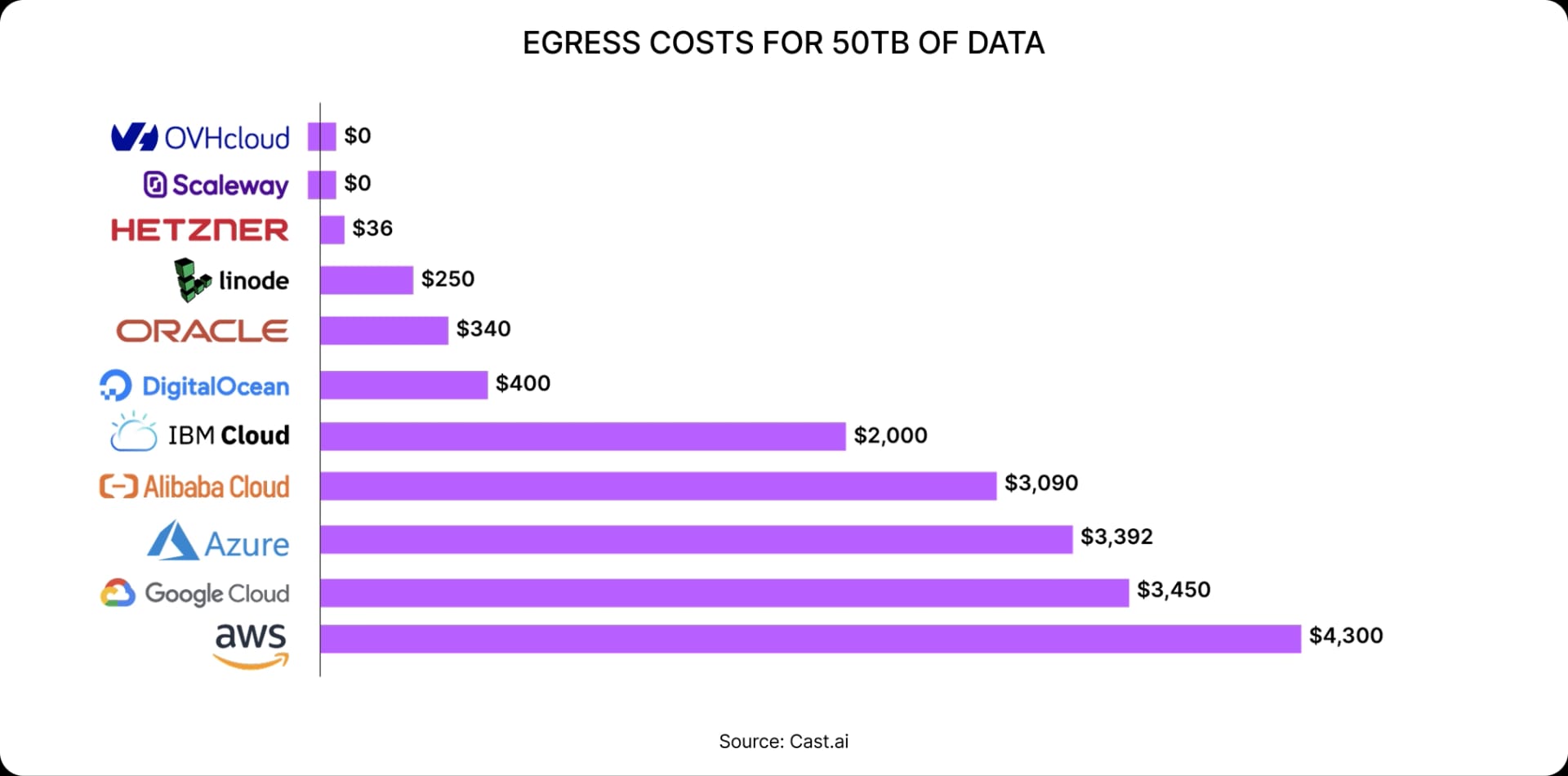
For startups, research labs and even governments, access to advanced compute increasingly requires long-term commitments to a handful of vendors.
Download the full report here
Download the "Building the Foundation for an Open AI Economy: The Case for 0G" report here (PDF)