




Introduction
The years 2024 and 2025 were significant for the institutionalization of BTC. ETFs, DATs, and a range of new catalysts brought BTC further into the mainstream, marking a major step in its integration with the traditional finance sector. As institutional participation has grown, however, a new divide within the Bitcoin ecosystem has become increasingly visible.
Two distinct systems for acquiring BTC have begun to emerge. Wall Street Bitcoin: institutional, compliant, and largely idle. On the other hand, there is Programmable Bitcoin: open, composable, and increasingly productive.
Although Bitcoin was built for open, peer-to-peer finance, the vast majority of its supply remains inactive. Only a small fraction, around 378,000 BTC by some estimates, is active in onchain DeFi, while the vast remainder sits in custodial accounts, ETFs, or other financial vehicles.
Even as BTC’s market capitalization surpasses $2 trillion and institutional holdings exceed $100 billion, with BlackRock’s IBIT ETF alone, nearing $89 billion, most of this capital is locked in passive structures, detached from onchain markets and liquidity.
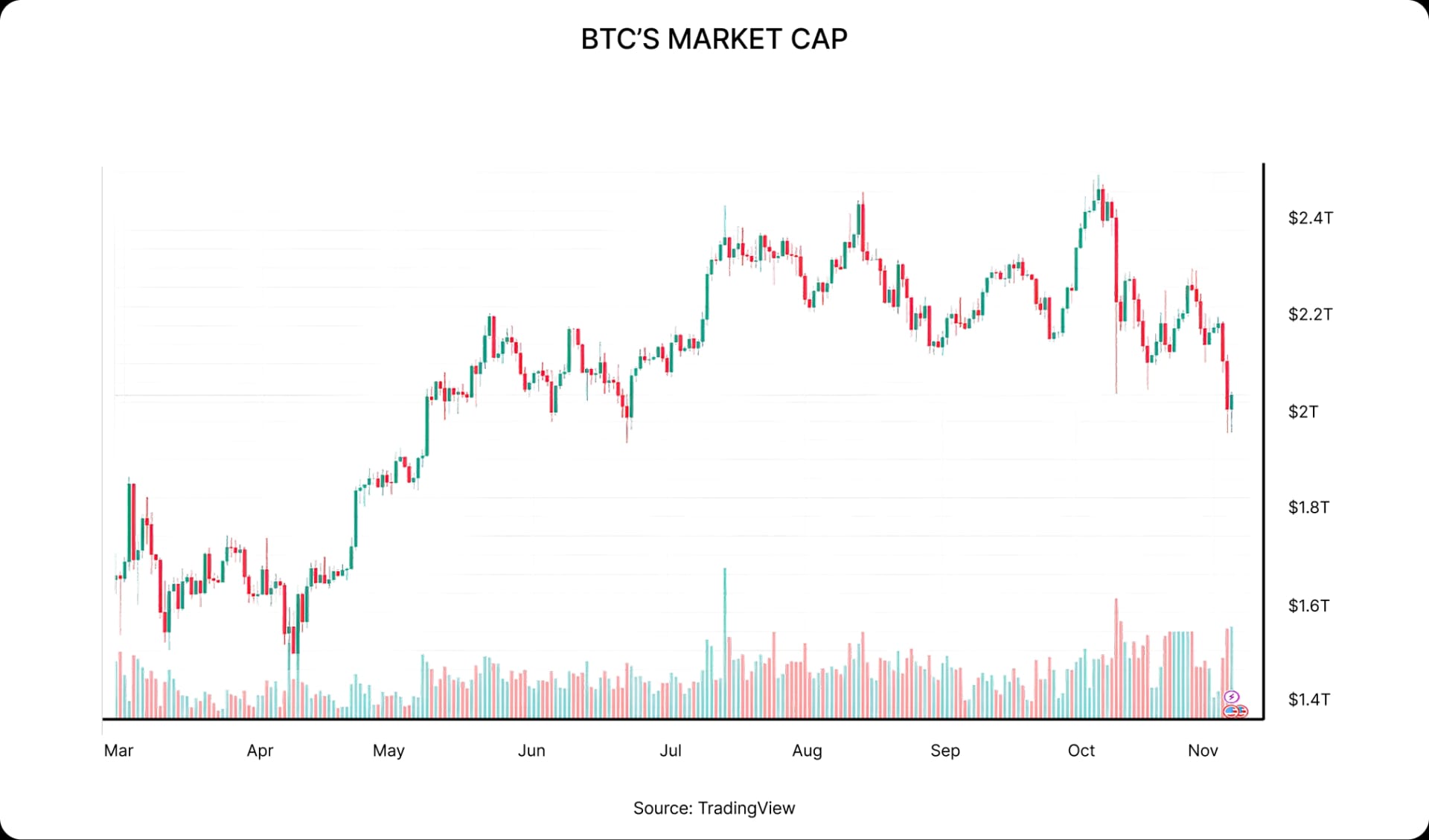
The First System: Wall Street Bitcoin
Institutional adoption has brought major benefits to BTC. Improved custody solutions, clearer regulations, and new investment products have made it accessible through mainstream brokerage accounts and financial platforms. ETFs and DATs have introduced exposure through familiar structures, while companies like Strategy have demonstrated BTC’s role as a treasury asset.
Today, BTC stands as a fully institutionalized asset, managed by firms such as BlackRock and Fidelity, and integrated into diversified portfolios worldwide. Yet this model also leaves most BTC holders financially inactive. Large portions of supply sit in custodial vaults or ETF structures, where participation is limited to price exposure rather than onchain use.
Even beyond these institutional holdings, a significant portion of the BTC held by individuals remains idle in wallets, primarily used as a long-term store of value. Across both systems, the result is the same: a significant share of BTC’s capital base is passive rather than productive.
The Second System: Programmable Bitcoin While
Wall Street Bitcoin has been vital for the asset’s growth and legitimacy, its next phase is unfolding into programmability.
After years of being held in custodial accounts and financial products, BTC is starting to integrate more directly with the broader crypto ecosystem.
The first example of this shift is Hemi, which demonstrates how BTC can move from a passive reserve asset to operating within an active financial infrastructure.
Hemi’s new infrastructure now allows BTC to move, trade, and interact with onchain applications without relying on wrapped tokens or insecure bridges. This opens the door for native BTC yield, creating an economic layer where previously idle capital can become productive while maintaining BTC exposure and supporting onchain liquidity.
This evolution is both technical and cultural. Bitcoin’s emphasis on security and simplicity once stood in contrast to the experimental design of smart contract platforms. Now, those approaches are converging as new layers combine Bitcoin’s security model with onchain programmability, enabling direct participation in onchain markets.
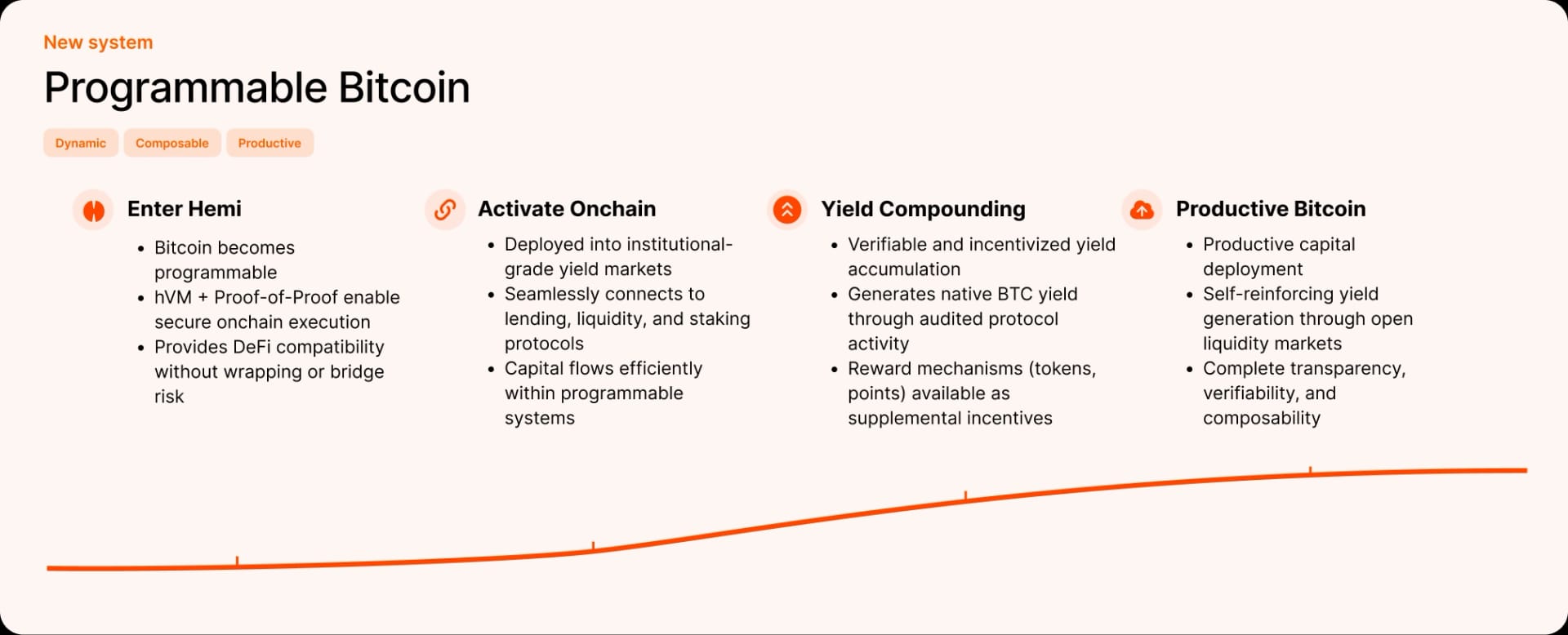
Productive Bitcoin Realized
Hemi serves as the missing link between BTC and programmability, enabling institutions, corporate treasuries, and individual holders to confidently and productively deploy their BTC.
Activating Bitcoin
The crypto ecosystem has long searched for a way to combine the best of both worlds: the security of Bitcoin and the programmability of Ethereum.
Hemi achieves this. It is designed to feel as familiar as an Ethereum Layer-2 network while fully integrating Bitcoin’s native capabilities.
This is how BTC becomes truly active and remains onchain, secure, composable, and ready to participate in the broader digital economy.
TradFi institutions store BTC in custodial products that limit functionality.
Activated programmable BTC on Hemi wields its full potential, becoming a yield-producing asset within an auditable, secure, and regulated framework.
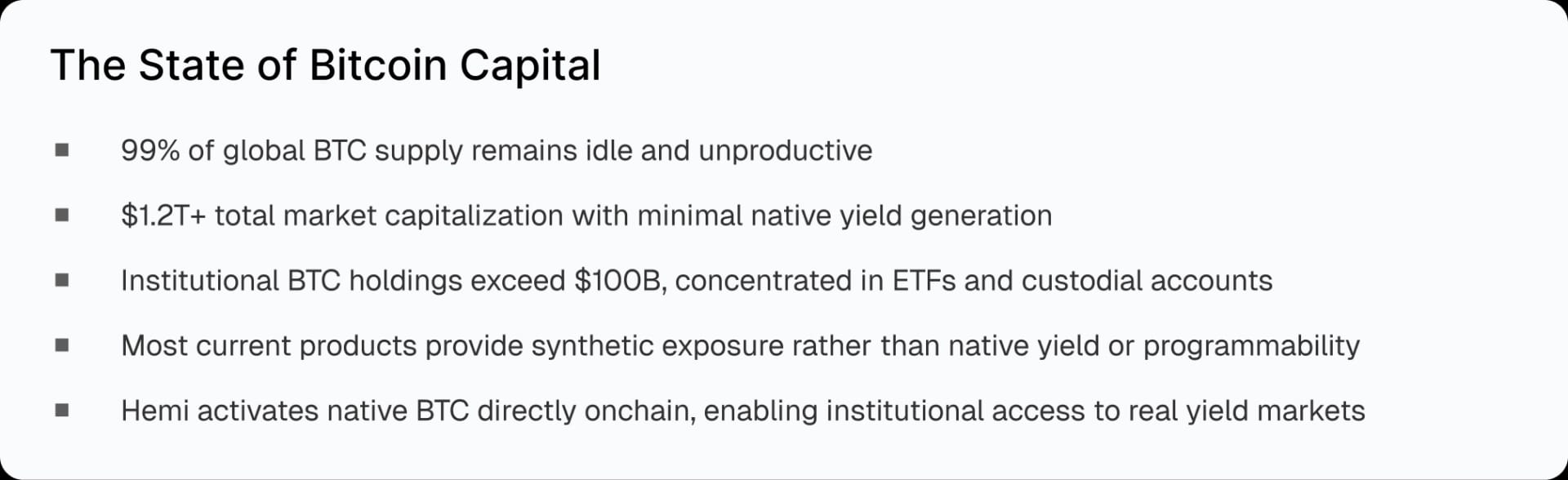
Architecture Overview
Hemi connects Bitcoin and Ethereum into a single supernetwork, allowing assets and data to move easily between the two ecosystems.
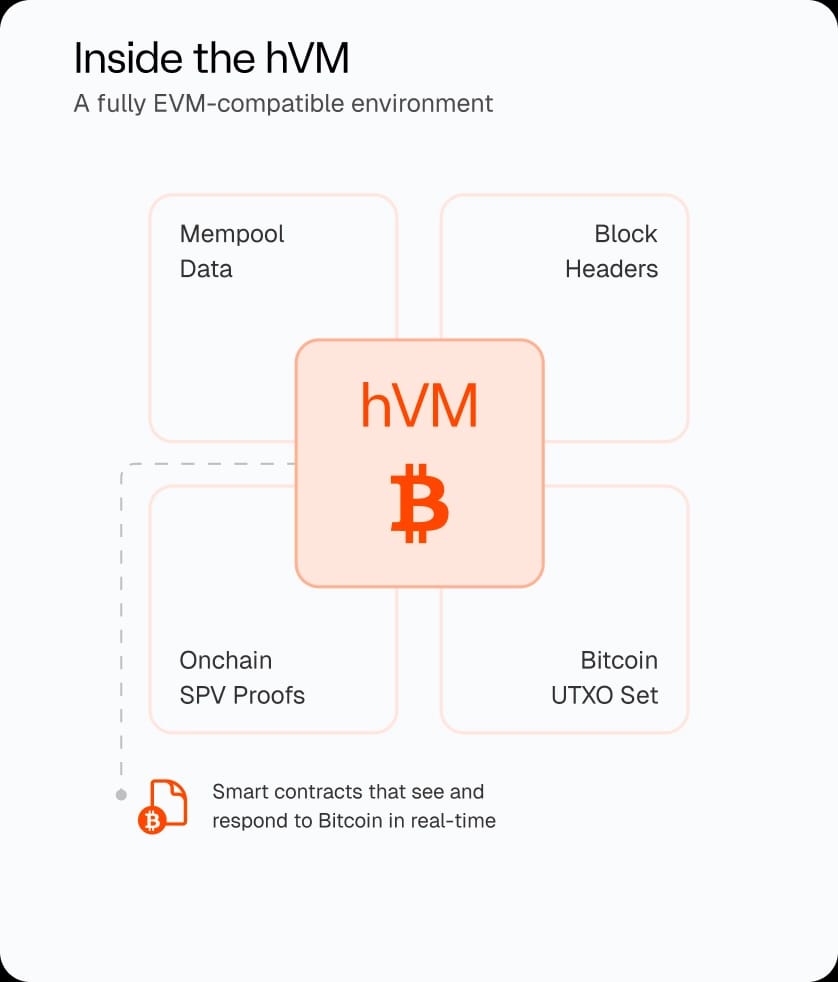
At the center is the Hemi Virtual Machine (hVM), which embeds a full Bitcoin node inside an Ethereum-compatible environment. This gives smart contracts direct, real-time access to Bitcoin’s state, including balances, transactions, and block data.
Developers can build Bitcoin-aware applications using standard Ethereum tools like Solidity on Hemi, without relying on bridges, oracles, or offchain relayers. This makes it easier to integrate BTC directly into onchain markets and applications.
Hemi’s security is anchored by Proof-of-Proof (PoP) consensus, which periodically records Hemi’s chain state onto Bitcoin following optimistic authentication. This process achieves a state of superfinality in about 90 minutes and gives Hemi the same security guarantees as Bitcoin itself without depending on external validators.
Bridging has been a major barrier to connecting BTC with the wider crypto ecosystem. Hemi overcomes this with its Tunneling System, which enables trust-minimized transfers of BTC and Ethereum-based assets between chains.
Transfers are validated directly by the protocol, removing the need for custodians or third-party intermediaries.
To simplify development, Hemi provides the Hemi Bitcoin Kit (hBK), a library designed for building on the hVM. It gives developers straightforward access to Bitcoin data, such as balances and transactions, making it easy to integrate Bitcoin functionality directly into onchain applications.
Hemi: Yield Opportunities
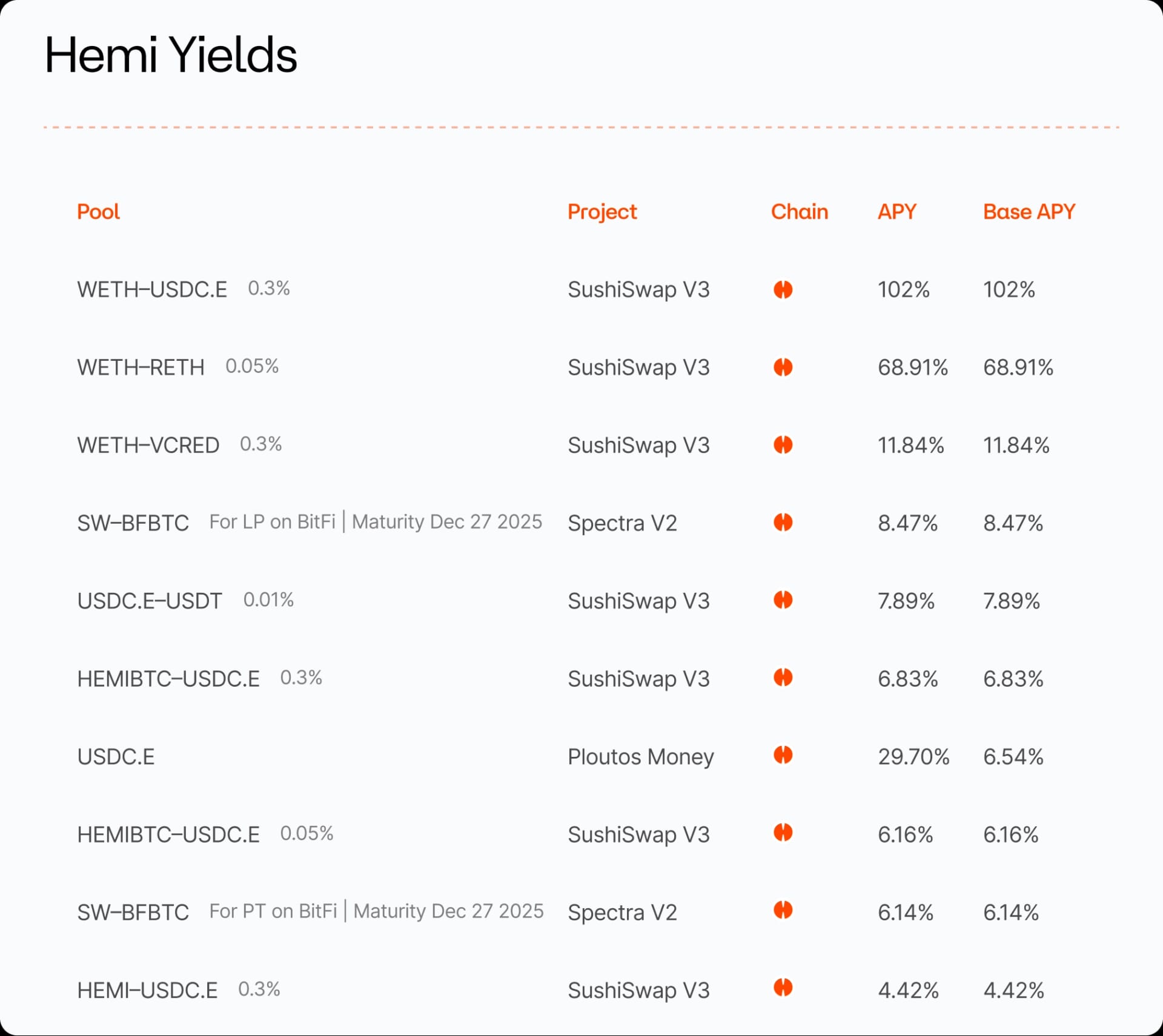
Hemi enables BTC to generate income in ways that were previously difficult or impossible. Institutions, treasuries, and individual holders can earn returns while keeping BTC secure.
The opportunities to generate yield on BTC are significant. Hemi supports a full range of strategies, from conservative to high-conviction.
Examples include:
- Lending and Borrowing: Deposit BTC-backed assets such as hemiBTC or bfBTC into decentralized lending markets to earn a liquidity return.
- Liquidity Provision: Supply BTC to automated market makers and liquidity pools to earn trading fees and protocol rewards.
- Fixed-Rate and Leveraged Products: Use platforms like Spectra, Morpho, and Gearbox for fixed-income tokens, leveraged strategies, and vault-based returns.
- Incentives: Programs like Merkl reward participation in lending, staking, or liquidity provision, further increasing yield.
The World's Largest Bitcoin Programmability Layer
From top-tier liquidity giants to next-gen protocols and apps, Hemi is where the industry's innovators build. With over 90 + partners, $1.2B in TVL, and new ecosystem deployments weekly, can you believe we're just getting started?
Wall Street Bitcoin Becomes Productive
As yield becomes a central focus in asset management, institutional BTC will increasingly move onchain and into productive ecosystems, like Hemi.
Custodial solutions have played a crucial role in providing adoption, security, and compliance, but they represent only part of BTC’s financial potential. Passive holding limits capital efficiency, and both institutional investors and Digital Asset Treasuries (DATs) are looking for returns that extend beyond price appreciation.
Hemi enables this shift by allowing BTC to participate in real-time financial activity while remaining secured by Bitcoin’s Proof-of-Work. It combines institutional-grade self-custody standards with onchain programmability, creating a compliant and efficient environment where BTC can become active, composable, and yield- generating.
Designed for regulatory maturity and institutional fit, Hemi provides a path for Digital Asset Trusts and compliant treasuries to access BTC-based yield opportunities without compromising governance or security. It offers transparency, programmable liquidity, and a structure that aligns with existing institutional frameworks.
By connecting custodial BTC with onchain finance, Hemi bridges the gap between traditional and decentralized markets. The same capital that once sat idle can now participate productively, marking the next phase in BTC’s evolution from static reserve to active financial infrastructure.
Download the full report here
Download the "Hemi: one bitcoin, two systems, and the link between" report here (PDF)