

Financial markets are entering a phase of convergence, where the historical separation between traditional finance and crypto is gradually breaking down. Assets, liquidity and users are no longer confined to distinct systems, but are increasingly moving across shared infrastructure.
In this context, platforms such as Binance are emerging as more than trading venues. By expanding access to traditional assets within a 24/7 crypto-native environment, they are beginning to act as a bridge between both systems.
This article explores that shift. It examines how traditional and crypto markets are converging, and how Binance’s expansion into commodities reflects a broader transition toward continuous, 24/7 price discovery across asset classes.
Two systems, one structural gap
For most of their history, traditional finance and crypto have operated as two separate systems. Crypto assets were traded on blockchain-native infrastructure, while traditional financial instruments remained confined to regulated exchanges, brokers and fixed trading hours. That separation is now breaking down.
Traditional markets are moving toward continuous trading
On the one hand, traditional markets are moving toward faster, more continuous trading environments. Nasdaq has announced plans to enable 24-hour trading on the Nasdaq Stock Market, while NYSE Arca has received approval in 2025 to extend its hours as part of a broader shift toward near-round-the-clock access. At the broker level, firms such as Robinhood already offer 24-hour trading in selected U.S. equities, and platforms like Blue Ocean ATS were built specifically to support overnight trading.
These developments reflect a growing demand for global, always-on access to financial markets. An increasing share of activity now comes from investors operating outside U.S. hours, with around 70% of overnight volume originating from Asia. At the same time, a significant portion of market returns is generated outside regular trading hours. Between 2020 and 2025, SPY delivered +47% overnight returns versus +29% intraday, while QQQ posted +53% overnight versus +30% intraday.
Still, legacy infrastructure continues to impose constraints. Markets shut down for several hours each day, creating gaps in price discovery while news and capital flows continue to evolve. As a result, investors are often unable to react in real time and adjust their positioning accordingly.
Crypto infrastructure expanding beyond native assets
On the other side, crypto has already demonstrated what a continuous market structure looks like. Trading is always on, settlement is faster, collateral is more mobile, and users can manage positions without waiting for markets to reopen.
Interestingly, what began as a system designed for native crypto assets is now expanding beyond that scope to include more traditional financial exposure. Stablecoins were the first clear signal of this shift. Initially used as trading pairs, they have evolved into a broader financial layer supporting payments, derivatives, collateral, treasury management and yield strategies as discussed in our recent article on stablecoin usage on BNB Chain.
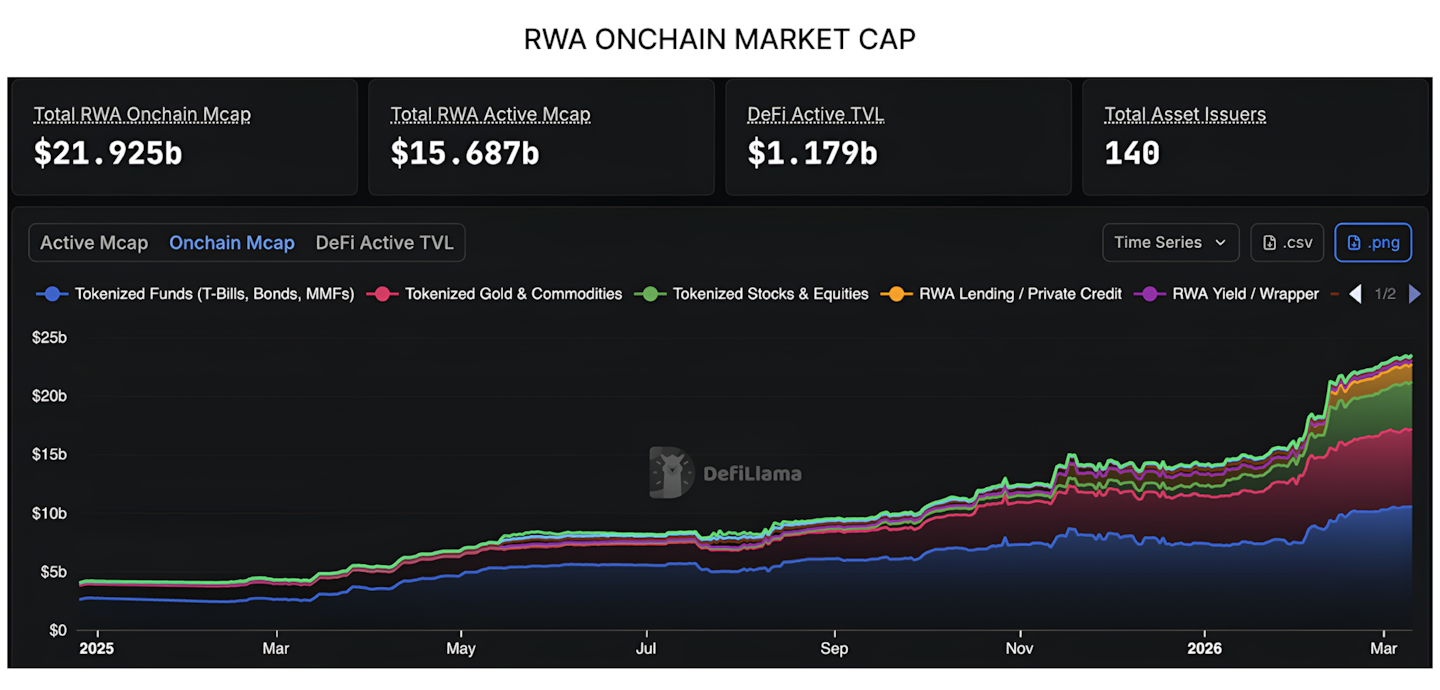
The same dynamic is now visible across real-world assets. Since March 2025, the onchain RWA market has grown from approximately $4.3 billion to around $22 billion, highlighting that demand for traditional financial exposure within crypto environments is no longer marginal.
This migration is likely to continue, driven by advantages such as faster settlement, improved capital efficiency and composability. However, key limitations remain. Security risks, custody concerns, regulatory uncertainty and user experience challenges continue to act as barriers to broader adoption.
Convergence is the next step
Together, these dynamics highlight a structural convergence. Traditional markets are moving toward continuous trading, while crypto infrastructure is expanding toward traditional assets. The remaining gap lies not in demand, but in the infrastructure required to support continuous price discovery across both systems. This convergence becomes particularly visible when looking at specific asset classes.
Commodities as one of the first RWAs adapting to 24/7 markets
Among traditional assets, commodities provide one of the clearest illustrations of this shift. The broader commodity complex represents more than $135 trillion in nominal value, spanning energy, precious metals, industrial metals and agricultural products. In practice, most participants don’t seek physical delivery, but rather exposure through instruments such as ETFs, futures, options and perpetuals.
In other words, commodities are well suited to market structures built around access, liquidity and continuous trading rather than ownership alone.
If the primary objective is always-on price exposure, then always-on crypto infrastructure is the obvious option. Audited reserves and transparent collateral backing can often be sufficient to recreate the asset’s economic function without reproducing the full logistical complexity of the underlying commodity.
In that sense, bringing commodities onchain does not create a new market, but introduces a new 24/7 access layer to an existing liquid market.
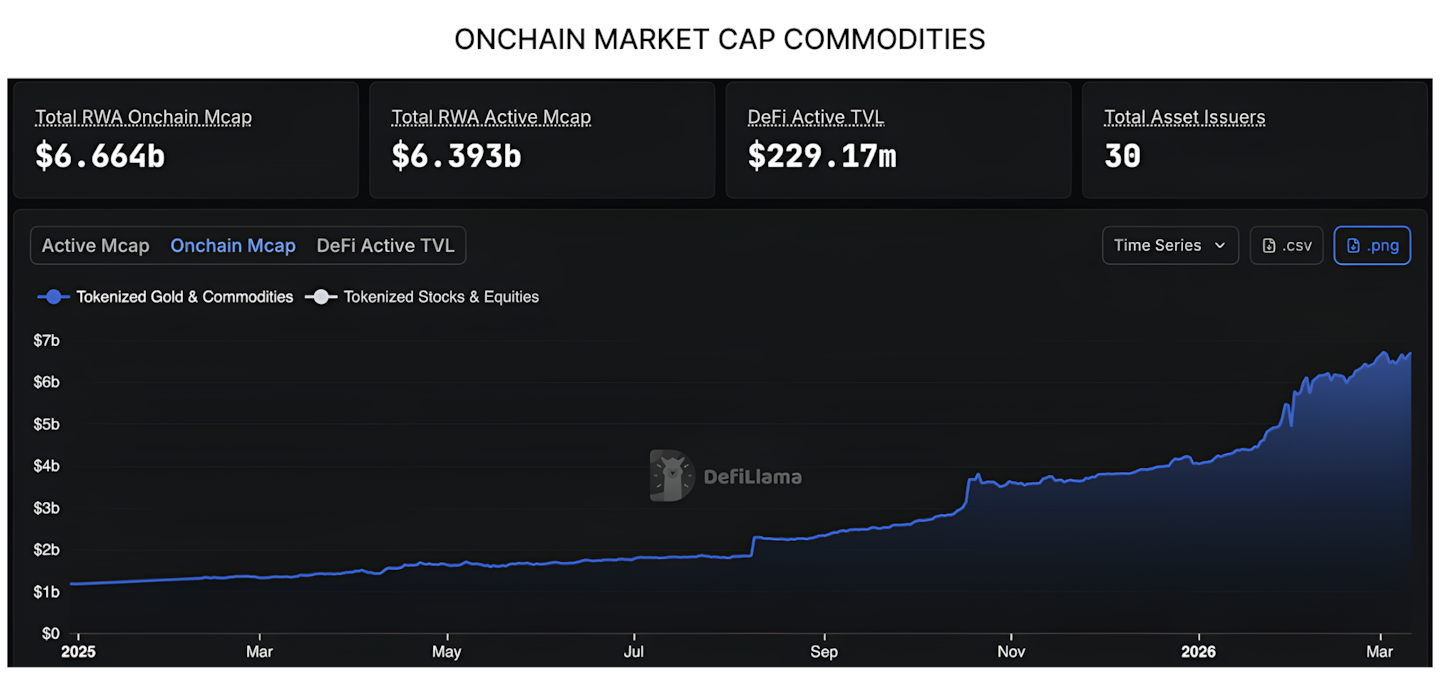
The data shows that this shift is already underway. Tokenised commodities have grown from roughly $1.1 billion to around $6.4 billion over the past year, making them one of the largest real-world asset categories onchain after tokenised U.S. Treasuries.
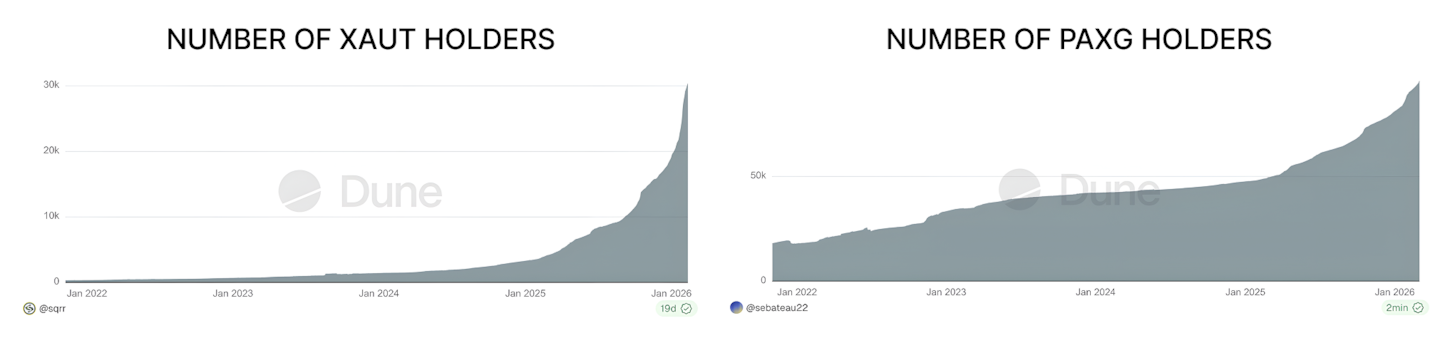
Growth remains highly concentrated, with roughly 95% of the market centred on tokenised gold through XAUT and PAXG. XAUT, at around $3.7 billion, and PAXG, at around $2.4 billion, form the backbone of the sector. Their holder growth has also been strong, with XAUT rising from roughly 3,000 to more than 30,000 holders and PAXG increasing from 48,000 to 98,000 within a year. This suggests that product-market fit is emerging first in the most liquid and familiar part of the commodity universe: gold.
The transition becomes clearer when looking at how these assets are used. Commodities onchain are no longer simply static representations held in wallets. They are increasingly traded across spot markets, perpetual exchanges and DeFi applications, reflecting a shift toward continuous, always-on market activity.
As an example, cumulative DEX volume for tokenised gold has increased from roughly $1.4 billion to more than $8.4 billion over the past year. The share of PAXG transactions routed through decentralised exchanges has also risen from around 5% to nearly 20%, suggesting that these assets are increasingly traded around the clock rather than merely transferred or stored.
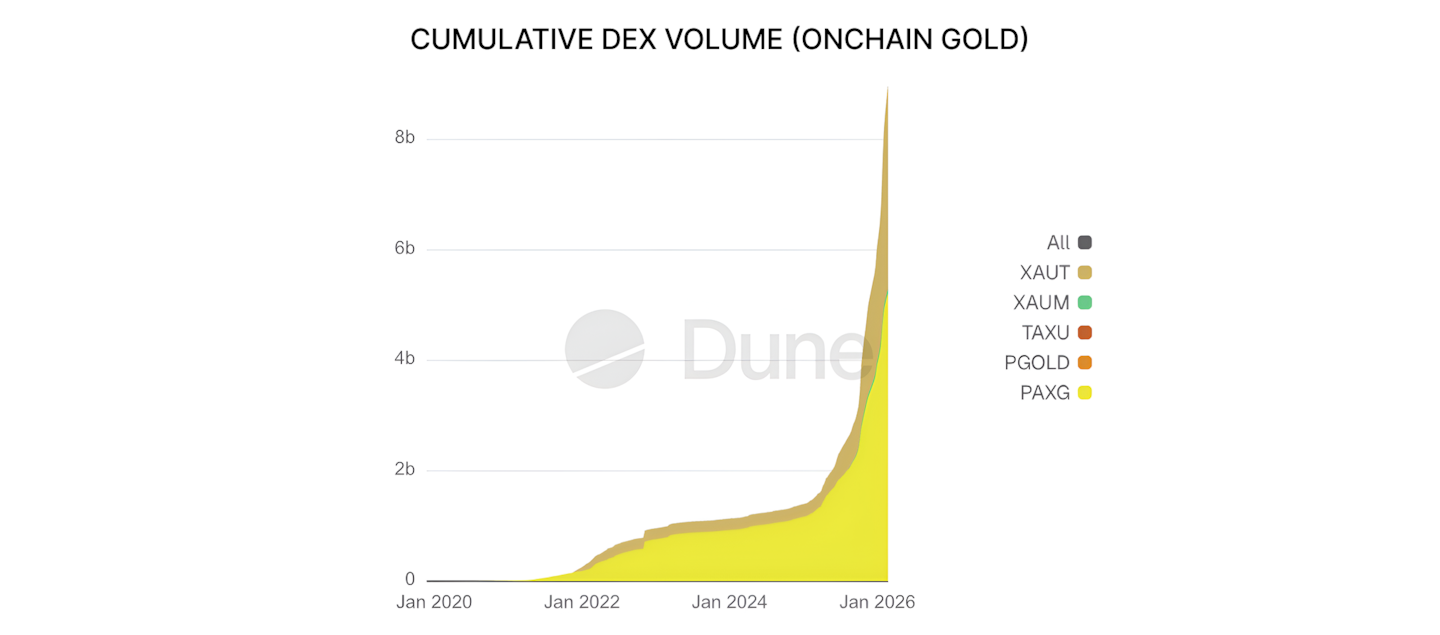
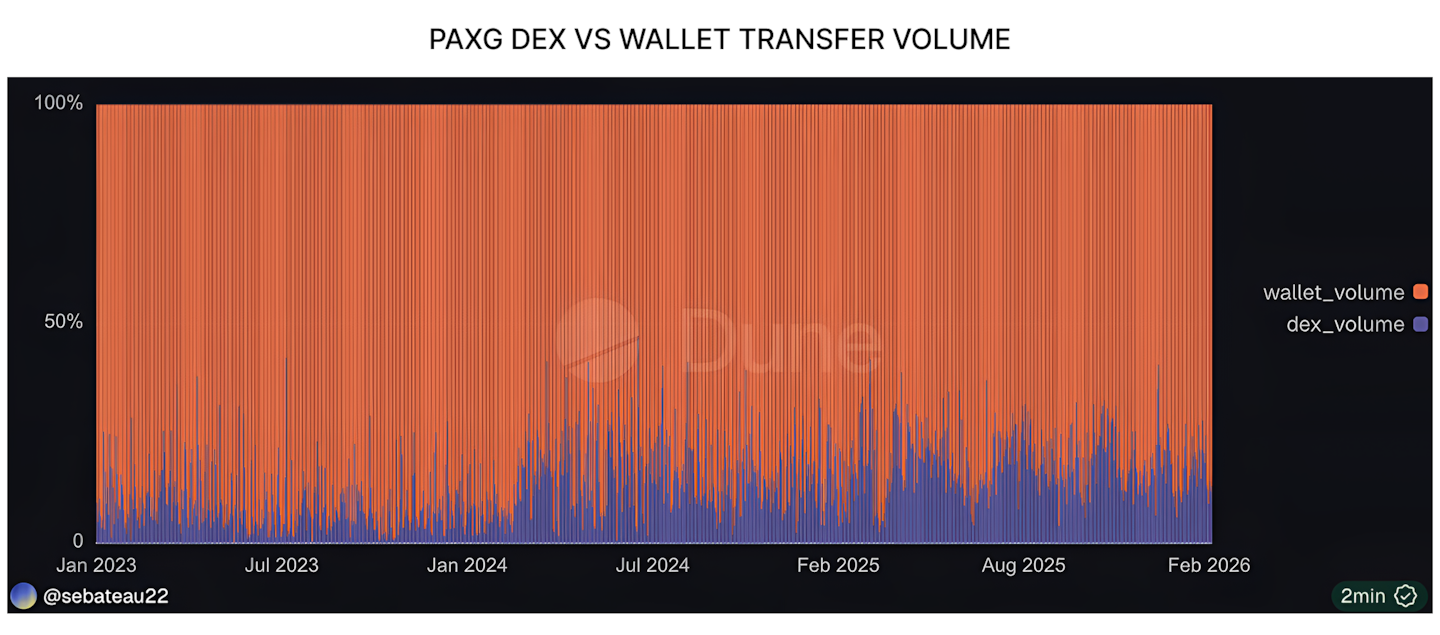
This shift from passive exposure to active trading introduces a structural requirement. As commodities transition toward continuous, 24/7 markets, the infrastructure supporting them must evolve to enable deep liquidity, global participation and real-time price formation.
Binance as a 24/7 price discovery engine for commodities
Meeting these requirements demands infrastructure capable of sustaining continuous trading at scale. This is where platforms such as Binance play a critical role: providing access to commodities while enabling real-time price discovery through deep liquidity and perpetual markets.
Perpetual contracts serve not only as a tool for accessing commodities but also as a primary mechanism for price discovery. Unlike traditional futures, they trade continuously, incorporate leverage and enable constant positioning across market participants. Funding rates and arbitrage dynamics help anchor prices to broader market expectations, while high-frequency trading activity ensures that new information is rapidly reflected in pricing.
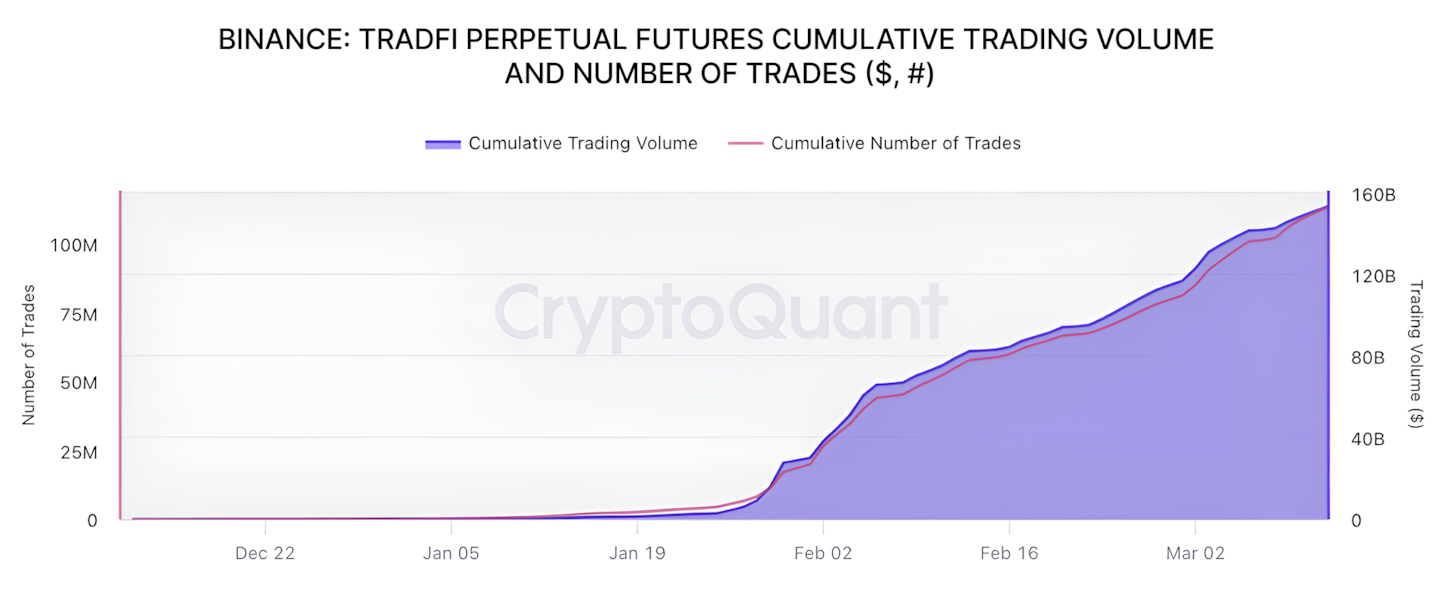
Early data suggests that Binance plays a key role in price discovery. In just a few months, Binance’s commodity perpetuals surpassed $153 billion in cumulative trading volume, with more than 113 million executed trades. This level of activity is a key component of price discovery itself. Continuous trading, dense execution flows, and global participation create an environment in which prices are formed dynamically rather than adjusted at discrete intervals.
The composition of this activity mirrors broader market dynamics, with gold and silver dominating. On March 3, daily trading volume reached approximately $3.77 billion for gold and $3.75 billion for silver, with earlier peaks even higher. On January 30, gold approached $4 billion in daily volume, while silver reached roughly $7 billion.
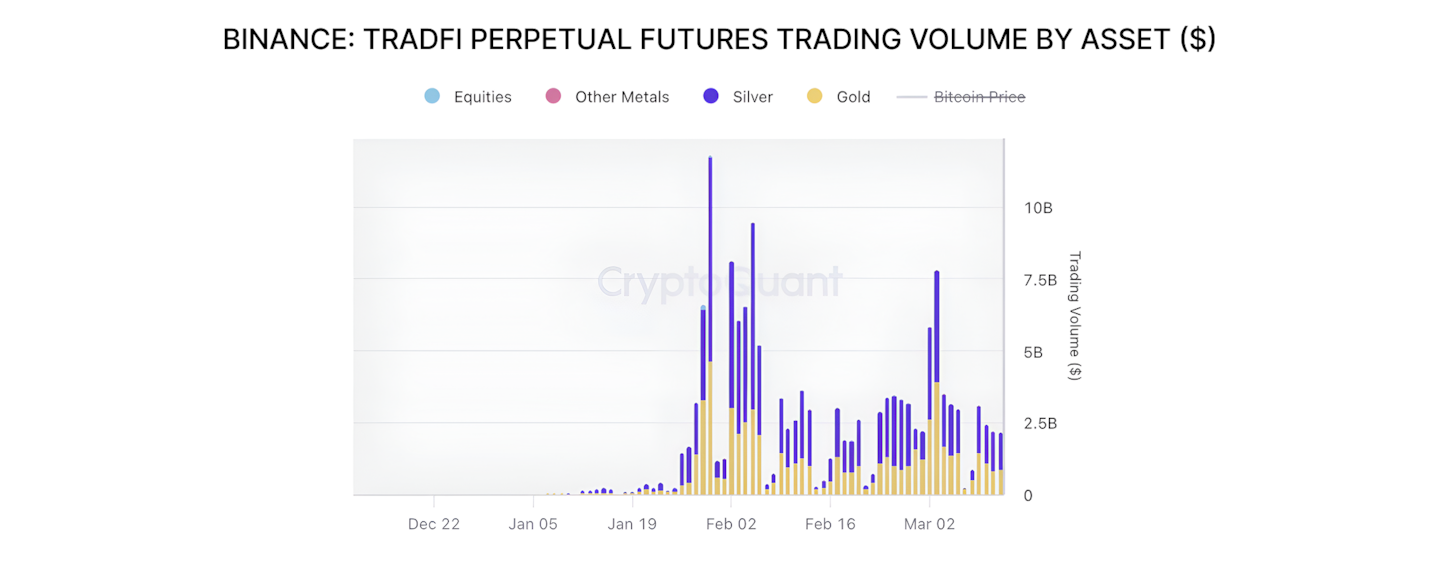
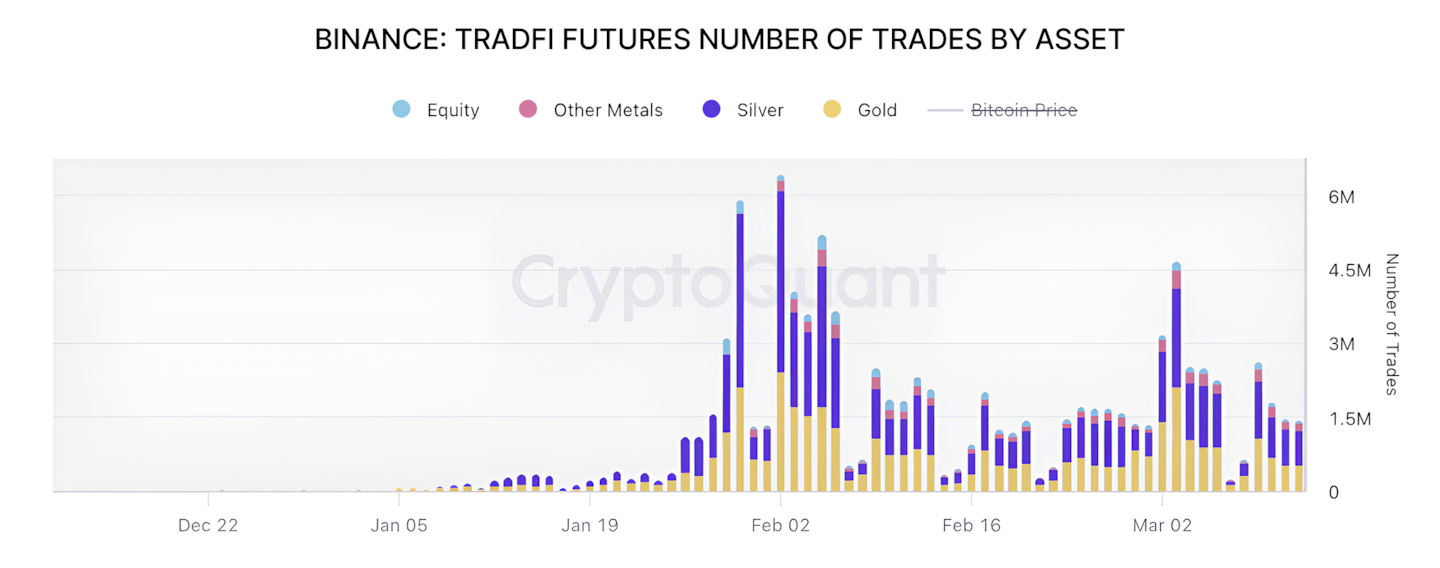
Trade counts reinforce this dynamic. In one session, total activity reached roughly 4.4 million trades, including 2.0 million in gold and 1.9 million in silver. On February 2, activity exceeded 6.3 million trades, with silver alone accounting for nearly 3.7 million. This level of continuous participation across time zones enables prices to evolve in real time rather than adjusting in discrete intervals.
This highlights Binance’s role on both sides of the transition. It lowers barriers for traditional users by providing 24/7 access through a familiar interface while, more importantly, enabling continuous price discovery. In traditional commodity markets, prices are formed within fixed trading hours, even though information, macro events and capital flows evolve globally at all times. This creates gaps where markets reopen with delayed adjustments rather than reflecting real-time conditions.
By contrast, Binance’s always-on trading environment allows commodity prices to update continuously as new information emerges. This results in a pricing mechanism that is continuous, globally distributed and more responsive to macro events unfolding outside traditional trading hours.
In that sense, Binance is not simply facilitating access to commodities. It contributes to a structural shift in price formation, moving from fragmented, time-bound markets toward continuous, globally integrated price discovery.