



- Memecoins hit the mainstream in 2025.
- You can thank politicians for that.
- Still, many coins and tokens didn't break new highs.
Memecoins ran out of favour in 2025.
The sector reached a peak total market value in December 2024 of $150 billion following US President Donald Trump’s election. It has since fallen 65% and is now worth just over $53 billion, according to CoinGecko data.
So what happened? Well, it’s a wild ride of scandals, controversies and lawsuits.
Let’s dig in.
Trump kicks off 2025
US President Donald Trump started his second term in the White House with a bang. Before the new commander in chief was sworn in, his team dropped a memecoin on January 18.
Official Trump is a token running on the Solana network.
Its value exploded to a record high of $8.7 billion in January before crashing over 90% to trade at just over $1 billion, according to CoinGecko, making it the 96th biggest cryptocurrency.
Hello! This chart will be available in a few moments
Trump’s political opponents have spent the bulk of the year pointing at the token as evidence of alleged corruption.
The administration has denied any wrongdoing.
“President Trump’s assets are in a trust managed by his children. There are no conflicts of interest,” Anna Kelly, the deputy press secretary, told DL News in May.
And then Melania, too!
A token dedicated to the president’s wife, Melania Trump, also debuted a Solana-based asset on January 20.
The Melania token surged as much as 12,000% in 24 hours.
The asset then quickly crashed as some investors cashed out. The token is now well below its market cap high of nearly $625 million — having shed 98% of its value.
The team behind the memecoin described it on its website as “intended for collecting and entertainment purposes only” and “not financial instruments or investments.”
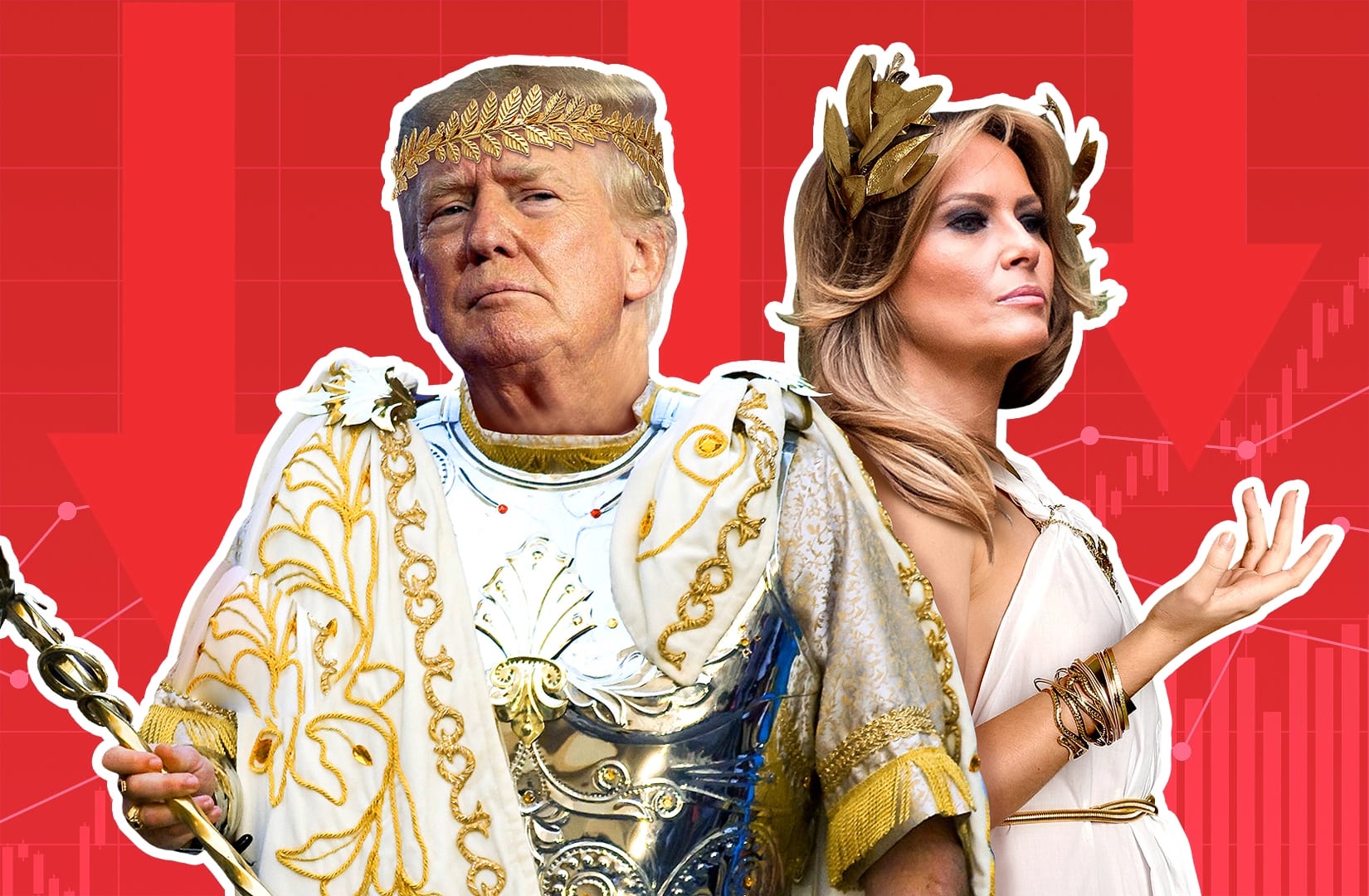
Still, the Solana-based exchange behind the controversial Trump and Melania token was hit by a class-action lawsuit in October, with plaintiffs accusing it of orchestrating a pump-and-dump scheme.
The Milei memecoin
In February, Argentina’s president and Trump ally Javier Milei also promoted a Solana-based meme token.
LIBRA, which shouldn’t be confused with the failed Meta-touted project, quickly caused controversy after Milei tweeted that it would “focus on encouraging the growth of the Argentine economy, funding small businesses and Argentina ventures.”
Following the post, the memecoin shot up in value to over $4.5 billion.
But hours later, a massive sell-off saw the token crash by 97% in value.
Milei later deleted the promotional tweet and claimed ignorance of the project’s underpinnings.
The move triggered a federal investigation in the South American country, with lawyers and Milei’s political opponents alleging fraud.
The investigation was dropped months later.
End of memecoins?
The booms and busts of the beginning of the year saw several people declare the end of memecoins.
In February, Matt Hougan, chief investment officer at asset manager Bitwise, was one among them.
He argued that the memecoin controversies combined with the fact that some of the proceeds of the $1.5 billion Bybit hack were reportedly used to launch a memecoin, meant “the death of the memecoin carnival.”
Pump.fun ICO
Memecoins may have been subdued in the second half of the year, but for Pump.fun things only heated up.
The memecoin generator raised $500 million in an initial coin offering in July. While Pump.fun today makes up 80% of the daily new tokens deployed, it faces competition from the likes of new upstart LetsBonk.
Pump.fun’s market cap has slumped 40% to $1.3 billion over the past year.
The company also faces a lawsuit in 2026 where investors claim it collaborated together with Solana Labs, the Solana Foundation, Jito Labs, and the Jito Foundation to create an “insider-rigged casino.”
The accused parties have called on the judge presiding over the case to throw it out, arguing that isn’t specific enough
“It asserts that Pump.fun touted launches as ‘fair,’ ‘safe,’ and ‘rug-pull proof’ but pleads no presales, insider allocations, or rug pulls,” Pump.fun said in its motion to dismiss. “Vague assurances of fairness and safety are, at most, ‘non-actionable puffery.’
Memes hit Wall Street
Memecoins also made their way to the mainstream via investment vehicles.
A slew of applications from fund managers wanting to release exchange-traded funds that give investors exposure to memecoins landed on the SEC’s desk.
But the first fund giving investors exposure to the biggest and oldest memecoin, Dogecoin, quietly hit markets: the REX-Osprey Dogecoin ETF, got off to a big start in September, bringing in $6 million in trading volume in the first hour.
Hello! This chart will be available in a few moments
Grayscale then in November got the green light to put its Dogecoin ETF, GDOG, on the market. It brought in a modest $1.4 million in daily trading volume.
Despite a more pro-crypto approach from the SEC this year, and industry observers expecting trading following the roaring success of the US Bitcoin and Ethereum funds, dozens of memecoin ETF applications have not been approved.
Yet, despite the setbacks, the subset of the industry is still here.
Mathew Di Salvo is a news correspondent with DL News. Got a tip? Email at mdisalvo@dlnews.com.