

- Phenomenon sees trapped liquidity spark artificial price surges.
- Ubpit made ‘$340,650’ in a day from commission fees ‘fuelled by fence pumping.’
- Instances of fence pumping date back to at least 2020.
On Monday, the South Korean crypto exchange Upbit recorded hundreds of millions in won on commission fees — just a week after a devastating $36 million hack.
A security breach typically sends traders heading for the hills.
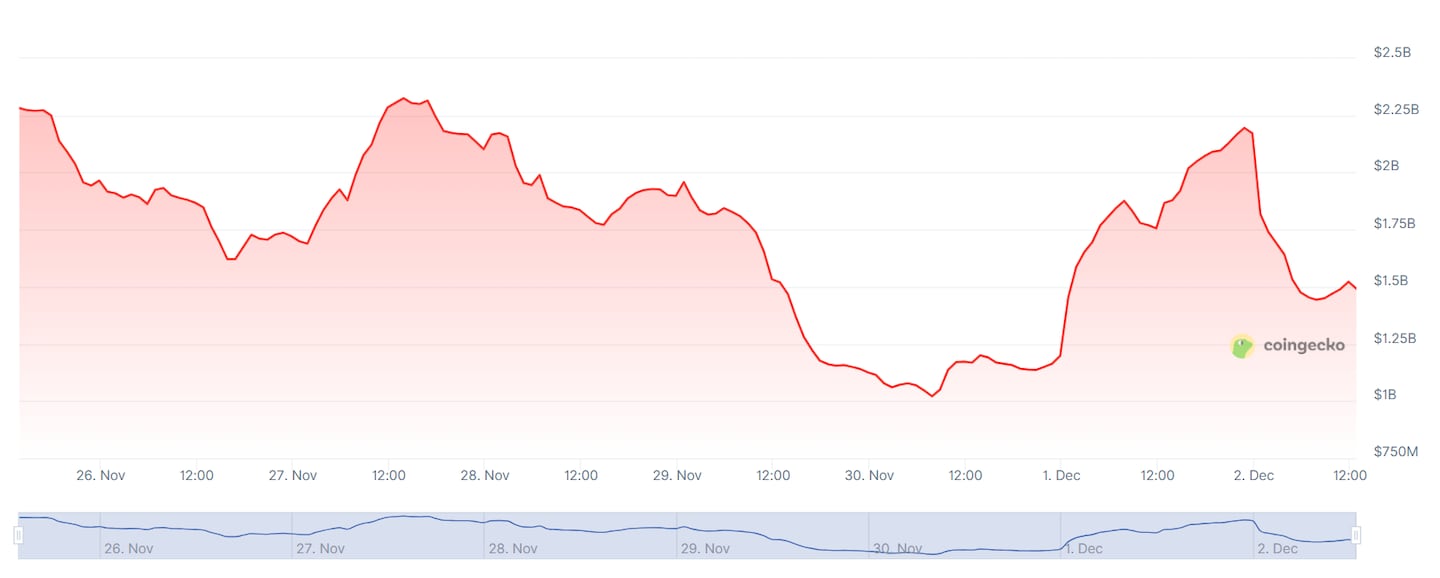
Instead, Upbit’s trading volume pushed past $2 billion, a whopping 27.5% rise from the previous day.
The reason, say South Korean crypto insiders, is a uniquely South Korean phenomenon named “fence pumping.”
“We usually see this phenomenon occur when a leading South Korean exchange suspends deposits and withdrawals, due to a hack or an outage,” a Busan-based crypto trader named Kim told DL News.
He spoke with DL News on condition that his given name was withheld.
“When traders are unable to take their funds off the platform, that leads to surges in their buying power,” Kim said.
“And that results in a rapid rise in prices on the exchange.”
When those coins surge, it incentivises investors to pile in on those skyrocketing prices, in the hope that prices will surge yet higher.
What is fence pumping?
Fence pumping is a common occurrence in South Korea.
Paradoxically, it means that exchanges that suffer security breaches — like the heist that saw $36 million looted from Upbit last week — can benefit from them.
On Upbit, the token behind Orca, a decentralised exchange on Solana, saw its price surge by over 100% after the hack, but quickly returned to the global average price range.
‘Many investors don’t understand how it works. They see the price spike and think it’s real positive news. They buy in. Then the price crashes, and they lose money.’
— Jay Jo, an analyst at Tiger Research
The token for Meteora, another Solana-based DEX, also saw similar drops after a sharp price increase.
As traders piled in, Upbit benefited by charging a 0.05% commission on trades made on the platform, which saw the crypto exchange collect over $340,650 in a single day, according to local media outlet TVChosun’s calculations.
The flurry of fence pumping-related activity appears to have died down abruptly on Upbit in the early hours of December 2, dropping from a high of $2.2 billion at 10:50pm GMT on December 1 to $1.4 billion at 7:50am GMT today.
South Korean market menace
Fence pumping has been wreaking havoc in the South Korean crypto market for years.
In 2020, the financial journalist Moon Ho-jun, writing in the South Korean newspaper Maeil Kyungjae, explained that when coin prices rise fast on one exchange, “prices on other exchanges follow suit.”
Analysts say it’s a noxious trend.
“Some South Korean investors use this as a trading opportunity. But it’s a real problem in the South Korean crypto market,” Jay Jo, an analyst at Tiger Research, told DL News.
“Many investors don’t understand how it works. They see the price spike and think it’s real positive news. They buy in. Then the price crashes, and they lose money.”
In a 2023 paper from the market intelligence provider Tiger Research, analyst Jay Jo equated fence pumping with the menace of price manipulation.
He pointed out that rival exchanges like Bithumb had also experienced the phenomenon in the wake of hacks.
“Fence pumping does not occur automatically as a result of the suspension of deposits and withdrawals,” said Jo.
“Instead, it is a form of price manipulation brought about by specific speculative forces. That’s why investors should exercise caution rather than expect price surges [after hacks].”
Tim Alper is a news correspondent at DL News. Got a tip? Email at tdalper@dlnews.com.