

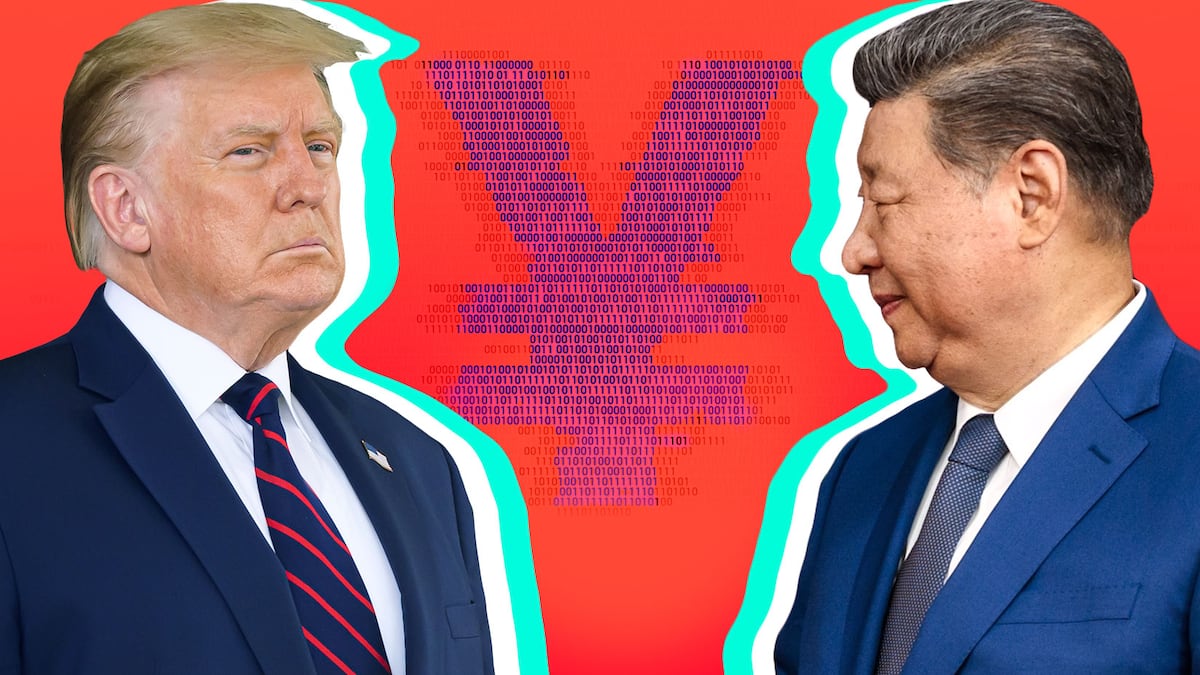
- Beijing is betting hard on the digital yuan.
- China is promoting its CBDC on a global stage in 2026.
- But will it really challenge the dollar?
President Donald Trump has given China an opportunity to strengthen its grip on the global economy.
Since taking office, the 79-year-old’s erratic foreign policies have shaken confidence in the US dollar — and China is seizing the opportunity.
Over the past year, Beijing has promoted greater usage of its digital renminbi as an alternative in cross-border payments.
In 2026, the People’s Bank of China, or PBoC, will ramp up those efforts by championing the international usage of the digital yuan as part of the ruling Communist Party’s 15th five-year plan.
“While it’s unlikely to upset the dollar dominance applecart anytime soon, it certainly should be looked at as a statement of intent by China,” Sean Tuffy, a financial regulation expert, told DL News. “It continues to lay the foundation for a possible world where the dollar isn’t king.”
Beijing has no shortage of reasons to want to challenge the greenback’s iron grip on the global economy. Higher demand for the renminbi will strengthen its value, which is something China’s President Xi Jinping is increasingly pressured to do.
If the yuan’s value rises, then it will be cheaper for Chinese businesses to import goods and boost the currency’s attractiveness for emerging economies where Beijing wants to assert its influence.
It will also enable it to further distance itself from the dominance of the dollar, one of the main motivations behind the rollout of the digital yuan, Richard Turrin, the author of the book “Cashless: China’s Digital Currency Revolution,” told DL News.
In short, it’s about power.
Tall order
Challenging the greenback as the reserve and cross-border trading currency of choice is a tall order.
In 2025, the dollar accounted for almost 90% of the $95 trillion foreign global trade, according to a report from the Bank for International Settlements. The yuan, by contrast, represented 8.5% of all transactions.
And while the digital yuan may provide a smoother, cheaper experience than traditional payment rails, dollar-pegged stablecoins offer similar advantages for the greenback — and at scale.
Dollar-pegged stablecoins make up 99% of the $311 billion market, according to DefiLlama data. The market is up 51% over the past year.
Emerging economies where China seeks to exert financial and geopolitical influence have been key drivers in that growth, Ari Redbord, global head of policy at blockchain investigations firm TRM Labs, told DL News.
“Rather than accelerating de-dollarisation, the past few years have arguably reinforced dollar dominance in digital form,” Redbord said, echoing an argument the US crypto industry has championed for years.
Even so, those challenges aren’t stopping the PBoC’s global central bank digital currency rollout efforts.
Digital yuan goes global
The PBoC’s international digital yuan push is a long time coming.
Since it first rolled out a string of domestic pilots in China in 2019, it has also promoted the use of the CBDC for cross-border payments. In June, the PBoC established an international operations centre in Shanghai that specialises in international trades using the digital yuan.
In December, the digital yuan took its first steps into Southeast Asia, finding use as a payment tool in cross-border trade between China and nearby Laos — with the PBoC hinting at further initiatives down the line.
The central bank has also launched initiatives to enable widespread use of the digital yuan alongside other nations’ CBDCs.
A CBDC interoperability project, mBridge, has processed over $55 billion in international trade transactions since 2022, according to a January report from the Atlantic Council think tank. That number is expected to grow.
For instance, Russia could use the digital yuan “in the future, as could some Association of Southeast Asian Nations members and Latin American countries,” Wang Huiyao, founder of the Beijing-based think tank Centre for China and Globalisation, told DL News.
Indeed, 2026 may just be the beginning for the Chinese CBDC.
“Given its scale, sophistication, and integration into national strategy, the digital yuan is likely to remain a central feature of China’s economy and of the global future of money debate for years to come,” said Alisha Chhangani, associate director for future of money at the Atlantic Council.
Tim Alper and Eric Johansson both report on international markets for DL News. Got a tip? Email them on tdalper@dlnews.com and eric@dlnews.com.