
- Yao Qian was removed from the Communist Party in 2024.
- Investigators say he took bribes in Ethereum.
- Former subordinate admits setting up a wallet for Yao’s bribes.
The former head of the Chinese central bank’s digital yuan project took at least $8 million in crypto bribes, the country’s government has claimed.
Yao Qian, the ex-head of the People’s Bank of China’s Digital Currency Institute, accepted the bribes from businesspeople, said reporters from the state-run broadcaster CCTV, in a documentary exposé, the Chinese publication China News reported.
“I set up a [wallet] where people would send coins, and then [we could] transfer them to Yao Qian’s personal wallets,” Jiang Guoqing, a former subordinate of Yao, told CCTV in an interview. “Originally, they wanted to transfer the money through me, but after thinking about it, I was afraid of getting into trouble, so I set up a transfer address.”
Businesspeople sent crypto to this address, and “from there, they would be transferred to Yao Qian’s personal wallets,” Jiang said. “I was afraid. I also knew that what I was doing was wrong.”
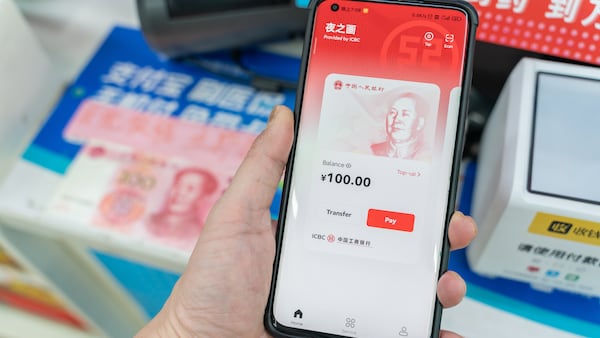
The timing of the revelations is unfortunate for the People’s Bank of China, which is trying to drum up public and private sector interest in the digital yuan through new incentives.
Ethereum bribe
Jiang told investigators he put a crypto businessman surnamed Zhang in touch with Yao in 2018. The latter then reportedly abused his power to help Zhang’s company raise 20,000 Ethereum tokens, currently worth $51 million, through a token sale on a crypto exchange. Zhang allegedly gave Yao 10% of this total in exchange.
Yao Qian was kicked out of the Communist Party in 2024 after a regulatory committee charged him with corruption.
At the time, party officials said Yao had “engaged in power-for-money transactions using cryptocurrencies,” adding that he had “illegally accepted a particularly large amount of money.”
However, the party did not say at the time how much money Yao had accepted, nor which cryptocurrencies he had received.
Property purchase
The exposé produced documents showing that Yao bought an upscale property in Beijing for $3 million. DL News has been unable to independently verify the veracity of these documents.
Yao funded at least half of the purchase by selling some of the crypto bribes he had accepted for cash, state investigators said.
Officials told CCTV their months-long search for evidence took them deep into the world of crypto, a sector that remains almost entirely illegal in China.
“Cryptocurrencies flow across borders without geographical restrictions, making them extremely difficult to regulate,” a member of the Central Commission for Discipline Inspection and the National Supervisory Commission told the broadcaster. “We studied the sector extensively to gain a deep understanding of the operating mechanisms of cryptocurrencies and identify key points for our investigation.”
Tim Alper is a News Correspondent at DL News. Got a tip? Email him at tdalper@dlnews.com.