



- The SEC clarified the liquidity buffer brokers need when handling stablecoins.
- It's a key change that will attract institutions to the sector.
- US Treasury Secretary Scott Bessent predicts the niche to hit $3 trillion by 2030.
A version of this story appeared in The Guidance newsletter on February 23. Sign up here.
Stablecoins are getting another facelift — or, rather, haircut.
Late last week, the US Securities and Exchange Commission announced that broker-dealers needn’t treat dollar-pegged cryptocurrencies with the same risk profile as before.
Instead, Commissioner Hester Peirce clarified that the SEC would not object if a broker-dealer applied a 2% haircut to stablecoins.
It’s a key regulatory change that will likely make stablecoins far more attractive for traditional financial firms.
“This move will open the floodgates for embedding stablecoins in institutional finance,” JP Richardson, the CEO of the NYSE-listed crypto wallet provider Exodus, said.
What‘s in a haircut?
To make sense of this critical change, let’s define our terms.
Broker-dealers play two roles in financial markets.
They help match investors with purchases and charge a commission for that activity. As dealers, they may hold a large inventory of a specific stock, bond, commodity, or stablecoin and sell it directly to investors. They make money by selling those assets back to investors for more than they purchased them.

When handling financial assets, be it cryptocurrencies, cash or gold, regulators assign risk to each asset. Depending on the level of risk, the SEC encourages broker-dealers to maintain a liquidity cushion commensurate with the level of risk.
This means that the riskier an asset is perceived to be, the larger the liquidity cushion, or haircut, that is required.
Previously, the SEC didn’t provide any guidance on the riskiness of stablecoins, so many conservative broker-dealers simply took a 100% haircut on the asset if they decided to operate in this sector.
In practical terms, a 100% haircut is like saying these assets are going to go to zero, and to keep your customers safe, you’re going to need to assume they are already worth zero.
Hello! This chart will be available in a few moments
If a broker-dealer held $100 million in Circle’s USDC stablecoin as part of its inventory to sell or use for other investments, the SEC demanded that the broker-dealer also hold an equivalent $100 million in cash in case USDC lost its peg to the dollar, there was a bank run, or any other kind of super bearish event.
It also means that those broker-dealers needed to hold an equivalent amount of that asset in cash or treasuries, making holding assets with this level of insurance policy hugely expensive for firms.
Now, that’s no longer the case.
“In my view, a 100% haircut would be unnecessarily punitive given the underlying reserve assets that back payment stablecoins,” Peirce said.
“A haircut of 2% aligns with the haircut imposed on registered investment companies that are money market funds, which hold similar instruments as payment stablecoin issuers.”
Pressure is on
That same broker-dealer now only needs to hold 2% of that $100 million in USDC, or $2 million, to meet the SEC’s new standards.
From a balance-sheet-efficiency perspective, this is great news for these kinds of firms.
Suddenly, they have another $98 million on their balance sheet to keep growing their business in other ways.
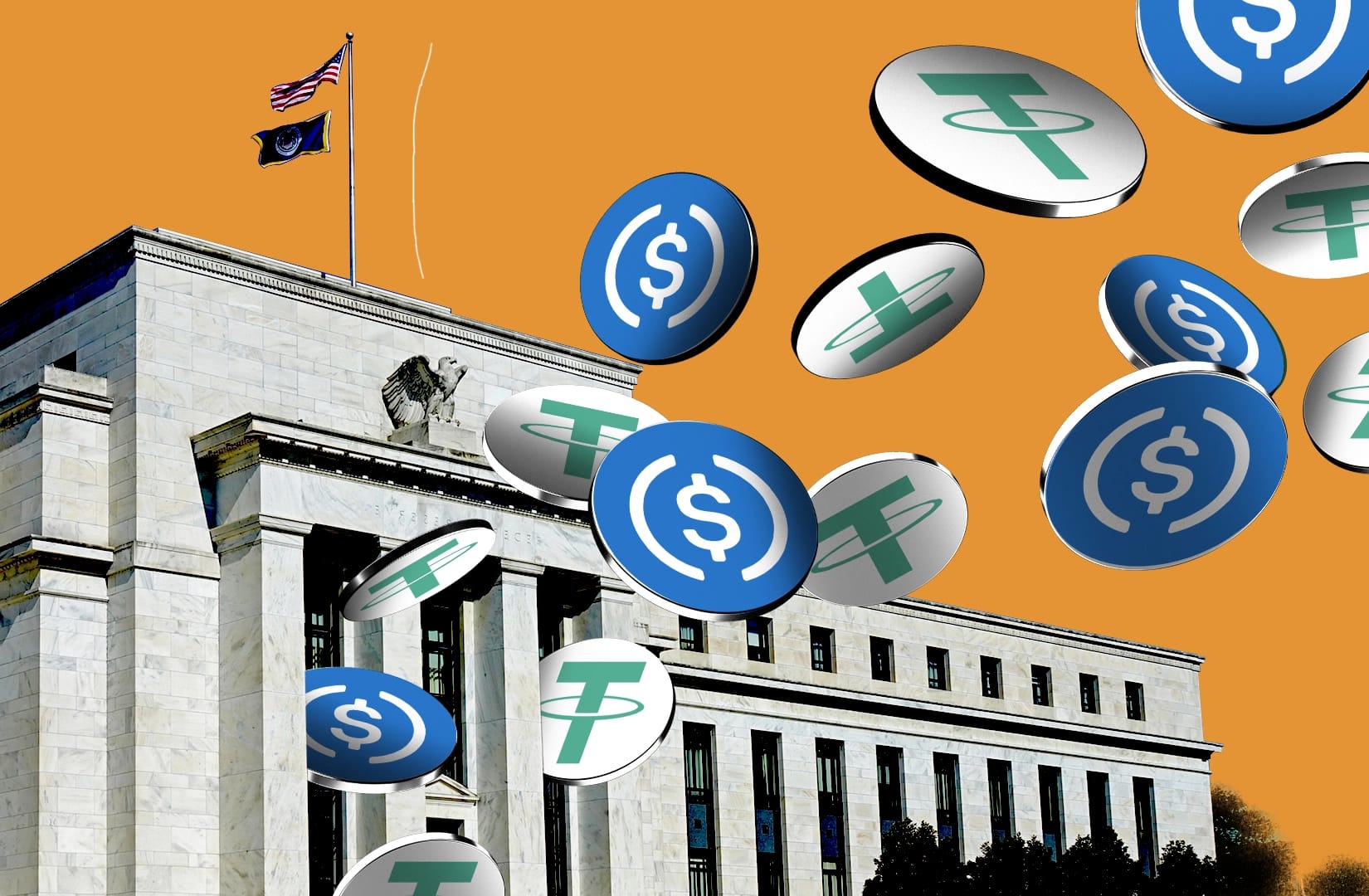
Exodus’ Richardson wagers that this will also encourage firms to start building stablecoin rails for their businesses.
“This puts pressure on every major broker-dealer to build stablecoin infrastructure or fall behind the ones who do,” he said.
“Because their competitors now can, and there’s no longer a capital penalty that makes it uneconomical.”
Liam Kelly is DL News’ Berlin-based DeFi correspondent. Have a tip? Get in touch at liam@dlnews.com.