



Digital asset markets entered 2026 under renewed volatility. Prices retraced across the board, with Bitcoin falling from $100,000 to $68,000 within weeks. Capital rotated toward traditional safe-haven assets such as gold and cash. Across the ecosystem, risk appetite faded, leverage declined, and capital rotated out of speculative positions. Yet one segment of the market did not contract: stablecoins.
This stability is not merely defensive behaviour. It reflects a structural evolution in the function stablecoins now serve within digital markets.
Stablecoins: the shift to infrastructure
Despite the recent market downturn, stablecoin capitalisation remains above $300 billion, marking an increase of more than 50% from roughly $200 billion at the start of 2025. This contrasts sharply with 2022, when the Terra-Luna collapse and the subsequent FTX failure triggered a contraction of approximately 40% in stablecoin supply.
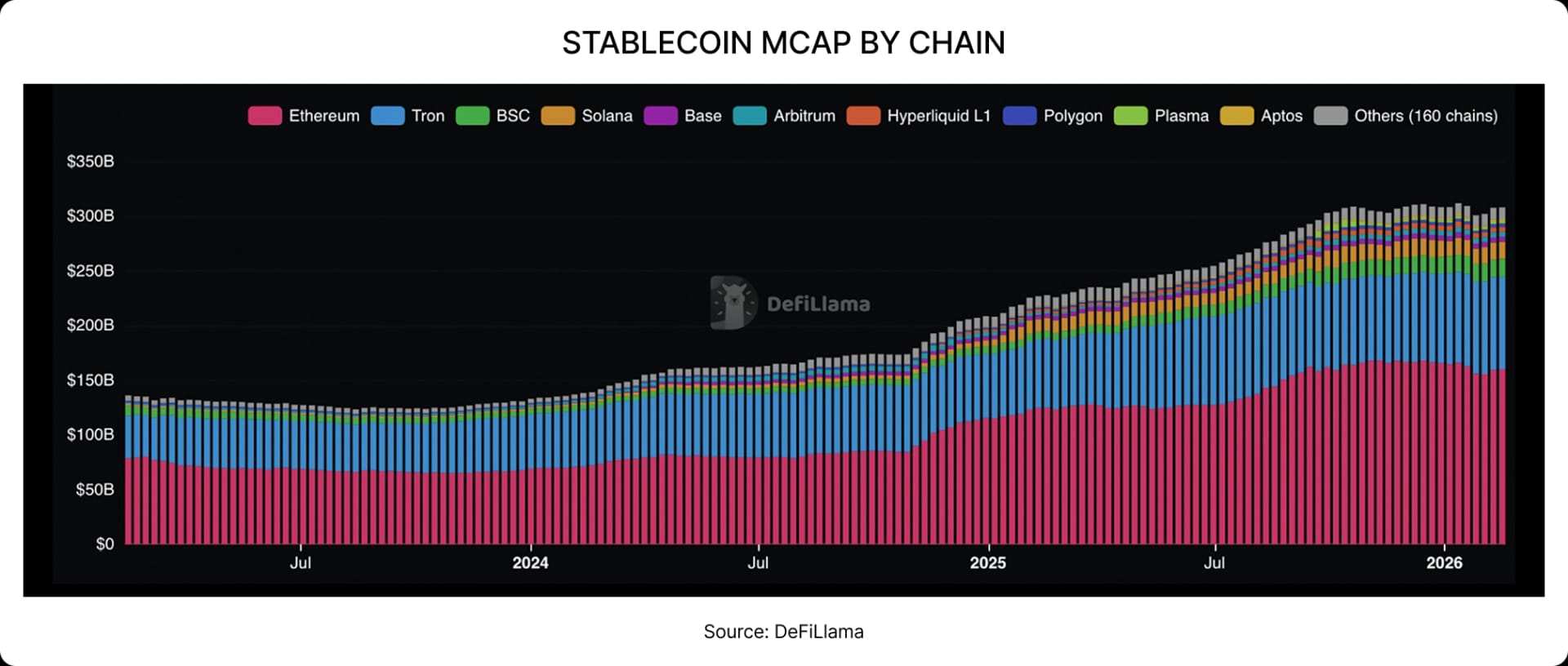
The reason is straightforward: stablecoins are no longer perceived as speculative instruments. The market has absorbed the structural failures of the past, from Terra-Luna to custody-related issues, leading to more robust models. Fiat-backed structures have demonstrated resilience and improved transparency, and onchain dollars are now broadly accepted in everyday financial activity. In other words, USD onchain has moved from experimentation to functionality.
More importantly, usage has shifted. During earlier cycles, stablecoins functioned primarily as trading intermediaries. They were the asset traders and investors held while waiting to deploy capital into volatile tokens.
Today, their role is different. Stablecoins are used for payments, payrolls, remittances, derivatives, collateral, treasury management and yield strategies. All these use cases have expanded steadily, turning stablecoins into a foundational layer of digital financial activity.
And this evolution changes the analytical question. Indeed, the issue is no longer whether stablecoins will persist during volatility. They clearly do. The more relevant questions are where they concentrate, how they circulate, and in what economic context they are embedded.
When looking at on-chain distribution, supply is far from evenly allocated across networks. Allocation reflects a combination of historical positioning and functional utility.
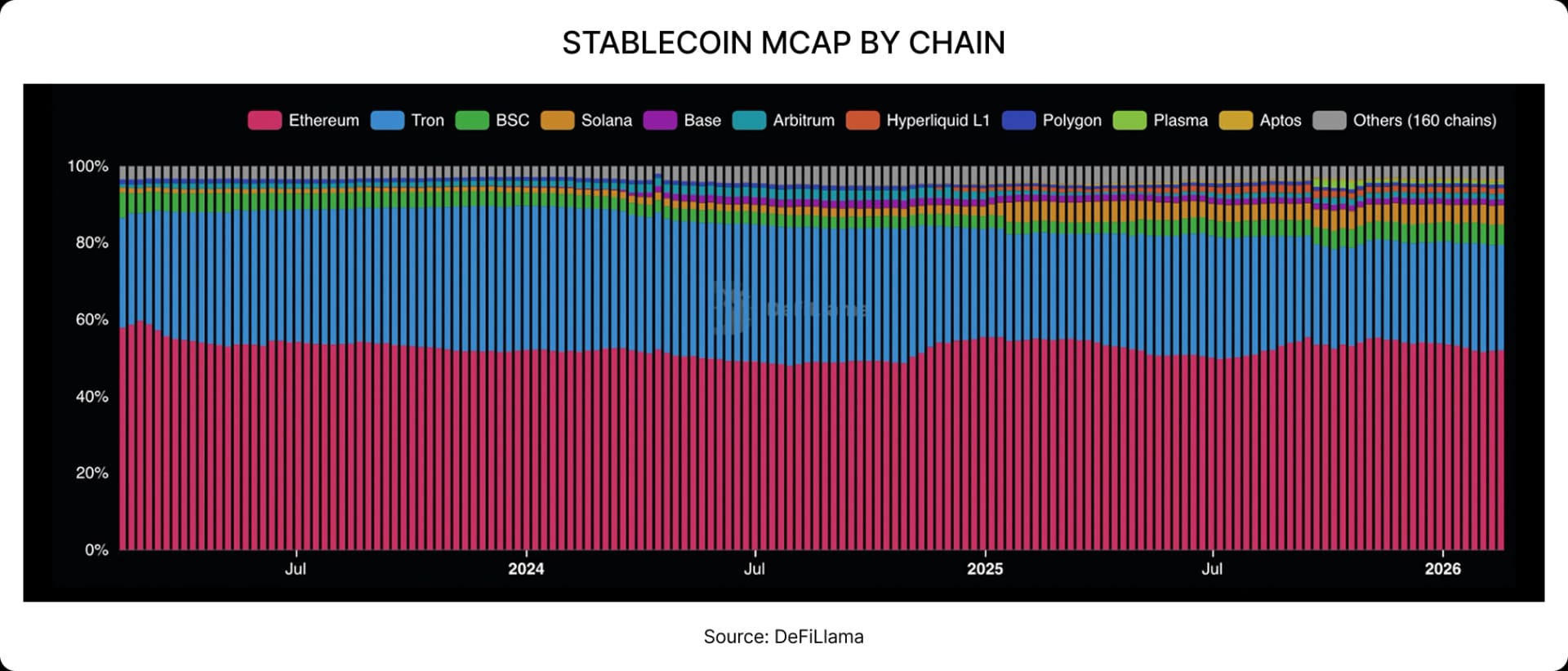
Ethereum continues to anchor the largest share of stablecoin supply with 52% dominance and a 40% expansion in 2025 from $115 billion to $153 billion. Its early liquidity dominance and institutional credibility have made it the default layer for large balances seeking security and composability.
Tron, with 25% market share and similar 40% expansion in 2025 from $49 billion to $83 billion, maintains strong USDT concentration, historically driven by cross-border settlement flows and remittance demand. Together, these two networks represent 77% of supply. If we extend to the next two, Solana and BNB Chain, this amount gets to 90%.
Solana now represents roughly 5.4% of global stablecoin supply, having grown about 2.4x in 2025 from $5.9 billion to $15.5 billion. BNB Chain has followed a comparable trajectory, expanding 2.3x over the same period from roughly $7 billion to $16.3 billion, and now accounting for just under 5% of global supply.
However, distribution alone does not determine economic relevance. Stablecoins are the operational substrate upon which onchain markets are built. What matters is not simply how much capital is present onchain, but how efficiently it is deployed and what activity it sustains.
Within this framework, BNB Chain stands in an interesting position. It does not dominate global supply, yet it has expanded at a pace similar to Solana. The relevant question is therefore not its relative size, but the behaviour of the capital it hosts.
Is this liquidity primarily dormant, or does it actively support a broader decentralised economy?
What stablecoin usage looks like on BNB Chain
To understand BNB Chain’s role in the stablecoin landscape, we examine several dimensions: transactional behaviour, volume and size distribution, infrastructure cost, and application-level activity. Combined, these elements provide a clearer picture of how stablecoins circulate and are used on the BNB Chain.
Volume, Transaction Intensity and User Breadth
Over the past twelve months, stablecoins have settled roughly $61.4 trillion in transaction volume globally, across approximately 13.6 billion individual transfers.
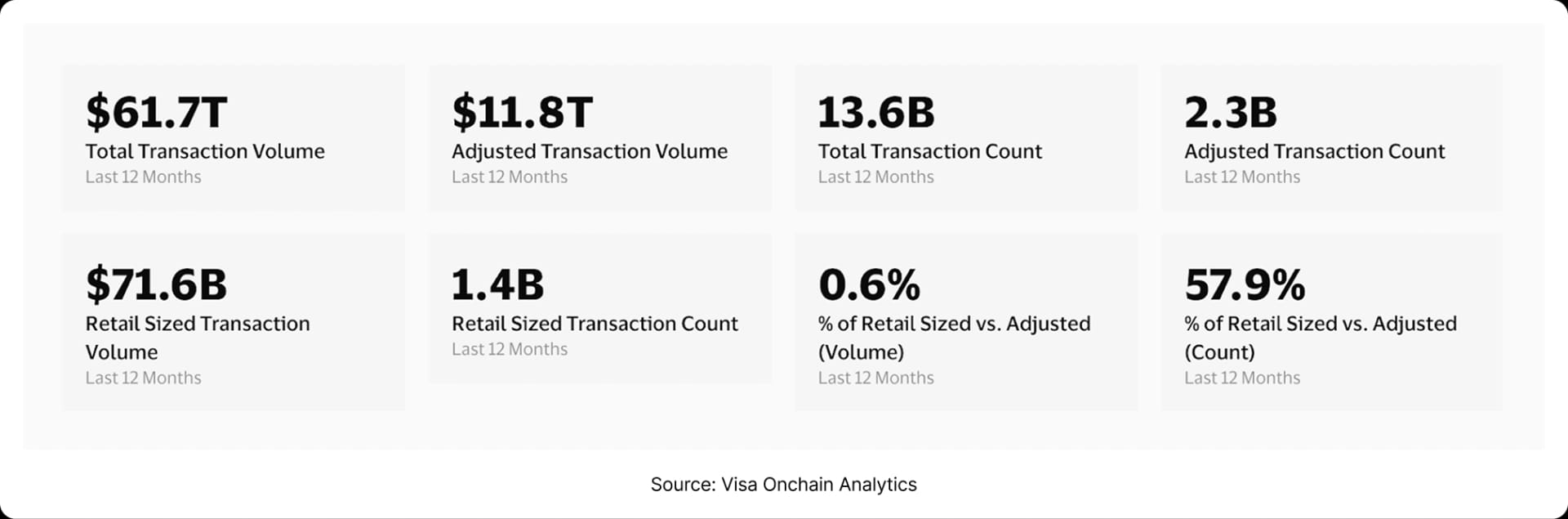
Ethereum remains the largest settlement venue, capturing roughly 45% of stablecoin transaction value. Tron follows at approximately 25% (though its share has declined significantly (40%) in less than a year). Solana and BNB Chain sit behind these leaders, each accounting for roughly 8 to 10% of global stablecoin volume.
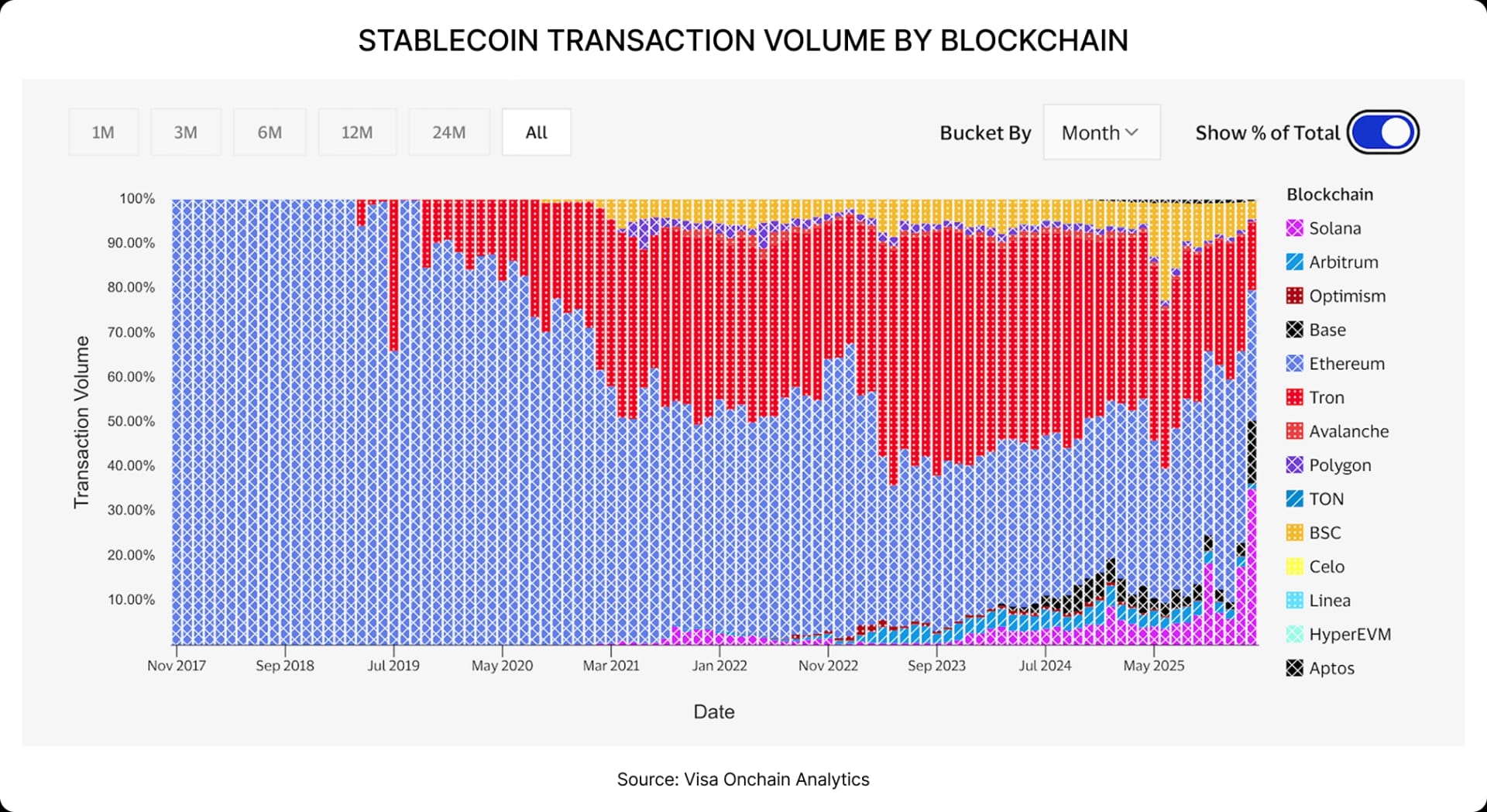
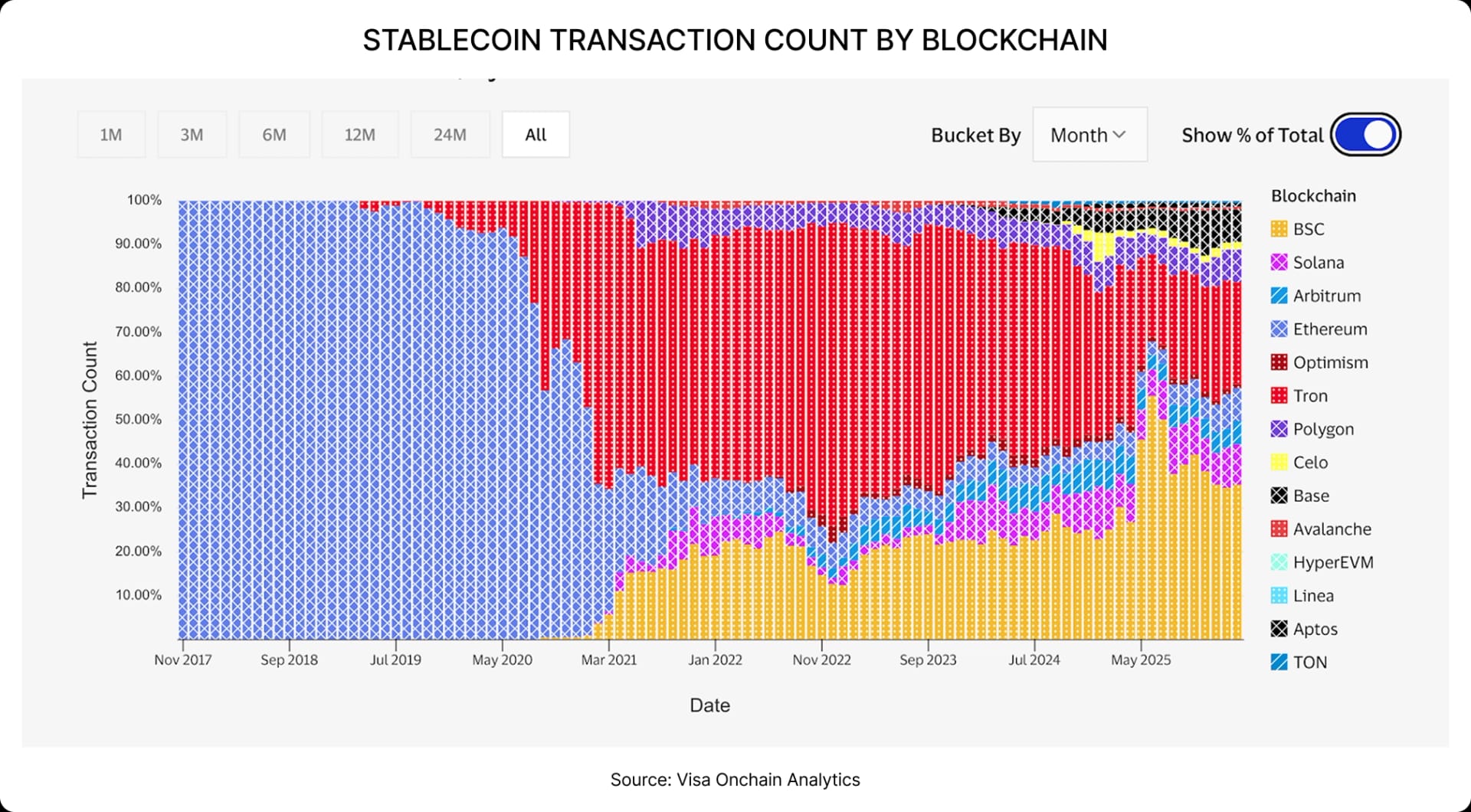
However, notional volume alone does not fully capture behavioural intensity. When shifting the lens from total value to transaction count, the hierarchy changes. BNB Chain represents roughly 40% of global stablecoin transactions, ahead of Tron at around 25% and well above Ethereum and Solana, both near 7%. The implication is clear: stablecoins on BNB Chain circulate more frequently even if individual transfer sizes are smaller.
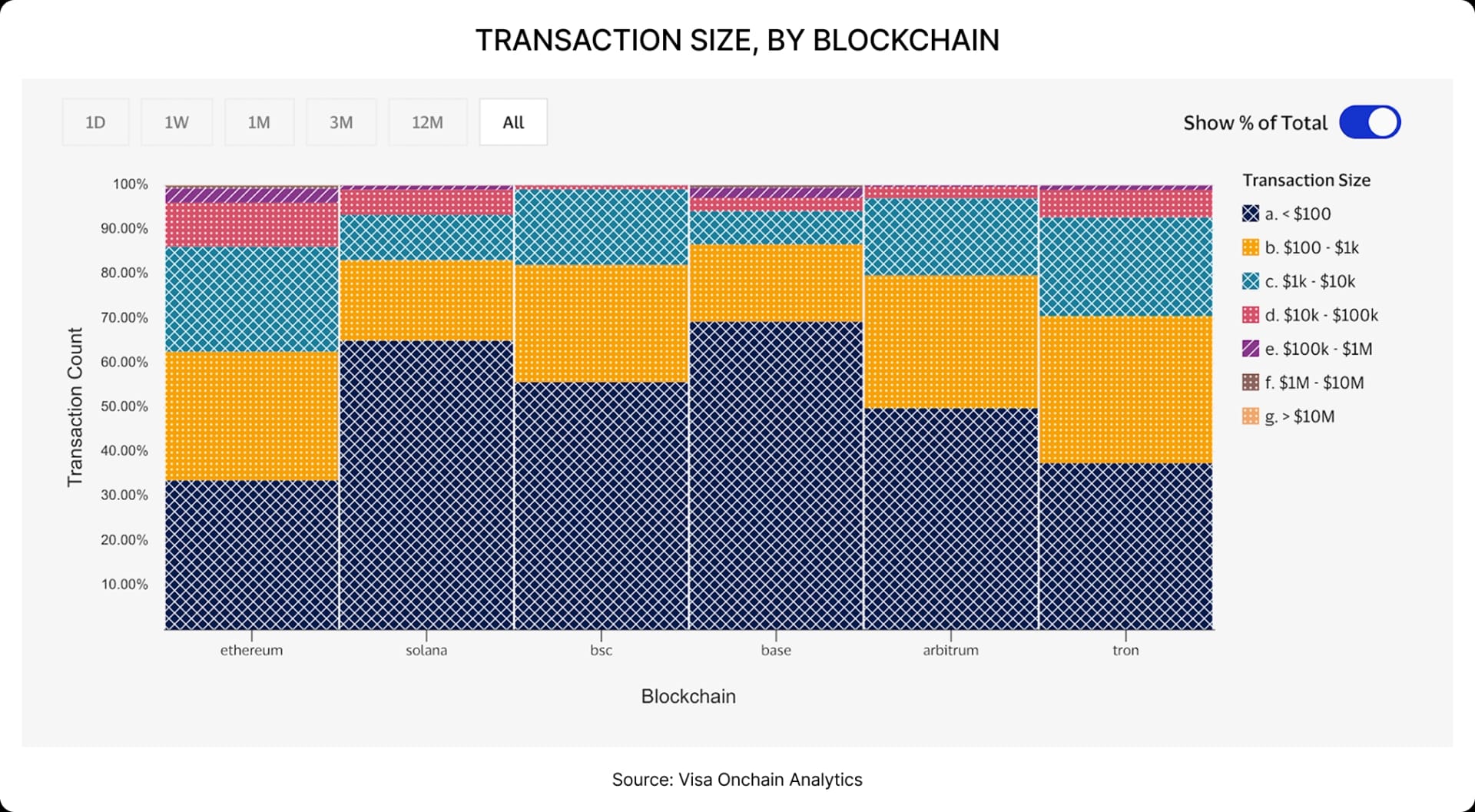
Transaction size distribution further reinforces this dynamic. On BNB Chain, approximately 99% of stablecoin transfers fall below $10,000 and roughly 82% are below $1,000. By comparison, Ethereum records 85% of transfers below $10,000 and 62% below $1,000, Tron 92% and 70% respectively, and Solana 93% and 83%.
This indicates that BNB Chain is heavily skewed toward smaller-sized transfers. Ethereum maintains a more institutional profile with relatively larger average ticket sizes, Tron sits in between with stronger mid-sized flows, while Solana structurally resembles BNB in its transaction distribution.
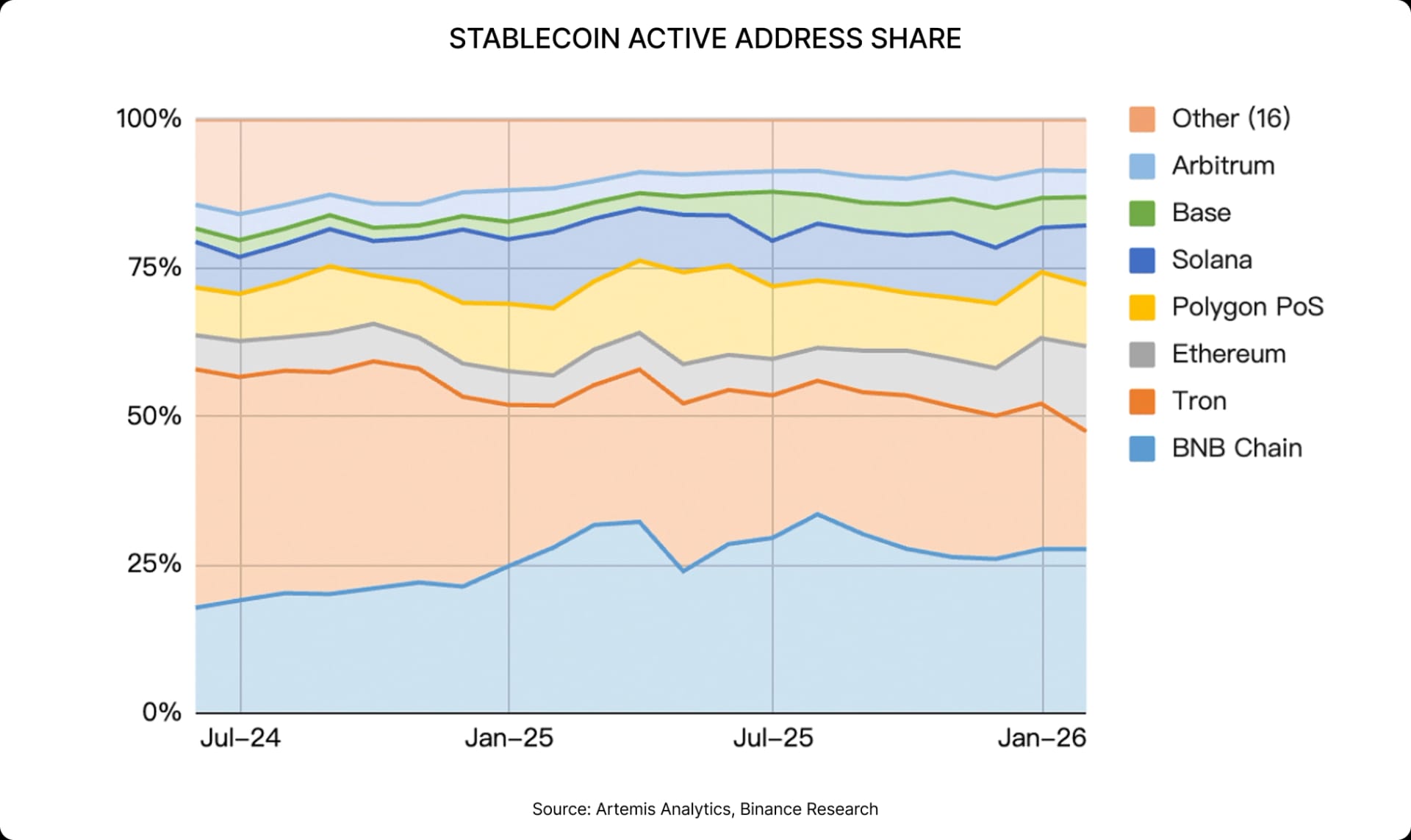
Wallet-level data reinforces this interpretation. BNB Chain represents approximately 25% of global stablecoin active addresses, ahead of Tron (~20%) and well above Ethereum and Solana (each near 10%). In January 2026 alone, BNB recorded approximately 13.7 million active addresses, compared to 9.8 million on Tron and 7.1 million on Ethereum.
New address creation follows a similar pattern. Over the past year, more than 220 million new addresses were created on BNB Chain, a scale comparable to Solana and significantly higher than Ethereum’s 54 million.
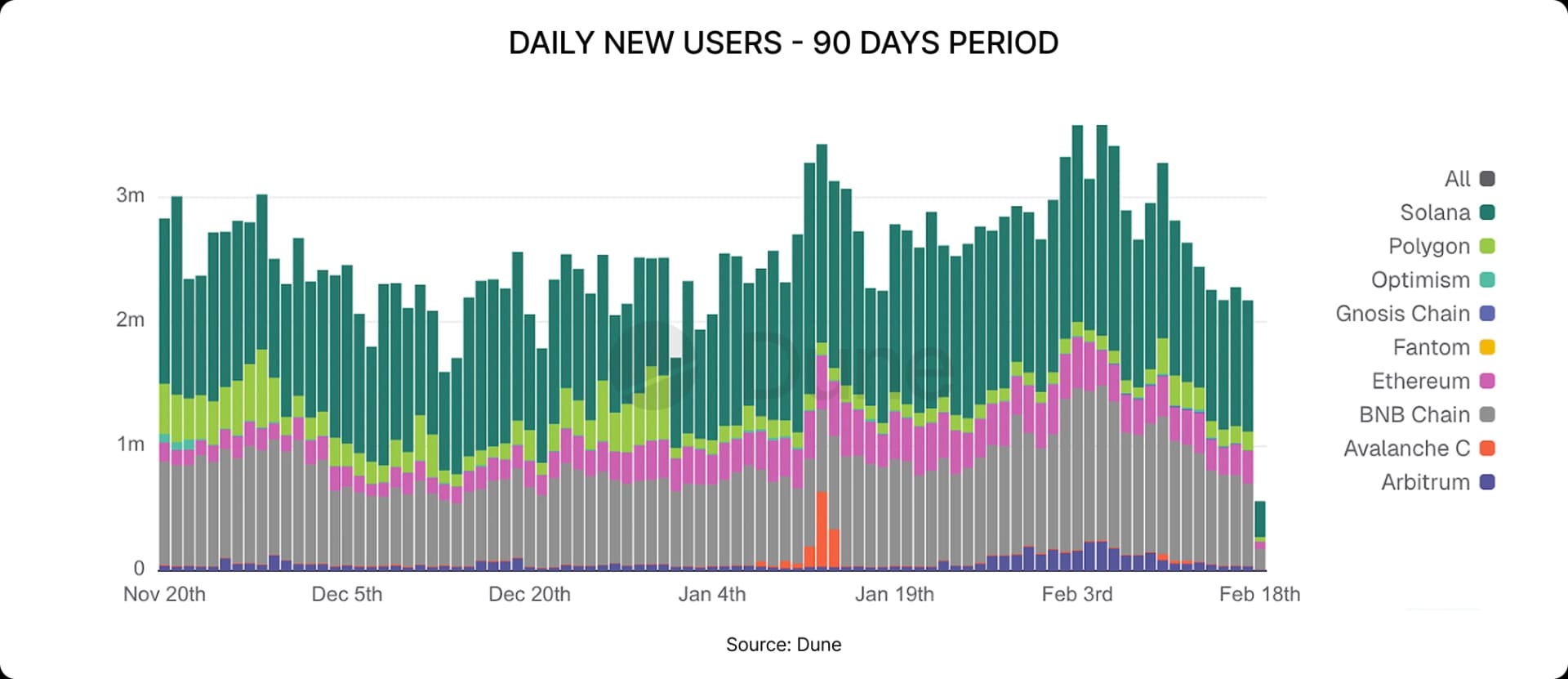
Taken together, these figures show that although BNB Chain holds only around 5% of total stablecoin supply, it processes a disproportionately high number of transactions and active wallets.
In simpler terms, stablecoins on BNB Chain are not idle balances, they circulate actively and are consistently used onchain.
A cost-effective execution layer
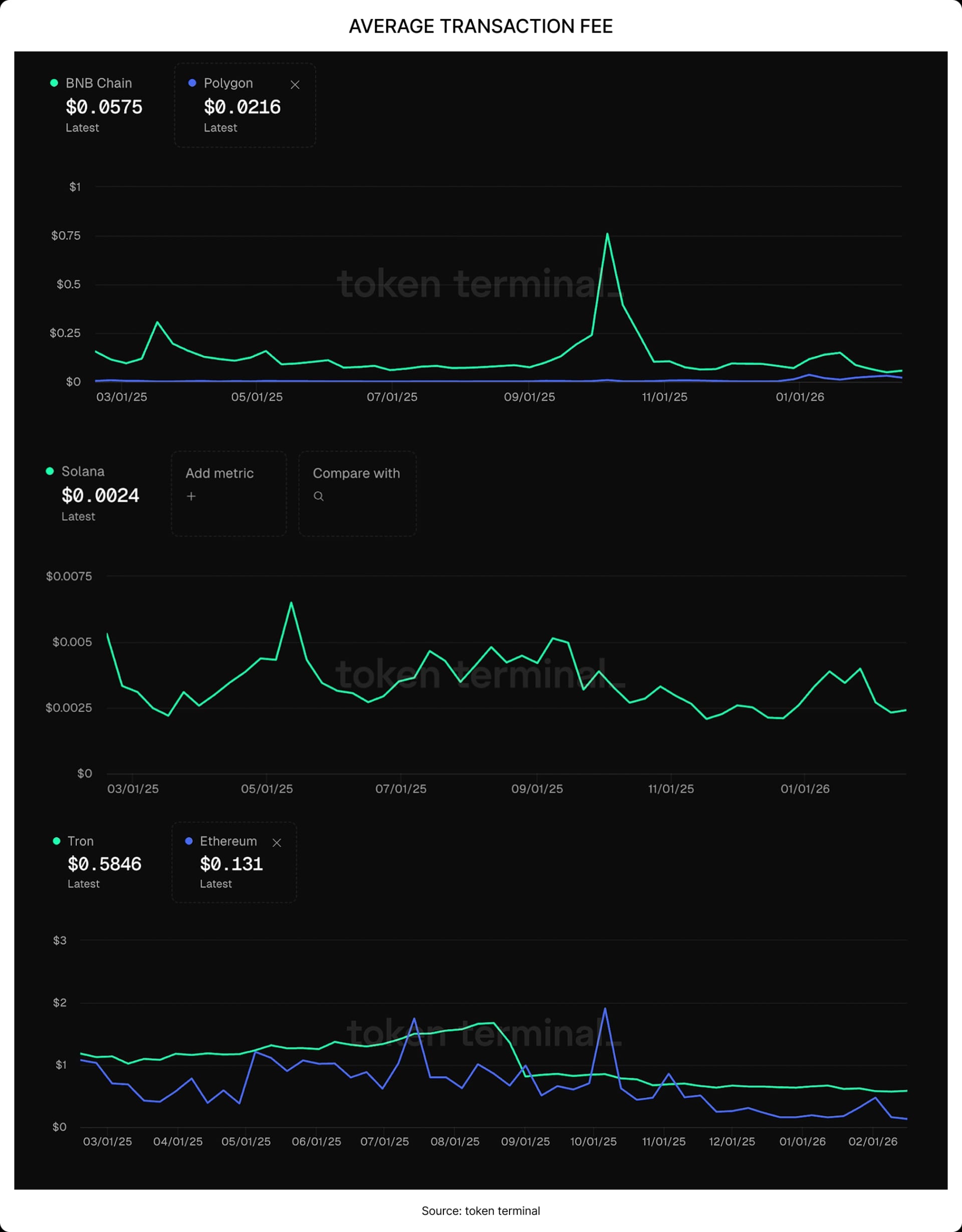
One of the drivers behind this surge in activity lies in infrastructure optimisation and cost efficiency. Throughout 2024, BNB Chain deployed several upgrades, including Pascal, Lorentz, Maxwell, and the Fermi hardfork. These improvements reduced block times, enhanced transaction finality, and more than doubled network capacity. At the same time, gas fees declined sharply from roughly 5 gwei to below 1 gwei. Today, average transaction costs stand at approximately $0.05.
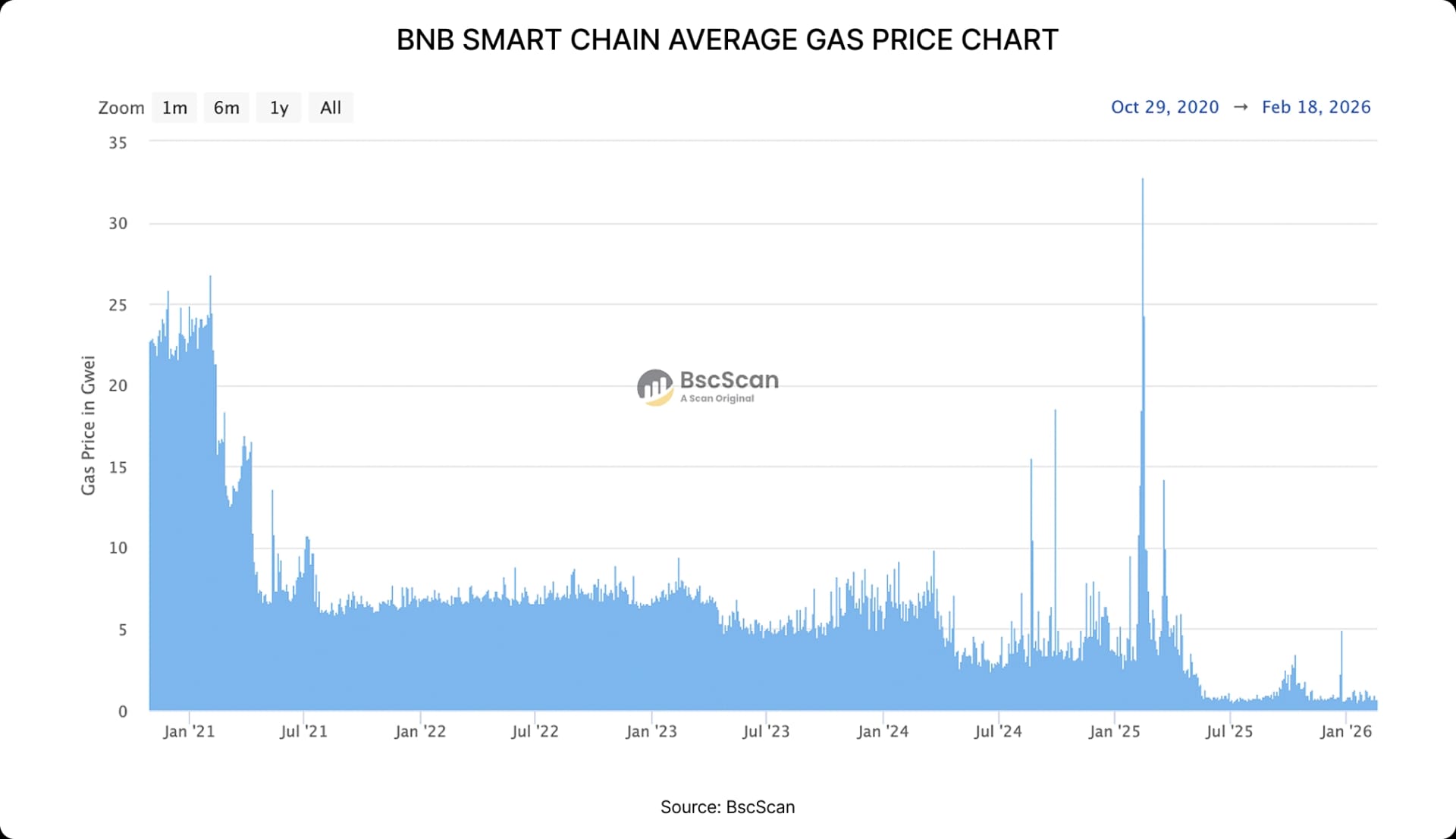
For comparison, Ethereum transfers average roughly $0.20, Tron has risen closer to $0.50 (explaining the loss in market share seen above), Arbitrum and Polygon are comparable to BNB Chain while Solana remains below $0.01. This positions BNB Chain as highly competitive. By offering low and predictable blockspace costs, it encourages more frequent transactions and facilitates the continuous circulation of liquidity on the network.
Applications confirm the pattern
Application-level data further reinforces this “stablecoin dynamic”, particularly across core platforms such as Aster, Predict, four.meme and PancakeSwap.
Aster
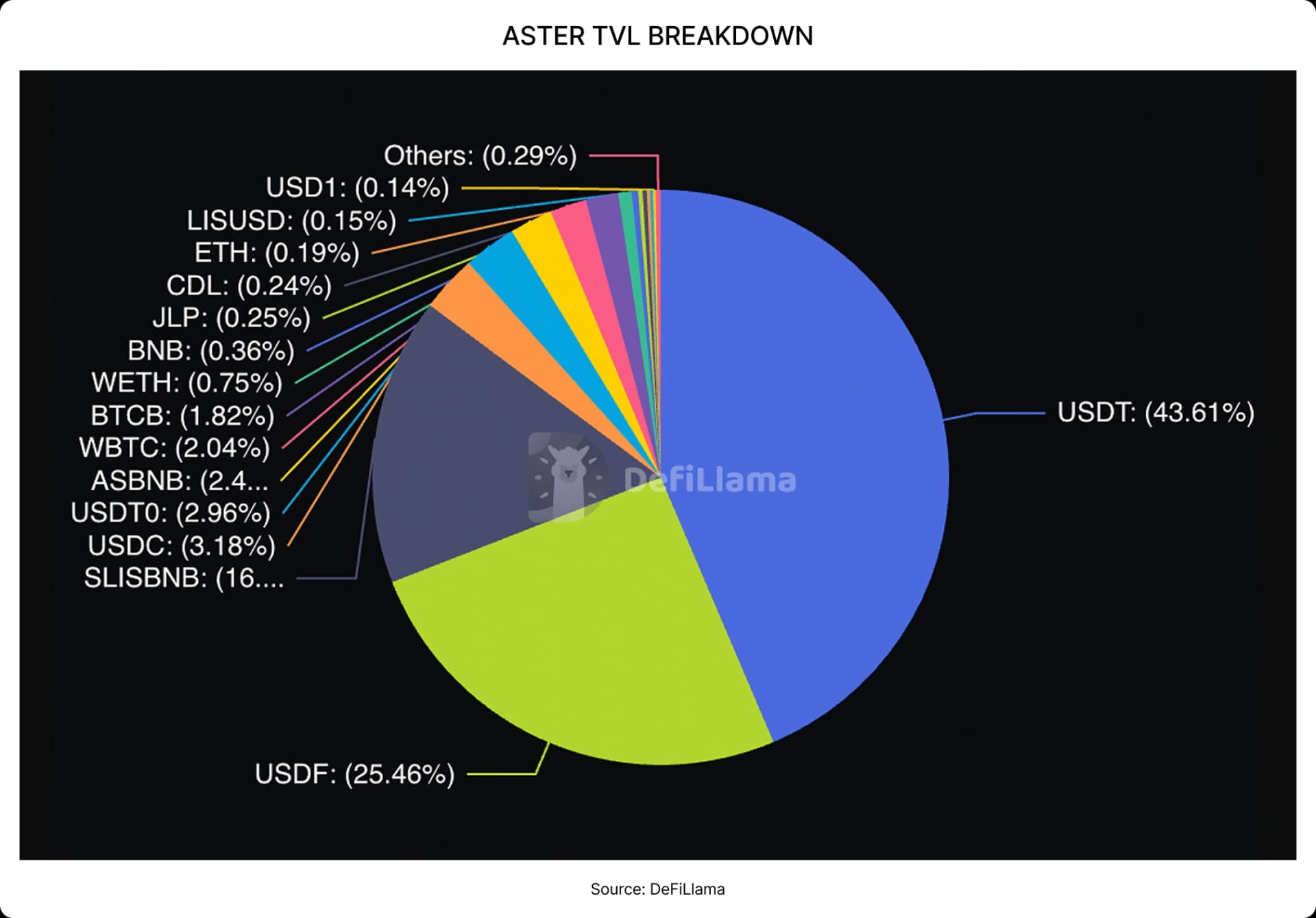
On Aster, the main perpetual DEX, stablecoins represent a significant share of the $1.1 billion TVL. USDT accounts for 43.6%, followed by USDF (native to Aster) at 25.46%, while USDT0 and USDC each represent roughly 6%.
With daily trading volume fluctuating between $25 million and $80 million depending on market conditions, stablecoin utilisation remains important, particularly given that these assets serve as the primary base and settlement layer for many trading pairs.
Predict
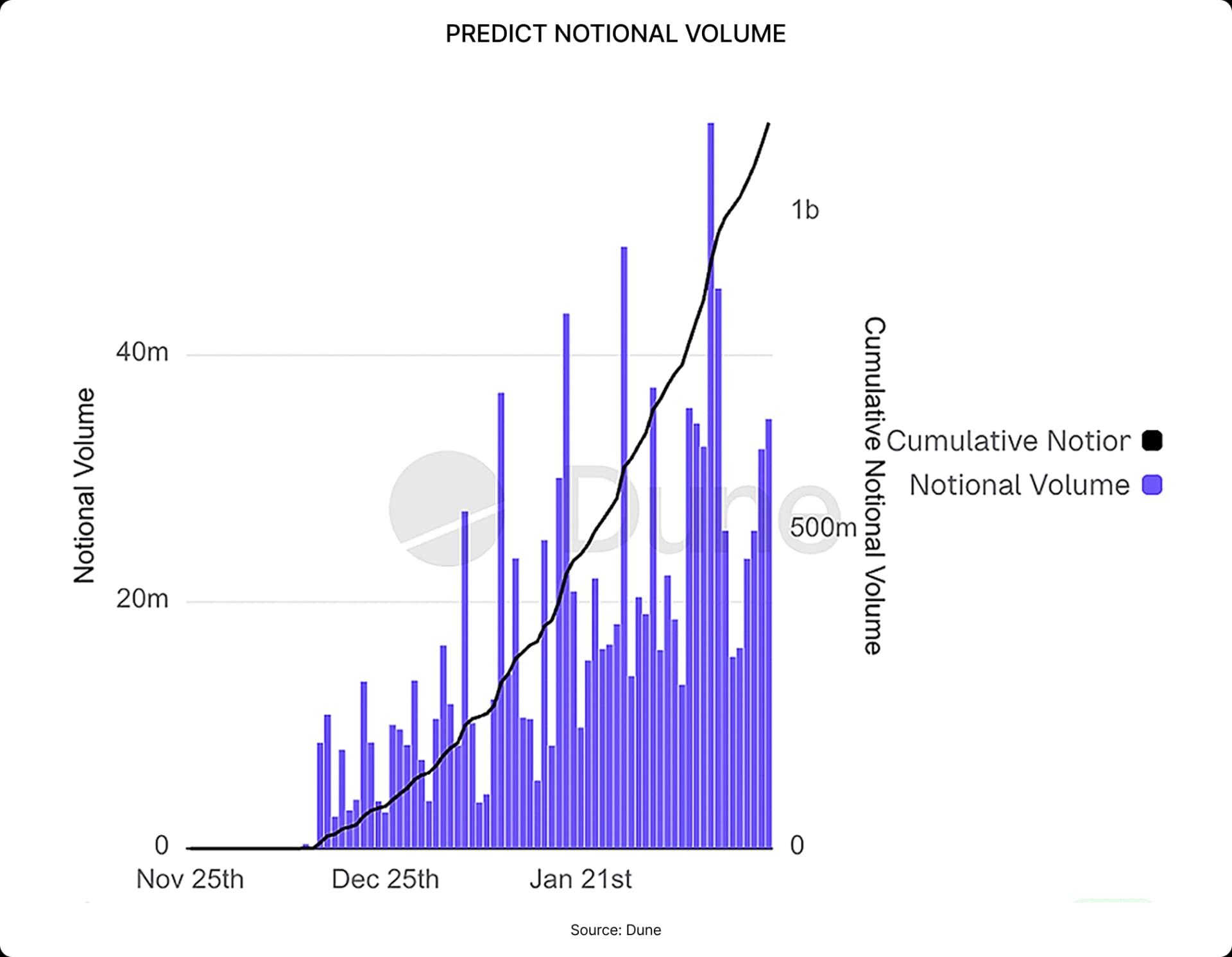
Since its launch on BNB Chain at the end of the 2025, Predict, a prediction market protocol, has recorded cumulative trading volume exceeding $1 billion. Notably, USDT serves as the sole settlement asset, meaning it is the exclusive currency used for market participation and payouts. As a result, Predict has become a significant driver of stablecoin activity on BNB Chain.
Pancakeswap
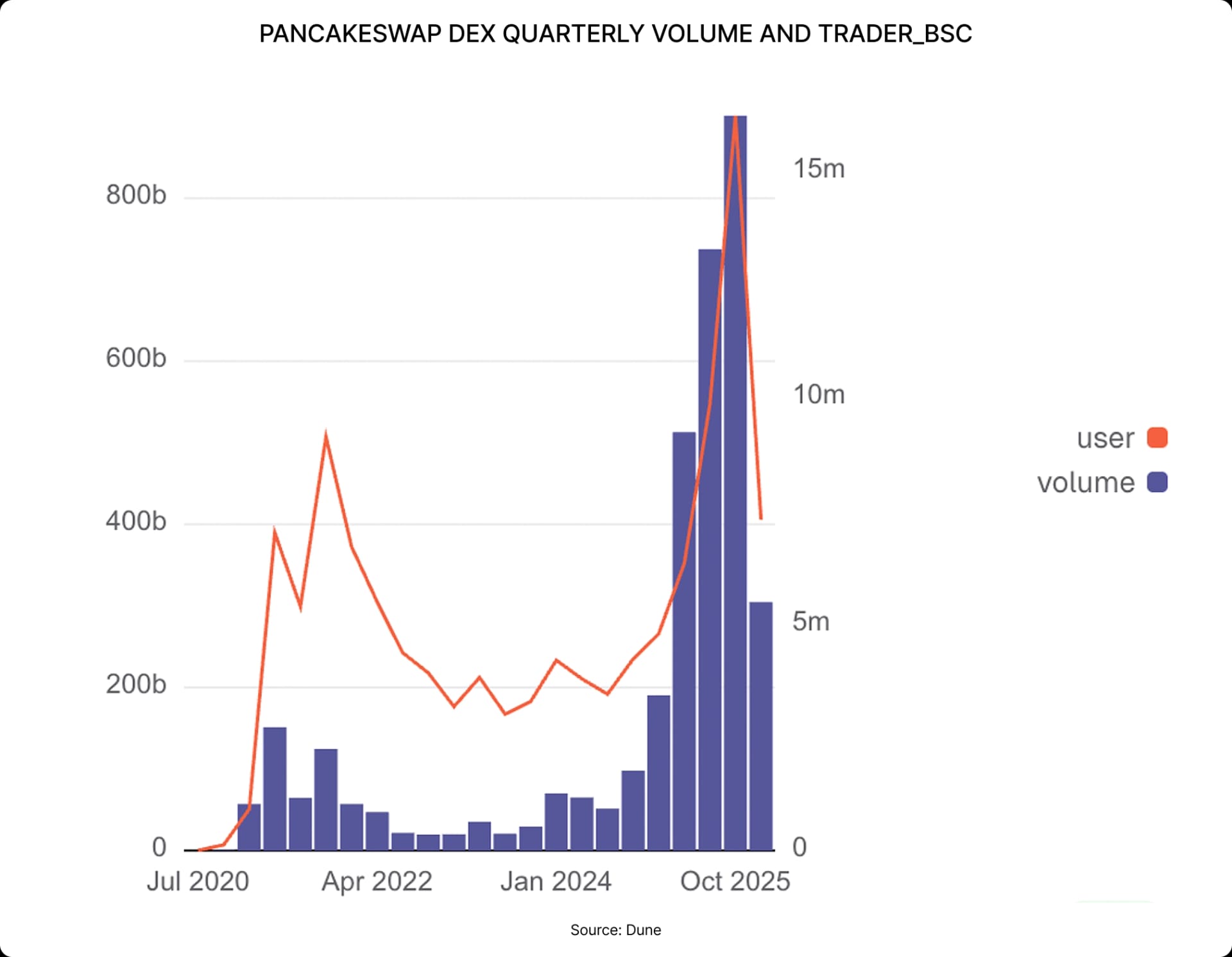
PancakeSwap records more than 10 million users per quarter and over $400 billion in cumulative trading volume since Q2 2025. Most importantly, it consistently ranks among the top 3 to 5 decentralised exchanges globally, comparable to platforms such as Uniswap or Pump. Monthly trading volume has remained above $50 billion since the end of Q1 2025, coinciding with the rise of perpetual markets and the first surge of activity on four.meme. Volume is not expected to decline in the near term, particularly following new integrations such as Ondo Finance’s tokenised assets in Q3 2025, which introduced access to more than 100 tokenised stocks and ETFs for traders.
While these figures reflect aggregate trading activity across multiple asset classes, it remains relevant as stablecoins typically serve as the base asset for spot trading. As a result, a substantial portion of PancakeSwap’s volume inherently reflects stablecoin usage and circulation within the ecosystem.
four.meme
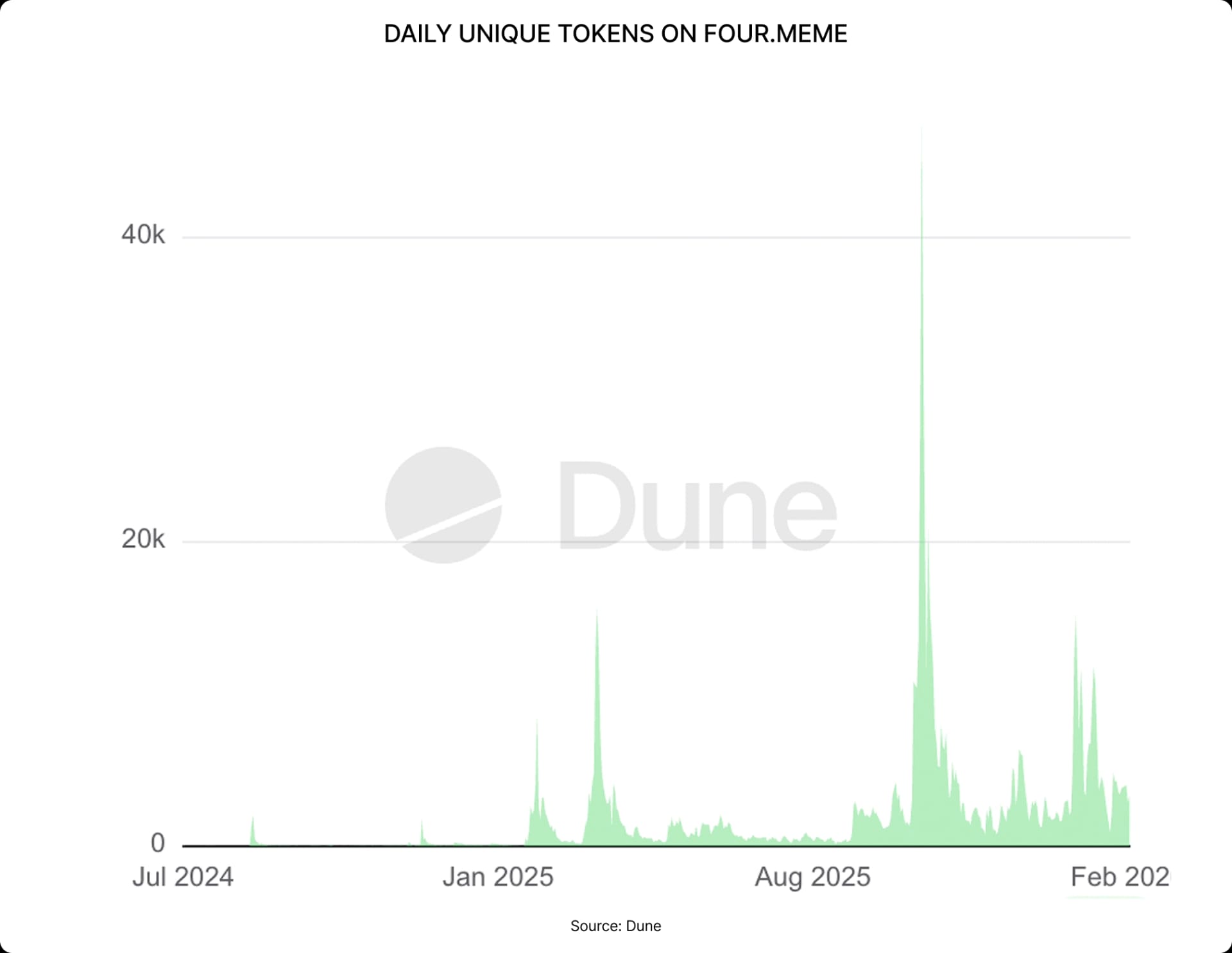
Since its launch, four.meme has facilitated token issuance at a cadence of more than 2,000 tokens per day, with peaks exceeding 10,000 during periods of heightened speculation. Each issuance event routes liquidity through stablecoin pairs or BNB, reinforcing activity in these base assets. In addition, issuance platforms are historically effective onboarding mechanisms, attracting new users and consequently, fresh liquidity into the ecosystem.
Stablecoin diversity
BNB Chain doesn’t rely on a single stablecoin archetype. USDT remains dominant at roughly 60% of supply, but its share has declined over 2025 from approximately 75%. USDC and USDYC collectively account for roughly 20%, while USD1 from World Liberty Finance represents approximately 15%.
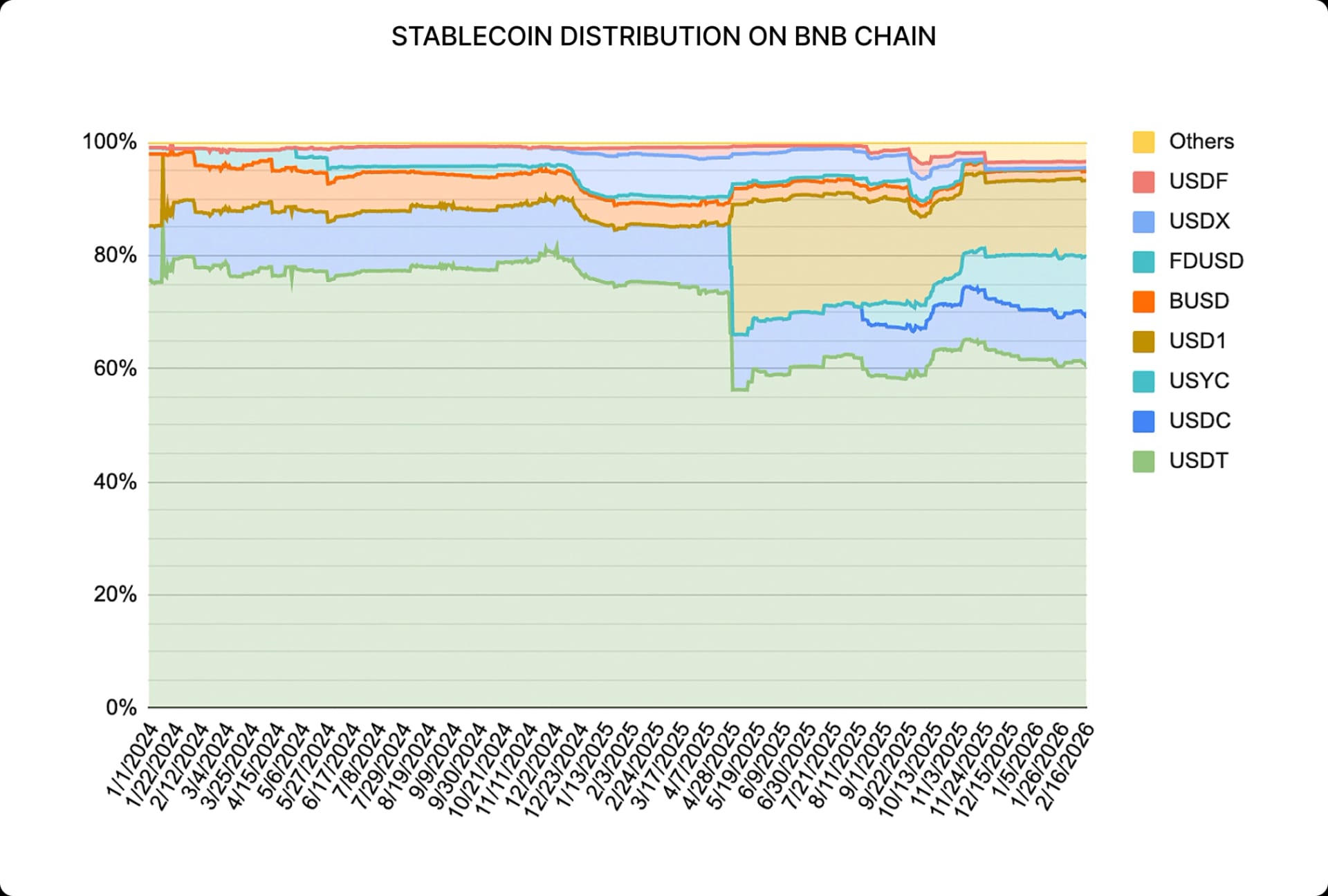
Interestingly, each stablecoin carries different structural characteristics. USDT remains the dominant trading and remittance instrument. USDC is more commonly associated with payments and institutional positioning. Yield-bearing instruments such as USYC introduce capital efficiency and treasury-like behaviour.
The coexistence of multiple stablecoin profiles within the same liquidity environment suggests functional diversity rather than mono-use concentration.
Overall, stablecoin activity on BNB Chain reflects behavioural depth rather than surface-level liquidity. Transfers are frequent, wallet participation is broad, and application-level demand remains diversified. This indicates an ecosystem where stablecoins function as working capital embedded in daily activity. This outcome is not accidental and is the result of deliberate infrastructure and product alignment executed over the past two years.
BNB Chain’s positioning as a consumer app layer
Rather than competing solely on capital concentration, BNB Chain has increasingly positioned itself over the past one to two years as a consumer-facing execution layer: a chain where onboarding friction is reduced and applications are delivered in alignment with market demand and prevailing trends. This strategy unfolded in three steps.
From exchange users to onchain participants
The first important shift was infrastructural. Binance Wallet replaced the former Web3 wallet architecture and became directly integrated within the Binance centralised exchange. Onchain access moved closer to the exchange interface. Users no longer needed to navigate separate onboarding layers to interact with decentralised applications.
A few months later, Binance Alpha reinforced this bridge. By offering early-stage tokens and streamlining access, Alpha connected exchange-native users with on-chain liquidity opportunities.
The effect was twofold. First, BNB Chain gained immediate exposure to Binance’s global user base. Second, Binance users were introduced to DeFi in a progressive and accessible manner, gradually becoming accustomed to on-chain environments and mechanics.
Stablecoins played a central role in this transition. Movement from centralised exchange balances into onchain activity naturally routed through BNB, USDT and other dollar-denominated assets.
Liquidity acceleration through various apps.
The second stage of the strategy focused on liquidity acceleration. During the meme issuance cycles largely initiated by platforms such as pump.fun across the industry, BNB Chain introduced four.meme as a native token launch platform. Since its launch, more than one million tokens have been issued on the platform, each bringing new users and injecting additional liquidity into the ecosystem, either in BNB or stablecoins.
Issuance alone cannot thrive without robust trading infrastructure. On the spot side, BNB Chain already had PancakeSwap, which directly benefited from the surge in token issuance activity. But more importantly, BNB Chain launched Aster in September 2025, its own perpetuals DEX, at a time when meme trading and derivatives demand were both reaching peak momentum. While derivatives demand differs structurally from issuance demand, the outcome is similar: user acquisition increases, liquidity deepens, and stablecoins emerge as the primary settlement asset for leveraged trading activity.
In December 2025, Predict launched on BNB Chain, introducing another stablecoin-intensive vertical. The prediction market platform accepts only USDT as the settlement asset and generates repeated, smaller-sized interactions with high settlement frequency.
In short, BNB Chain’s DeFi ecosystem evolved considerably over the year, developing into a complete and actively used suite of applications. Given that these verticals rely heavily on stablecoins as base and settlement assets, it is unsurprising to see stablecoin usage expand on the chain.
Institutional overlay: RWA integration
While the initial growth phase was largely retail-driven, tapping into more advanced investors, traders, and institutions represents a natural progression. Expanding real-world asset capacity has therefore become a core strategic focus for BNB Chain.
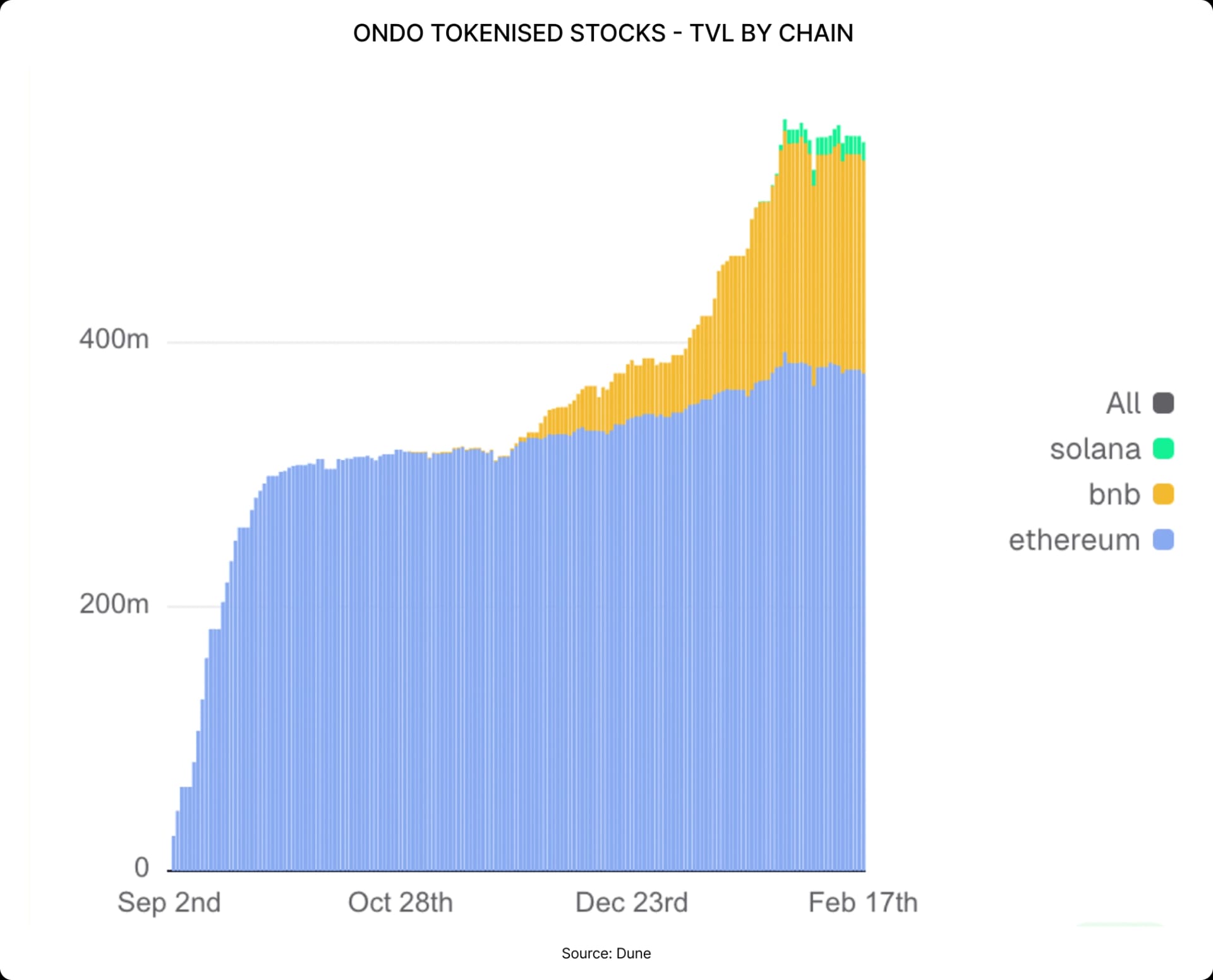
In October 2025, BNB Chain partnered with CMB International to launch a tokenised money market fund. Ondo Global Markets subsequently introduced more than 100 tokenised U.S. stocks and exchange-traded funds to BNB Chain, expanding the offering beyond money market instruments into equities. The launch has been successful, with total value locked exceeding $160 million.
The flywheel effect
Taking a step back, stablecoin activity on BNB Chain can be understood as the outcome of successive strategic layers. First, infrastructure optimisation lowered blockspace costs and improved execution performance. Second, integration with Binance’s global user base created a direct onboarding bridge. Third, product alignment with prevailing demand accelerated liquidity and usage. Today, the focus shifts toward institutionalisation, bringing more sophisticated traders and investors on-chain.
BNB Chain’s stablecoin profile therefore reflects more than raw transaction count or a single use case. Stablecoins function as working capital within a diversified and increasingly structured ecosystem rather than as idle balances or simple remittance tools.
As long as onboarding remains friction-light, costs predictable and applications aligned with demand cycles, stablecoin circulation is likely to remain structurally embedded. In this sense, the ecosystem operates as a flywheel: infrastructure reduces friction, onboarding expands participation, participation deepens liquidity, and liquidity attracts further applications and capital.