- Iran asking for Bitcoin as payment for oil is a massive gamechanger, said Matt Hougan of Bitwise.
- Bitcoin has been rallying since the onset of the war between Iran, Israel and the US.
- Hougan puts the price target at $1 million.
What happens when the country that controls 20% of the world’s oil supply suddenly starts demanding Bitcoin as payment?
Bitcoin goes to $1 million, according to Bitwise chief investment officer Matt Hougan.
Getting there, however, isn’t exactly a straight shot. Especially because Bitcoin trades today at nearly $75,000, meaning it needs a fourteenfold rally for that forecast to come to fruition.
But it’s on its way, analysts say, thanks to Iran.
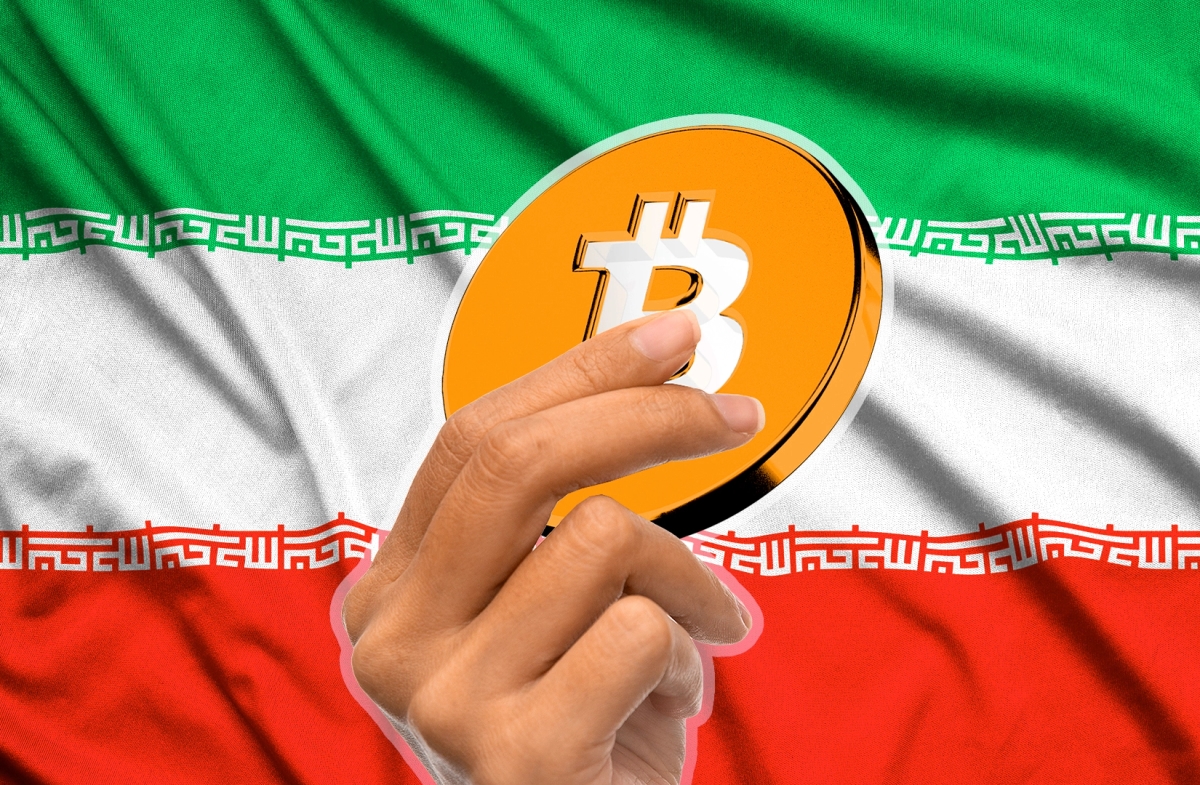
Just last week Iran announced it would be collecting a $1-per-barrel toll from ships passing through the Strait of Hormuz — payable in Bitcoin.
The announcement, reported by the Financial Times last week, meant that for the first time ever a sovereign nation legitimised Bitcoin as a tool for international commerce.
If the toll holds, it would mean a windfall for Iran. One-fifth of the world’s liquid petroleum flowed through the strait before the war. But the US recently imposed a blockade in hopes of squeezing the Iranian economy.
For Hougan, Iran’s decision is proof that Bitcoin’s “apolitical currency” thesis — long derided as fantasy — is becoming reality. And when layered on top of its digital gold narrative, the sky is the limit.
"If Bitcoin takes on a dual role as a store of value and a currency then $1 million per Bitcoin begins to look like a starting point,” Hougan wrote.
Bitcoin has rallied 12% since US and Israeli airstrikes on Iran began February 28, while the S&P 500 fell 1% and gold dropped 10% over the same period.
The Overton Window
Hougan isn’t the only one reckoning history just happened.
“Even if no agreement is reached, this feels like a watershed moment for Bitcoin and is a huge shifting of the ‘Overton Window,’” the London Crypto Club wrote in a research note this week.
Named after Joseph Overton, a political analyst, the Overton window is the range of ideas or policies that are considered politically acceptable or “normal” in mainstream public discourse at any given time. It’s also known as the window of discourse.
The researchers drew parallels with Russia’s exclusion from the financial system following its invasion of Ukraine in 2022.
Back then, global central banks accelerated gold purchases after realising that the money spigot could be turned off at will by the US and its allies. Russia’s exclusion provided a rationale for stockpiling non-sovereign reserve assets. And now Iran is strengthening it.
“The ‘game theoretic’ incentives to hold Bitcoin in reserves have just increased significantly," they wrote. “Our long-term bullish thesis for Bitcoin continues to unfold perfectly and even more rapidly than we anticipated. It’s a matter of when, not if, Bitcoin becomes a globally held reserve asset.”
Two bets in one
Hougan argues that buying Bitcoin is like making two bets simultaneously.
The first chips go to Bitcoin becoming digital gold. If it manages to capture 17% of the $38 trillion store-of-value market, then it will topple $1 million, explained Hougan.
The second bet is that Bitcoin becomes a global currency used for international settlement. Until last week, that was an outcome that seemed “deeply unlikely,” wrote Hougan, because the world ran almost exclusively on dollar-based financial rails.
Until it didn’t. Precisely like the London CryptoClub, Hougan pointed to Russia’s removal from the Swift system in 2022.
“When the Russia/Swift split happened, I mused that the fracturing of dollar hegemony might open up space for Bitcoin,” Hougan wrote. “If countries grew reluctant to deal in dollars for political reasons, it stood to reason that they might prefer an apolitical alternative.”
Pedro Solimano is a markets correspondent based in Buenos Aires. Got a tip? Email him at psolimano@dlnews.com.