
Scope of the research report
Tokenisation is expanding rapidly across financial markets. From stablecoins to commodities, equities and real estate, an increasing share of assets is moving onchain. Yet this growth is often analysed as a single trend, grouping fundamentally different asset classes under one umbrella. Unfortunately this framing creates blind spots.
Each asset class carries its own structural characteristics. Commodities are tied to physical supply chains and custody systems. Equities represent financial claims with embedded rights such as dividends and voting. Real estate operates within jurisdiction-specific legal frameworks and registry systems. Other emerging financial assets introduce yet another set of dynamics.
As a result, tokenisation of real world assets doesn’t unfold uniformly. The pace of adoption, the role of intermediaries, the depth of liquidity and the degree of DeFi integration all vary depending on the underlying asset.
Hence, rather than treating tokenisation as a homogeneous market, this report takes a segmented approach, focusing on four emerging sectors: commodities, equities, real estate, and alternative financial assets, which are often overlooked in research that typically focuses on more traditional instruments such as bonds and Treasury bills.
Across each sector, the analysis goes beyond simple growth metrics. It combines quantitative data with qualitative insights to understand how these assets are structured, how they are used onchain, and how they integrate into DeFi. The goal is to connect usage, growth and constraints to build a clearer view of how each segment is evolving and collectively shaping what can be defined as RWAFi.
The report begins with a brief global overview to set the stage. It then examines each sector independently to capture its specific dynamics and constraints, before bringing these perspectives together in a final section to show how these segments connect and what they reveal about the development of RWAFi.

1. What makes DefiLlama RWA dashboard unique in the space?
We organize RWAs under several classification systems. Are you looking for permissioned va permissionless? What about yield bearing RWAs versus tokenized commodities? Simply looking for bonds? How about specifics like palladium or sovereign bond funds? Or RWAs only on ETH? We have them organized in countless ways. Most importantly, we have Active Marketcap and DeFi Active TVL as core metrics for our dashboard. DeFi Active TVL is how much value of an RWA is found in third-party defi protocols. This gives us an idea of how integrated with the rest of crypto an RWA is. Active Marketcap is a derivation of onchain marketcap where we remove from the total marketcap the tokens held in high confidence associated wallets that belong to the team, treasury, or other various internal addresses or that are engaged in mint-burn loops. This gives us a more realistic picture of how much RWA value is actually being provided for the greater market and not simply a reflection of internal bookkeeping. Utilization as a metric is the % of DeFi Active TVL over Active Marketcap. The higher the utilization, the more integrated an RWA truly is with the greater financial ecosystem. TradFi already has its various financial instruments webbed together. DeFi has that already. We want to see an increasing amount of this as this means the RWAs are not just sitting stale and represent capital that’s actively taking risk. This is the most perceptible and thus most quantifiable intersection demonstrating where the future of finance is being birthed.
2. What are the main challenges you face when integrating RWA projects on the dashboard?
Defining what constitutes RWAs. That is what criteria are needed to sufficiently define an asset as an RWA. What _isn’t_ an RWA? It’s a philosophical debate at this point. What also are the exclusionary criteria for RWAs? That seemed easier to come up with as a lack of evidence. Where is the difference programmable finance and RWAs? What metrics will someone want to see that can effectively compare a treasury bond to copper to Pokemon cards?
3. What are the hardest metrics to standardise across RWA protocols?
The concept of TVL/AUM/Marketcap. Each RWA protocol seems to operate differently when claiming how much capital exists within their asset/protocol. Standardization had to come from us to prevent user confusion. RWAs are such a massive umbrella of assets that you truly are comparing apples and oranges and that’s desired. Fruit is a big umbrella but RWAs are bigger than that metaphor and closer to anything that can be ingested. How do you decide to show the same standardized data for a fractionalized art piece and carbon credits and the same money market fund that has three different jurisdictional wrappings?
4. What are the biggest data transparency issues you see with RWA protocols today?
Attestations. Though lots of RWAs provide them. There are some that can’t provide them easily due to the risk associated with revealing exact locations/doxxing while adhering to security procedures. Furthermore, frequency of attestations and what constitutes as “good enough” of a verification are somewhat subjective when this entire industry is still in its infancy. Do you need a live webcam stream of a gold vault to know it exists or is a simple document signed every few months enough? If so, how do we know that the assets haven’t moved during that duration of time in between? Crypto solved for double-spend onchain but not offchain.
5. Where do you think the RWA sector will be in 2/3 years in terms of on-chain data and transparency?
It’s going to be glorious compared. The rate of change in the past two years has been exponential. Simply put, as much as the crypto native is not fond of regulatory compliance being a barrier for development that isn’t the case when it comes to RWAs. They’re already regulated IRL. “Don’t trust, verify” is going to hit TradFi _hard_. What used to be hidden away due to inaccessibility is going to be a normal demand from people so that they can have trust with these products. Onchain data is the trickiest part but there are several developments that look like they’re going to help get us on track to where we want. We want to get from the point of PDFs uploaded to centralized servers declaring the existence of RWAs to eventually having the full document written onchain and updated there on the public ledger. That’s going to be a bit intensive in terms of block space, sure. That will also be solved for. The significant takeaway isn’t the transparency and onchain data for RWAs, it really is about how much it is going to influence the rest of the world & TradFi to become more transparent about their record keeping. We’re here at the advent of a new era of finance and it is absolutely pertinent that we do not lose sight of why we are avid about crypto to begin with. The old system was broken. We shouldn’t rush onboarding that old system without making the improvements we need to make it sustainable. Once again, we’ve solved double-spend in crypto. Let’s not be too excited that massive values of assets are being put onchain and neglect the reason they even were inspired to come onchain in the first place: a decentralized peer-to-peer financial system that anyone can audit themselves. This is going to happen in steps. We’ve made breakthroughs. The next ones are going to be loosening of crypto regulations while enhancing the pre-existing compliance for the underlyings. This is how we manufacture concrete DeFi lego blocks.
Market Overview
Tokenisation is no longer an emerging narrative. It is becoming a measurable segment of financial markets. As of March 2026, the active real-world asset market cap* has expanded from approximately $4.1 billion in early 2025 to $25.2 billion as of today, representing a more than fivefold increase in just over a year.
This growth, however, is not evenly distributed. It is concentrated across a limited number of asset classes.
Tokenised funds dominate the market, growing from $2.7 billion to $13.5 billion and accounting for more than half of total active market cap. Commodities follow, expanding from $1.1 billion to $5.9 billion, largely driven by tokenised gold. Private credits come next, with $4.6 billion but remains hard to track with accuracy due to the private nature of the asset class. Tokenised stocks and equities have also scaled rapidly, increasing from around $200 million to $1.2 billion. Together, these segments represent the vast majority of the market accounting for more than 95% of total RWA value.
Real estate remains relatively small and requires a different lens of analysis, as it is more relevant to consider the underlying asset value rather than the active market capitalisation. The sector has grown from a few tens of millions to around $300 million in represented value.
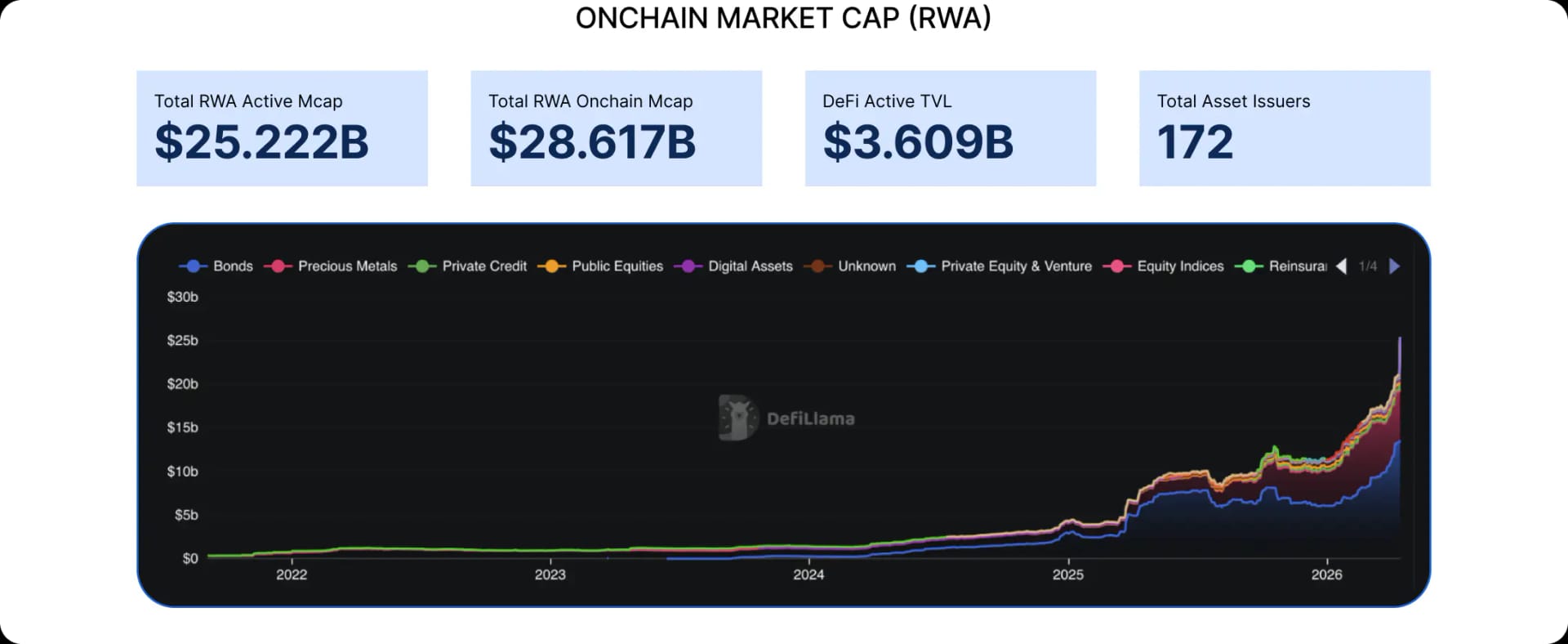
Beyond market size, actual usage is another key metric to consider. While total onchain market capitalisation stands at approximately $28.6 billion, only around $2.81 billion is currently deployed within DeFi protocols.
*Active Market Cap : The portion of Onchain value taking real market risk in user or protocol hands.
The uneven growth across asset classes and the still gradual pace of DeFi integration can largely be explained by how the market is structured. Not all assets are equal. Some are easier to standardise, distribute and track, while others are more complex due to legal, operational or market constraints. Tokenised assets rely on offchain infrastructure such as custodians and legal entities, meaning tokens often represent claims rather than direct ownership, and their tracking can vary in complexity. Liquidity also differs: it can be deep and accessible in some cases, while in others it remains fragmented across issuers, chains and venues. Regulation further defines how far assets can integrate into DeFi, particularly when introducing yield, lending or cross-border activity.
As a result, RWA should not be viewed as a single market, but as a set of distinct asset classes evolving under different conditions. This is what we explore in the following sections across the four selected asset classes.
Sector #1 - Tokenised Commodities
Overview and Structural Categories
Commodities represent a broad sector covering a wide range of assets. Structurally, they share a common foundation: each commodity is tied to an underlying tangible asset. Ownership or exposure ultimately represents rights linked to something physical, although legal structures, regulation, custody and KYC requirements introduce important differences across assets.
The market itself is massive, representing more than $138 trillion in nominal value, largely driven by oil and gas alongside precious metals such as gold. In traditional finance, commodities form a mature and highly financialised sector supported by deep liquidity and a broad range of instruments, including futures, ETFs and structured products.
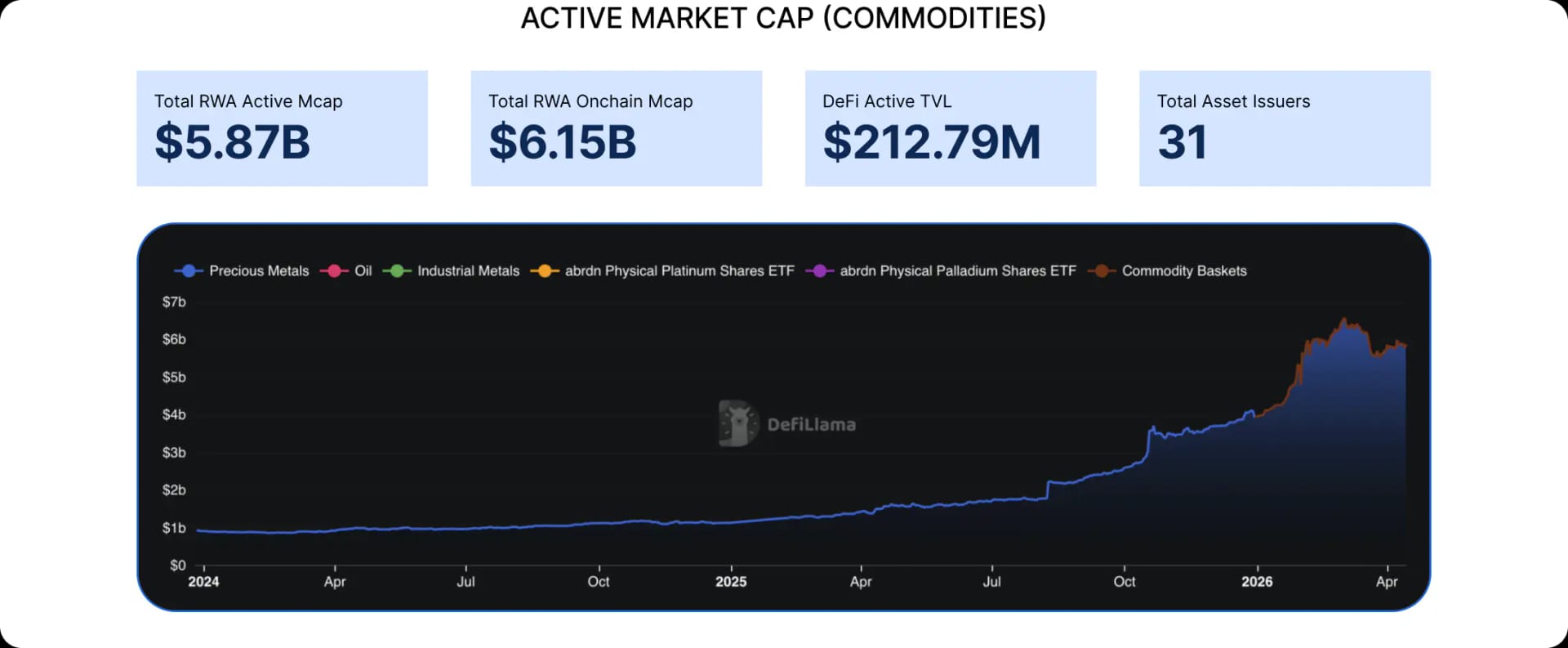
Onchain, commodities are emerging as one of the largest real-world asset categories after tokenised U.S. Treasuries, reaching around $5.8 billion in active market cap. This represents strong growth from approximately $1.1 billion one year earlier, a 481% expansion. While a wide variety of assets exists onchain, ranging from oil, copper, uranium, soybeans, gold, and silver, the market remains heavily concentrated. Two assets alone, XAUT and PAXG, account for roughly 95% of total commodity market capitalisation, reflecting the dominance of tokenised gold.
This concentration shows that commodities do not move onchain uniformly. In fact, their economic function, how they are stored, used, regulated, and financialised, determines their migration. Three segments emerge: monetary collateral commodities, strategic supply constrained commodities, and industrial flow based commodities.
Monetary collateral commodities are primarily held rather than consumed. Gold, and to a slightly lesser extent silver, fall into this category. They exhibit high above-ground stock relative to annual production, standardised units, deep global liquidity and mature custody infrastructure. Most importantly, they already function as collateral within traditional finance. Their price discovery is continuous, storage is verifiable and their reserve role is globally recognised. This makes them structurally suited for tokenisation.
Strategic supply-constrained commodities follow a different path. Uranium is the clearest example. Its value is closely tied to energy security and geopolitical positioning rather than monetary function. Physical ownership is highly regulated and retail access remains limited, with exposure typically occurring through specialised vehicles or mining equities. In this category, tokenisation primarily expands access rather than settlement efficiency, meaning adoption is more likely to remain institutional-first and permissioned.
Industrial flow-based commodities represent a third structural model. Oil and copper are continuously produced and consumed within logistics-heavy supply chains. Financial markets for these assets are dominated by derivatives used for hedging rather than long-term holding. Investors rarely seek physical ownership and instead trade exposure through futures or swaps. Storage, transport and delivery requirements introduce operational complexity, making warehouse-backed tokenisation less practical. As a result, migration onchain is more likely to occur through synthetic or derivative structures.
Liquidity, Redeemability and Capital Efficiency
Traditional commodity markets are already efficient, liquid and deeply financialised, yet commodities are progressively moving onchain. The shift is therefore not about fixing inefficiencies, but about improving infrastructure. Beyond faster settlement and transparency, tokenisation influences how commodities are accessed, redeemed and deployed as capital.
Methodological note: With XAUT and PAXG representing roughly 95% of commodity TVL, they are used as proxies for broader market dynamics in the sections below.
Liquidity: Access vs Depth
Traditional commodity markets are highly liquid at the institutional level. Gold trades hundreds of billions of dollars daily across spot, futures and OTC markets, while oil futures maintain substantial open interest on CME and ICE. However, access typically requires brokerage accounts, clearing relationships, margin frameworks and custodial infrastructure. Products also remain fragmented across providers, creating friction and limiting capital mobility between venues.
Tokenisation reduces these frictions.
Fractional ownership lowers entry thresholds, settlement occurs within minutes rather than days, and assets can be transferred directly without authorised intermediaries. Liquidity therefore becomes more accessible and more portable.
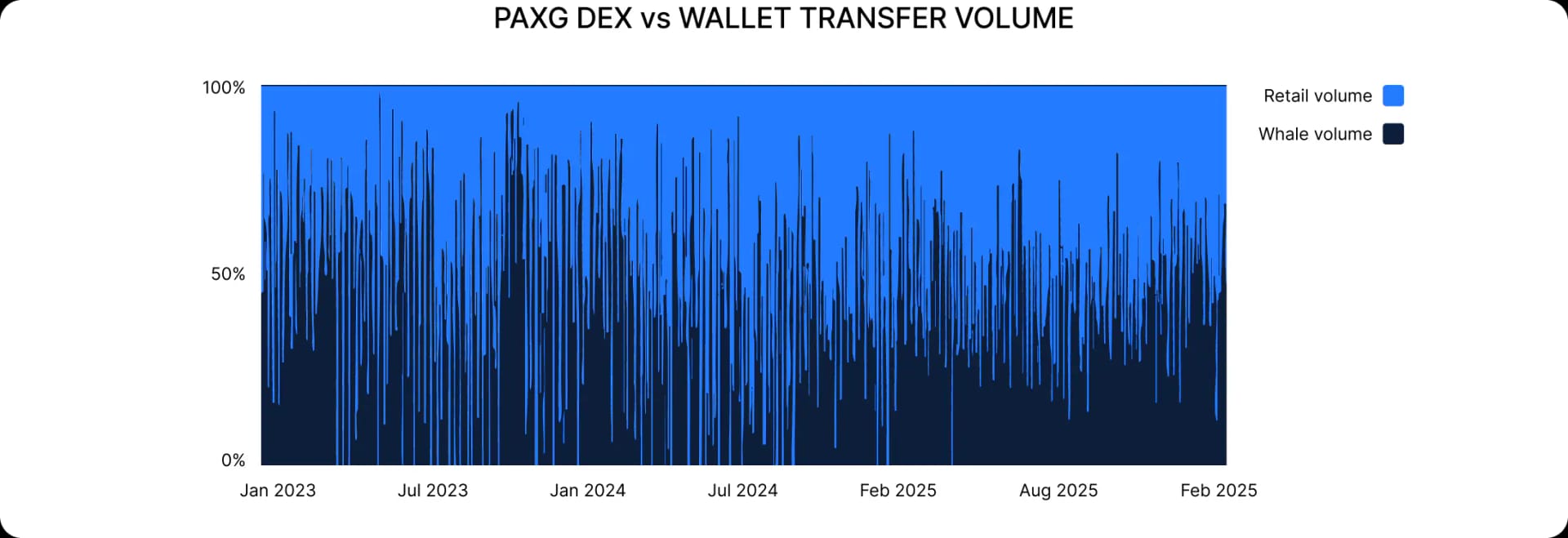
This dynamic is visible in tokenised gold markets, where transaction volume between whales and retail participants appears relatively balanced, indicating that access is no longer dominated by institutions alone. Whale participation has also become more consistent compared to earlier years, reflecting clearer regulation and improved liquidity infrastructure.
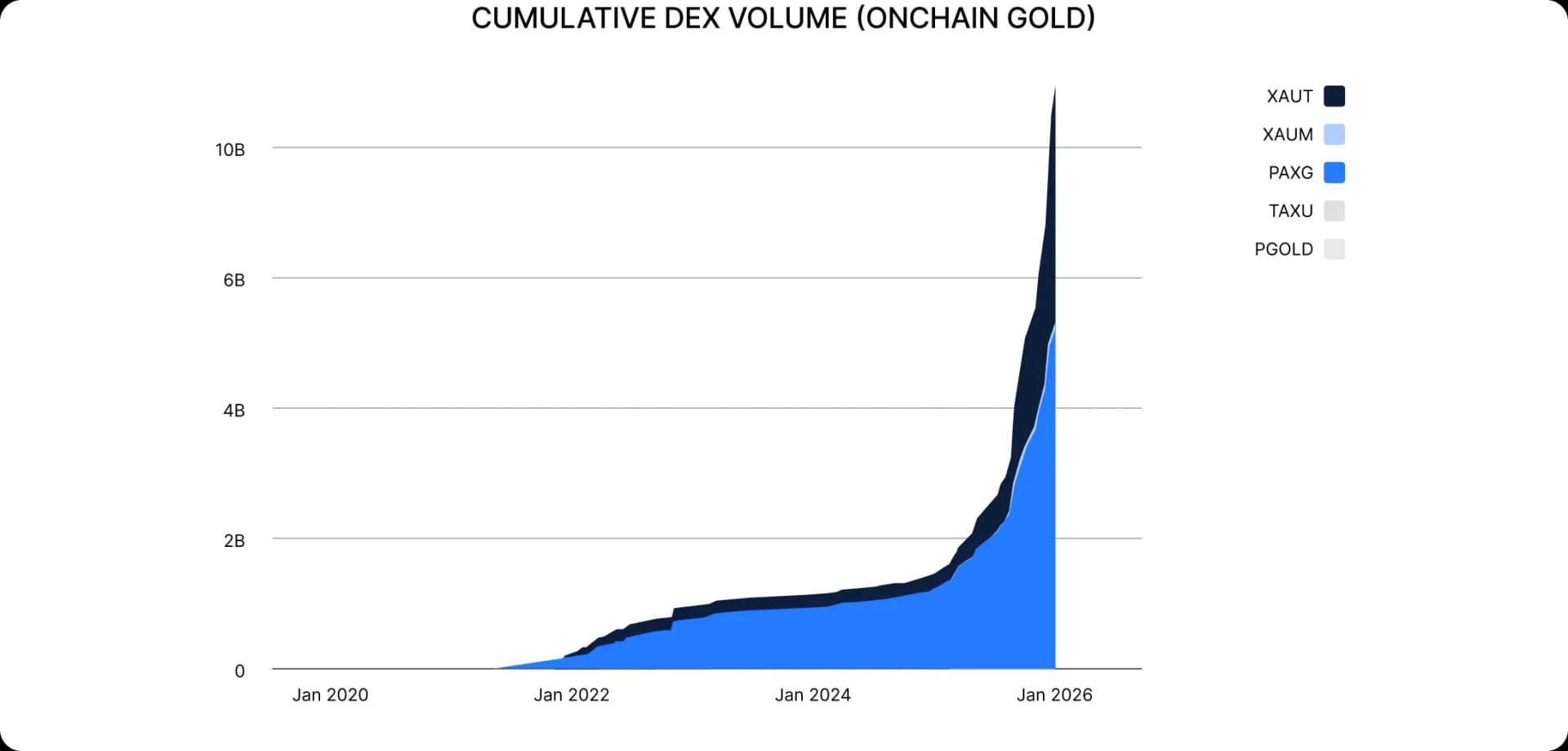
This trend aligns with deeper market activity, as cumulative DEX volume increased from roughly $1.4B to over $8.4B in the past year alone, signalling stronger secondary liquidity and better execution conditions.
Liquidity quality is also reflected in transaction behaviour.
The share of PAXG transactions routed through DEX smart contracts increased from roughly 5% in earlier periods toward around 20%, suggesting that liquidity has matured enough to support active trading rather than simple transfers.
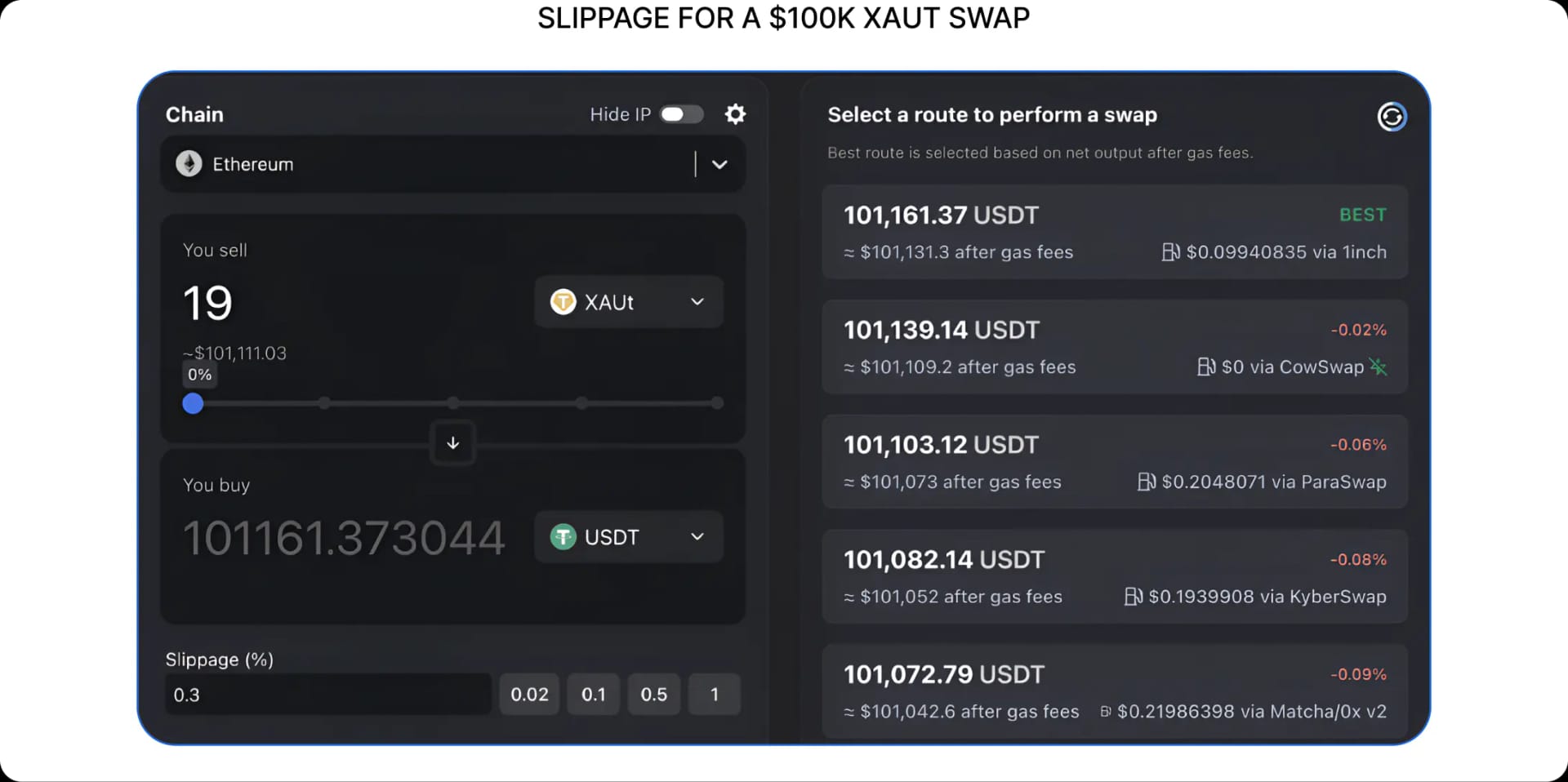
Execution quality further reinforces this evolution. Tests on PAXG, XAUT and SLV using trade sizes of $10k and $100k show slippage remaining below 0.03% (when not net positive thanks to solvers) when routed through aggregators such as 1inch, CoW Swap, and around 0.1% when executed directly against individual pools.
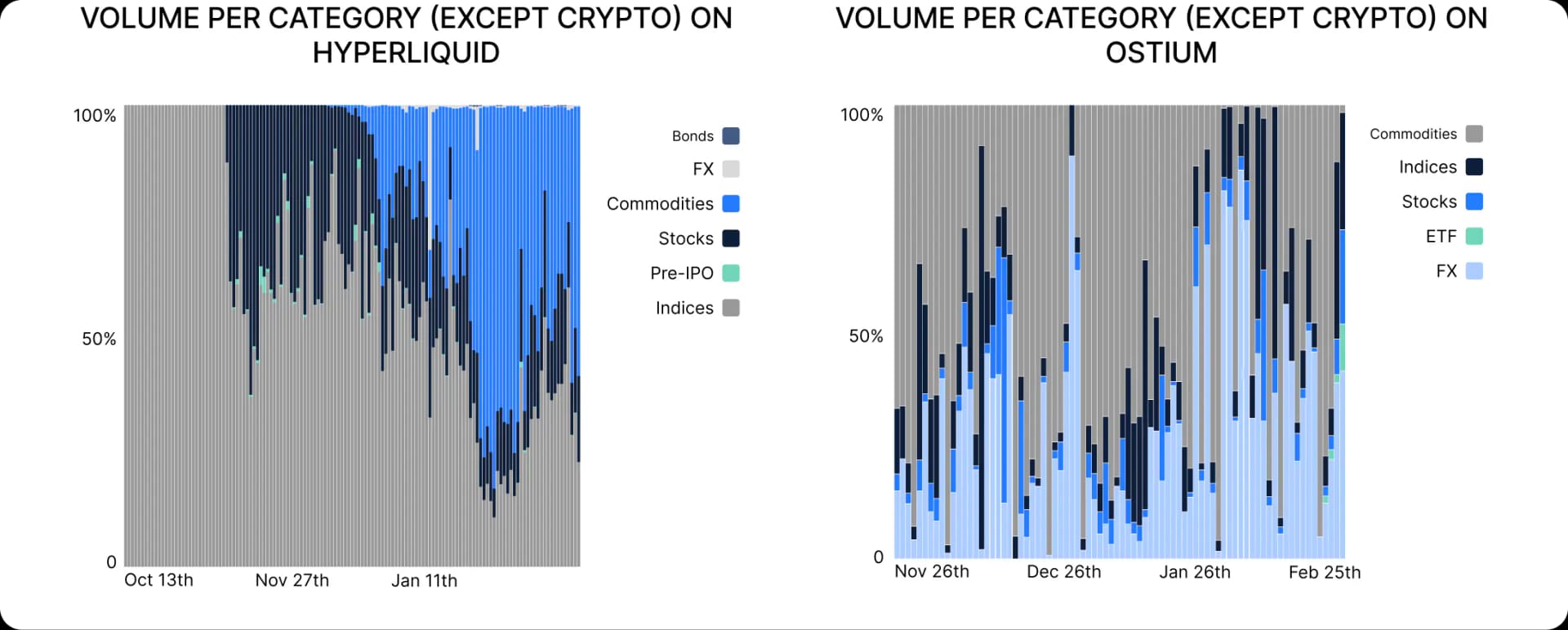
Liquidity depth also extends beyond spot markets. Commodities now represent over $1B in daily perpetual trading volume, with platforms such as Hyperliquid and Ostium showing commodities accounting for more than half of RWA perpetual activity. Open interest reinforces this trend, with Ostium alone showing more than $150M in commodity OI, signalling the ability for the platforms to support long term positioning.
The key takeaway is that tokenisation fundamentally improves access to liquidity.
Onchain markets now offer execution quality sufficient for both spot and perpetual trading at size, with pricing and slippage often comparable to traditional finance. While liquidity remains concentrated, with roughly 95% centred in XAUT and PAXG, this reflects an early-stage market likely to broaden as more commodity tokens mature. Tokenised commodities are therefore no longer experimental, but functional trading assets.
Redeemability: Credibility Over Usage
In theory, physically backed commodity tokens such as tokenised gold or silver establish direct claims on vaulted assets. Legal structures, custody arrangements and attestations establish the backing mechanism.
In practice, redemption remains conditional, requiring KYC compliance, jurisdictional limits and minimum thresholds. For example, XAUT or PAXG typically require around 430 tokens, corresponding to one London Good Delivery bar. Smaller holders can usually redeem in cash for fees ranging from roughly 0.25% to above 1%.
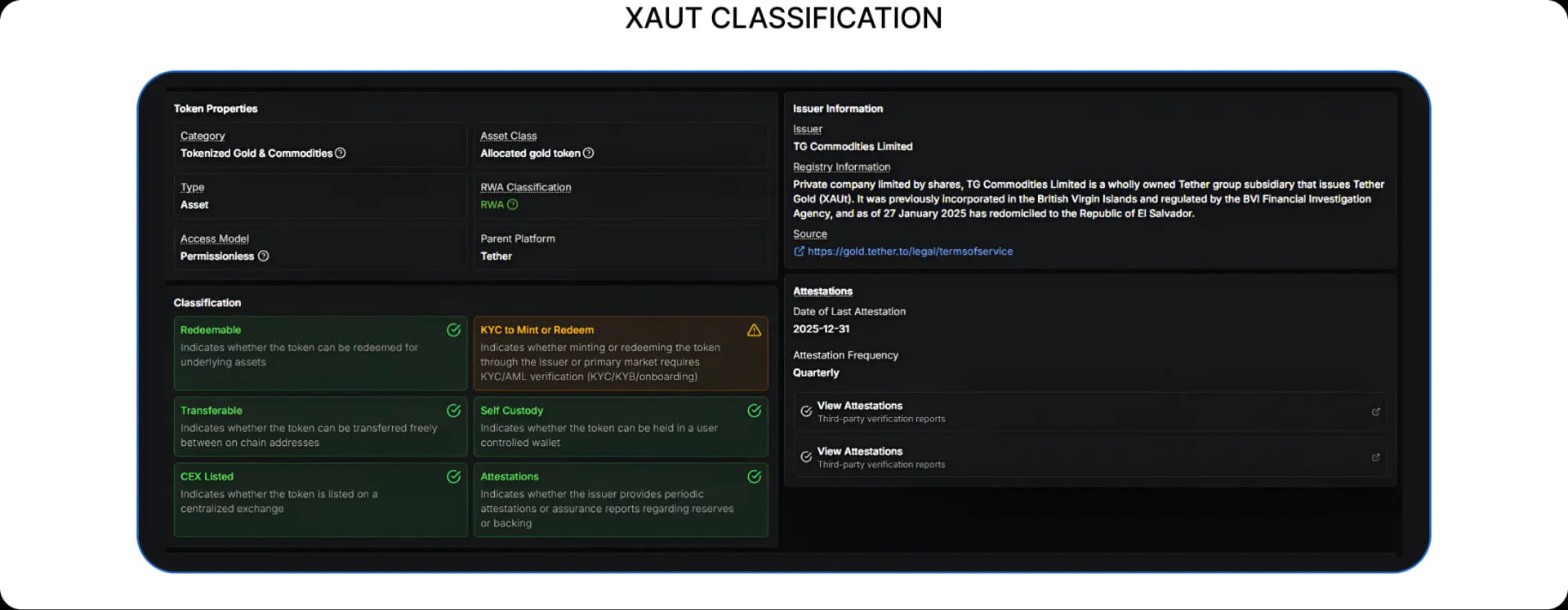
This dynamic is not unique to crypto. In traditional finance, physical redemption is also possible but generally limited to authorised participants, large institutional investors or holders meeting minimum size requirements, often involving custodial agreements and settlement through approved clearing entities.
In reality, most participants seek exposure rather than physical ownership. Consequently, what matters is not redemption itself, but the credibility behind it.
The existence of a legally enforceable redemption pathway anchors price stability and mitigates insolvency risk. Onchain, credibility is reinforced through periodic audits, proof-of-reserve mechanisms and mint-and-burn structures designed to align token supply with underlying assets.
Capital Efficiency: From Static Exposure to Programmable Collateral
In traditional finance, commodities already function as collateral. They can be pledged in structured products or margin accounts, yet this collateral remains institution-bound and often siloed across custodians. Tokenisation changes this dynamic by allowing collateral to move more freely across venues and protocols, a shift that is now becoming visible onchain.
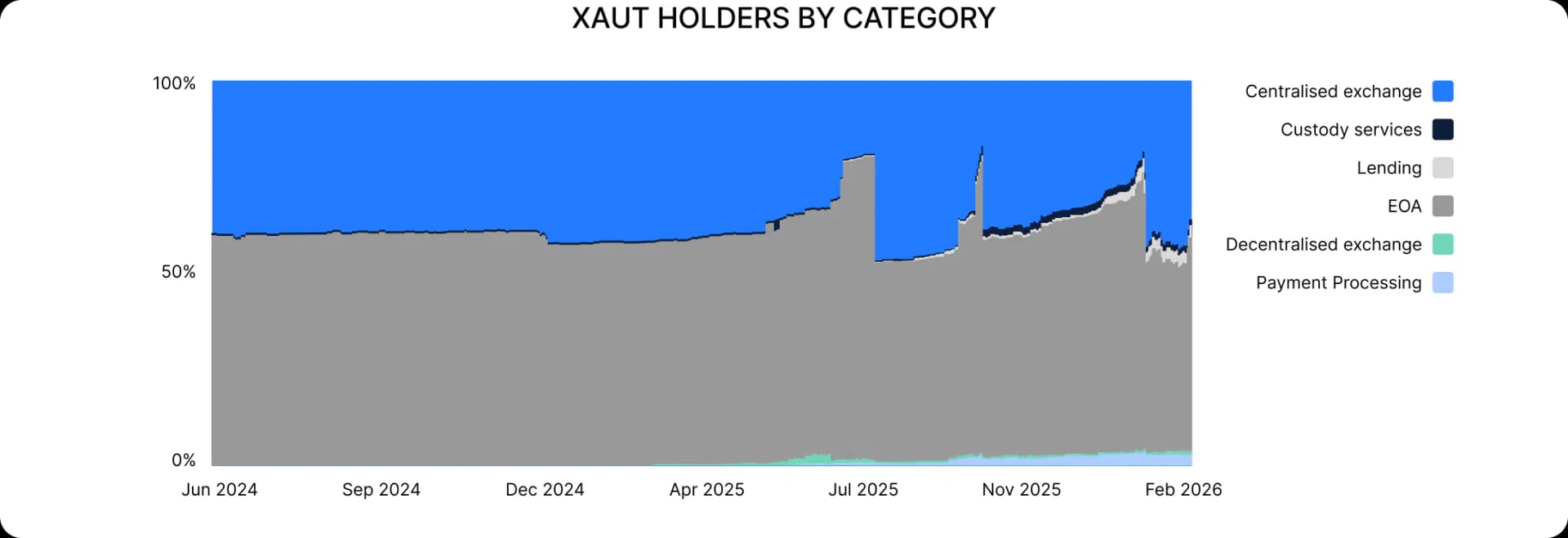
For example, XAUT holdings are split between approximately 49% externally owned wallets and 42% centralised exchanges, with the remaining share deployed across lending, payment solutions and DEX activity. While this active share remains limited in absolute terms, the trend is more meaningful.
Indeed financial applications such as payments, lending and trading account for an increasing share of usage. This indicates a gradual shift toward commodities functioning as active financial primitives within DeFi.
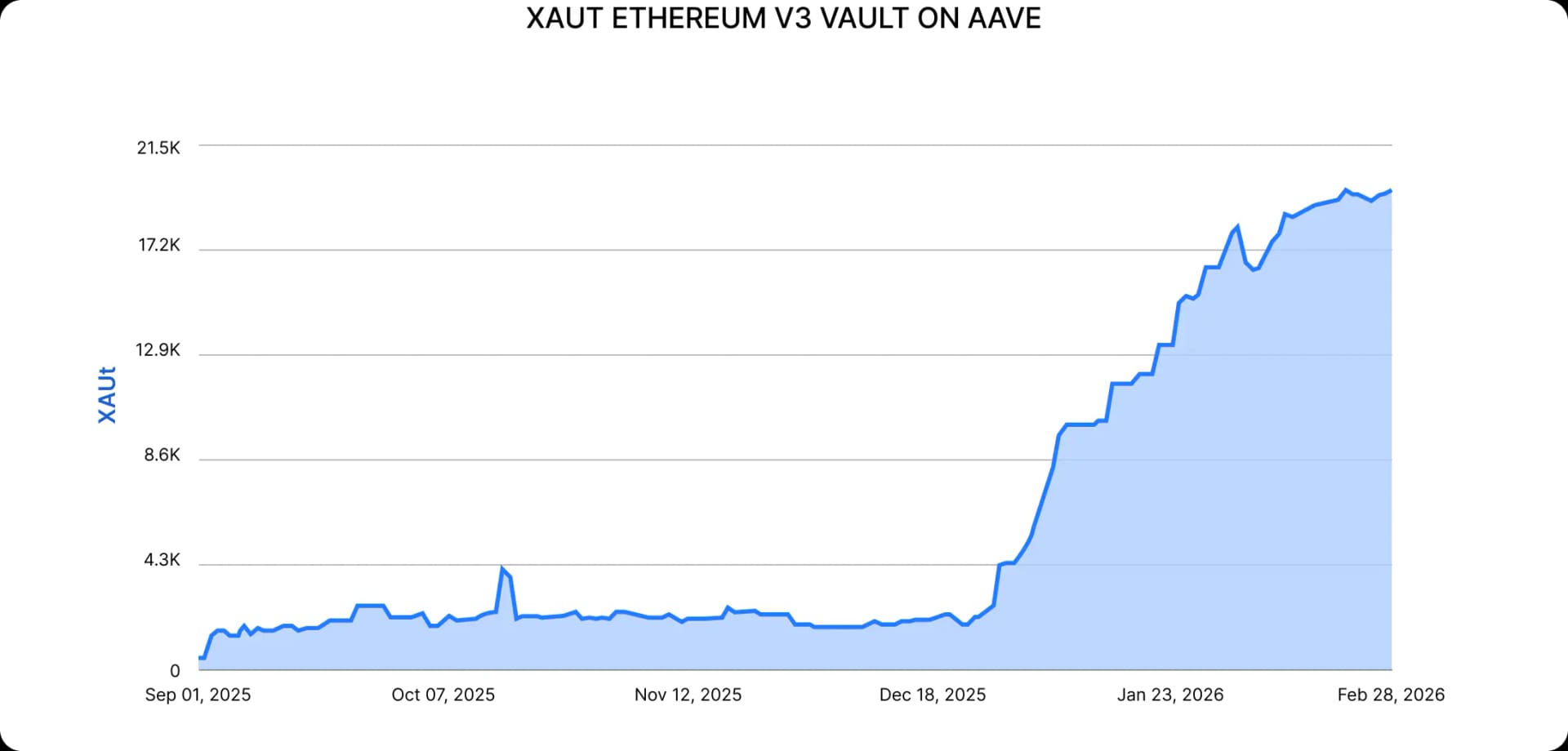
The Aave XAUT vault illustrates this transition even better. Supplied balances increased nearly tenfold over a few weeks, demonstrating that holders are increasingly deploying gold within credit markets rather than passively storing it.
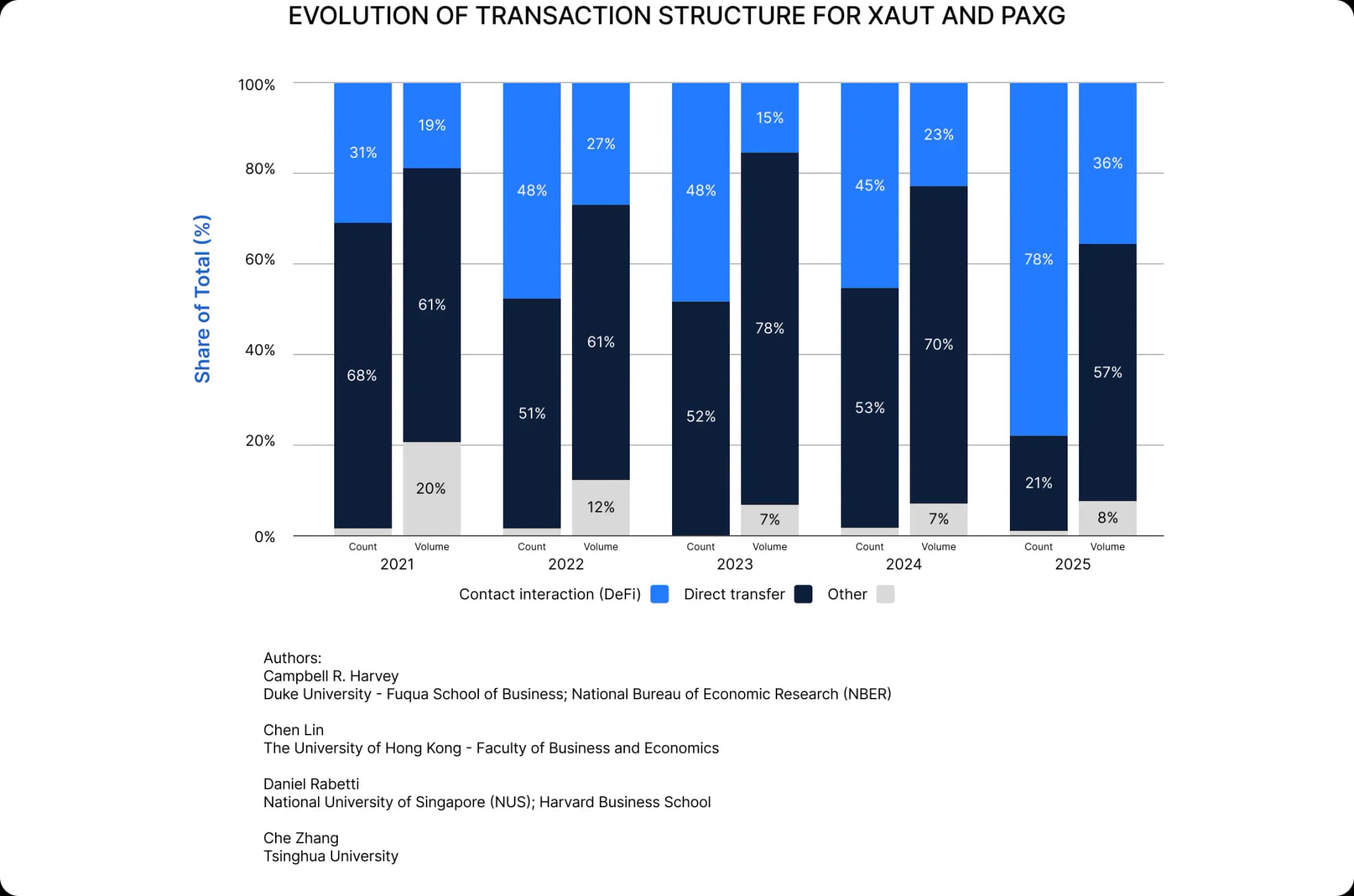
This evolution is also visible in broader interaction patterns. Since 2021, both the number and volume of XAUT and PAXG interactions with smart contracts have increased significantly, with more than 75% of transactions and around 36% of total volume now involving contracts.
Finally, asset velocity has also increased materially. Turnover on assets such as PAXG and XAUT is two to three times higher compared to traditional ETF equivalents, indicating that users deploy these assets more actively when they exist onchain.
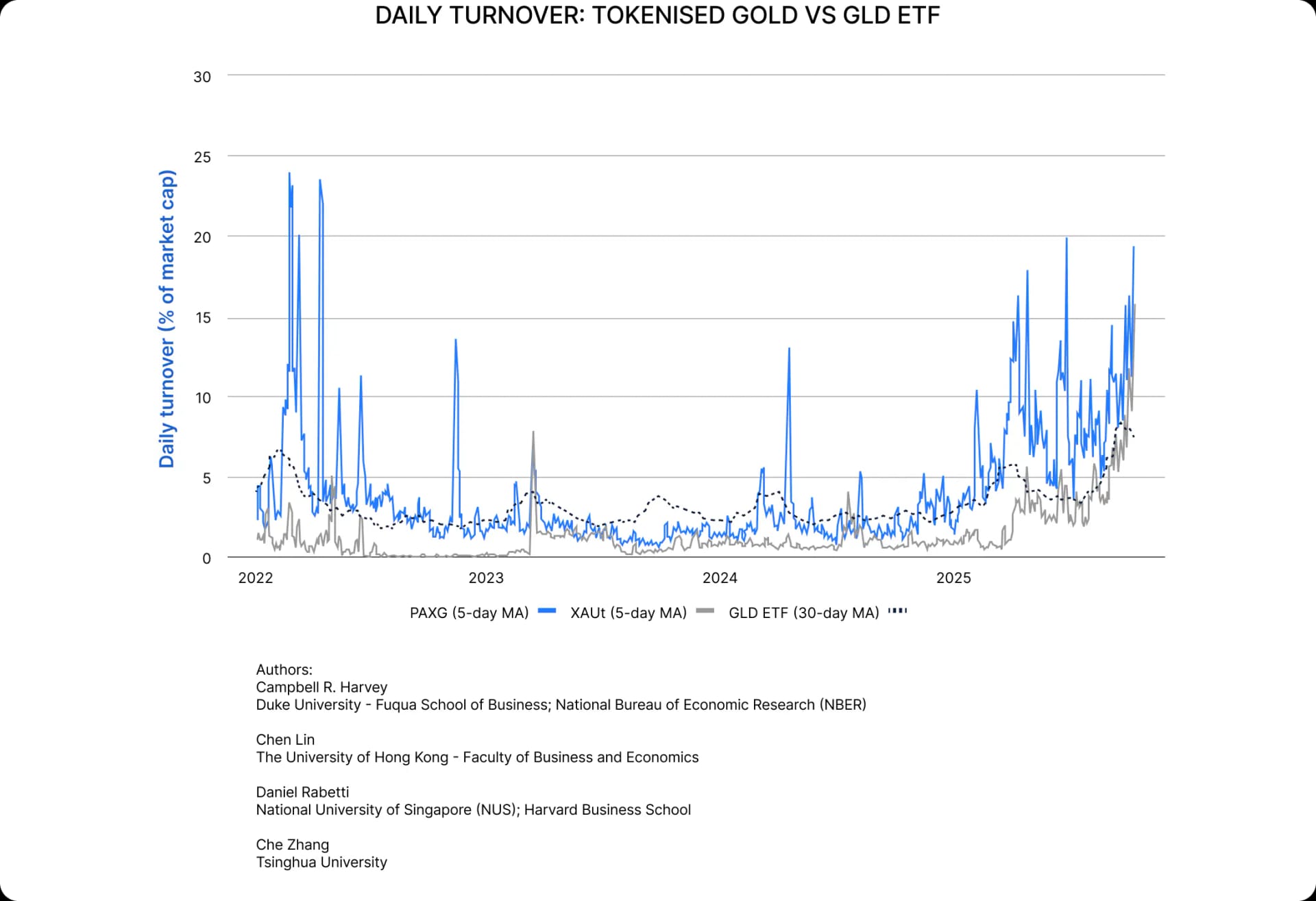
Taken together, these figures reflect the growing momentum of DeFi for commodities, where collateral usage, yield opportunities and composable strategies encourage more active capital deployment. This dynamic is enabled by the programmability, composability and interoperability introduced through tokenisation.