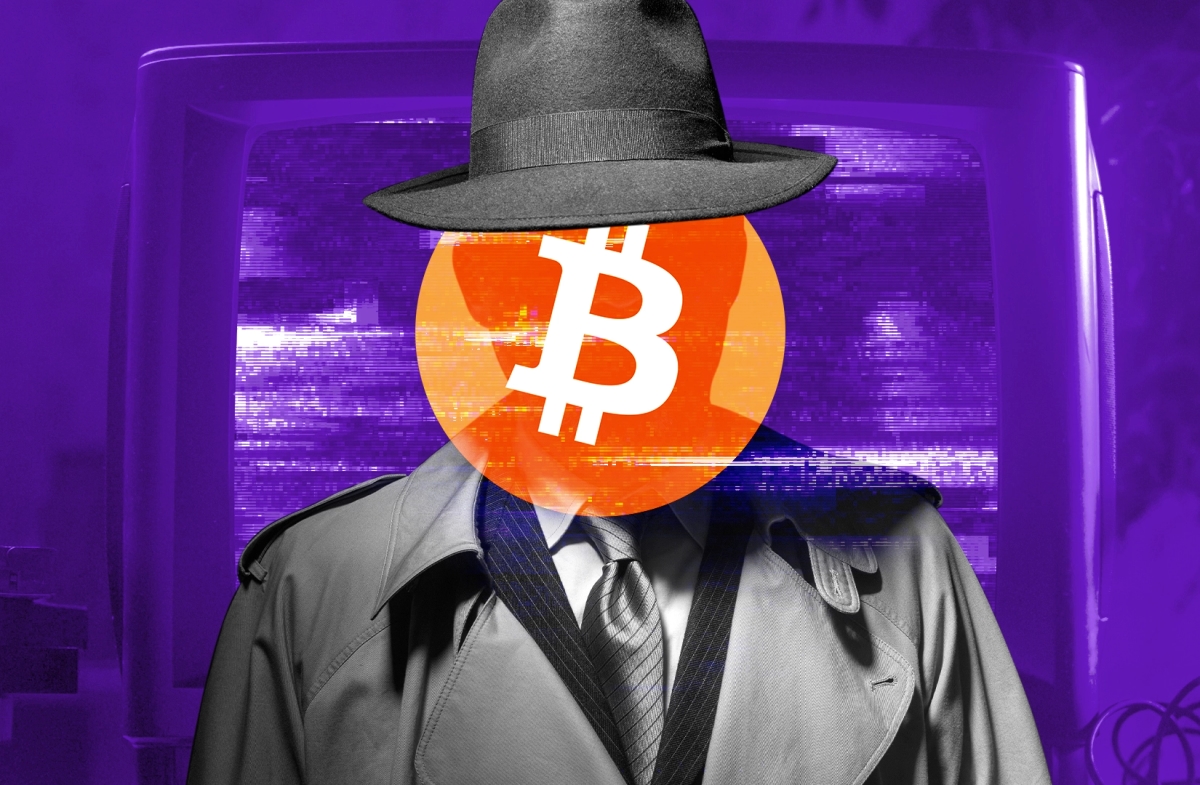
- A new documentary claimed to have finally unravelled the mystery of Satoshi Nakamoto's identity.
- It wasn’t one, but two cypherpunks that invented Bitcoin, the documentarian alleges.
- Investigators have grappled with the question for years.
Pedro Solimano is DL News’ markets correspondent. All opinions are his own.
There’s no shortage of documentaries and articles claiming to have found Bitcoin’s mysterious creator, Satoshi Nakamoto. I finally watched one that’s compelling.
“Finding Satoshi,” which aired on Wednesday after more than four years of research and dozens upon dozens of interviews, argued that Bitcoin wasn’t created by one person, but actually two: Hal Finney and Len Sassaman, both now deceased.
And after watching it, I’m kind of sold. Not because the film found a smoking gun — there isn’t one — but because it stopped playing the “gotcha” card, and started connecting dots that have been hiding in plain sight since 2009.
For years I’ve pored over the BitcoinTalk forum, read all the books, watched all the documentaries like HBO’s Money Electric: The Bitcoin Mystery, interviewed the OGs, and sat around thinking about who Satoshi is. It always seemed like we were never really going to know. Satoshi was a ghost and that was it.
Well, this time feels eerily different.
Here’s why I think “Finding Satoshi” makes the most compelling case yet.
The investigation
The film follows New York Times bestselling author William Cohan and private investigator Tyler Maroney through a four-year investigation that began with the usual suspects.
Six cypherpunks adorned their blackboard. Adam Back, Nick Szabo, Hal Finney, Len Sassaman, Paul Le Roux, and Wei Dai.
Using a combination of data science, linguistic analysis, and expert testimony, Alyssa Blackburn, a data scientist at Baylor College of Medicine, analysed Satoshi’s digital rhythm. She researched when they posted, when they mined, and when they went silent.
Notably, only two fit the bill, says the documentary: Finney and Sassaman.
It was “inconceivable” that Back, Szabo, or Dai could be Satoshi based on that analysis alone, she said.
This is not the first time that Sassaman has been named as the mysterious founder of Bitcoin. Ahead of a 2024 HBO documentary titled “Money Electric: The Bitcoin Mystery,” punters on Polymarket were pouring money into bets that he was the person the film would identify as Satoshi.
Meredith Patterson, Sassaman’s widow, rejected those claims, telling DL News that her late husband wasn’t the founder of the crypto industry.
“Money Electric” ended up naming Bitcoin developer Peter Todd as the cryptocurrency's creator, something he denied.
More recently, New York Times investigative reporter John Carreyrou — the man who exposed the fraud at Theranos — published an exposé claiming Back was likely the inventor of Bitcoin. Back has repeatedly refuted such claims.
The coder
"Finding Satoshi" named Finney as the brains behind the code.
Finney was the first person to receive Bitcoin from Satoshi Nakamoto himself, way back in January 2009. A few years earlier, Finney had created Reusable Proof of Work, also known as RPOW, Bitcoin’s closest precursor — yet curiously, it wasn’t credited in the Bitcoin whitepaper.
Maroney suggested that Finney couldn’t have written Bitcoin because he wasn’t known for C++, the programming language that the cryptocurrency was coded in.
Will Price, Finney’s boss at PGP Corp., where Finney worked for around 16 years, laughed. “To an engineer of Hal’s caliber, a different language is like chicken versus steak,” he said. “It doesn’t matter.”
Besides, Finney, being a diehard advocate for privacy would program something like Bitcoin in a language he wasn’t known for, said Price.
Then Price noticed something else: a two-month gap from when Bitcoin’s whitepaper dropped in October 2008 to Bitcoin’s genesis block in January 2009 where Finney made no work commits.
“What was he working on?” Price asked. “I think it was Bitcoin.”
Finney died in 2014 from ALS.
The timing
But Finney couldn’t have worked alone.
Jameson Lopp, co-founder and chief security officer at Casa, discovered several instances where Satoshi and Finney were both active at the exact same time — when Finney couldn’t have been at a computer.
Lopp analysed emails between Satoshi and early Bitcoin developer Mike Hearn with timestamps while Finney was provably running a marathon.
“From the very simple fact that it’s not possible to be in two places at the same time, it’s highly unlikely that Satoshi and Hal were the same person,” said Lopp.
Enter Sassaman.
If Finney handled the code and Sassaman handled the communications — posting as Satoshi while Finney was offline — the timing conflicts disappear.
Even Lopp acknowledged the possibility, saying that “one possible explanation is that Satoshi was a group of people.”
The academic
Sassaman was a PhD student who cared deeply about anonymity, privacy, and excelled at writing whitepapers. He used occasional British spelling, and his PhD advisor was David Chaum, the godfather of cryptocurrency, and founder of privacy-focused XX Network.
“He would have really cared about checking every reference, the precision, and correctness of every part of that whitepaper,” Price said. “That’s not Hal.”
More importantly, he was an expert in stylometric anonymisation, making small linguistic alterations to the way someone writes, in an effort to obfuscate their identity.
Plus, according to Sassaman’s former roommate, best friend, and BitTorrent creator Bram Cohen, Sassaman was brilliant at inventing pseudonyms for himself.
“He had pseudonyms I didn’t even know of,” said Cohen.
Much like Finney, Sassaman understood the value of disguise. He publicly bashed Bitcoin in 2010 and 2011, calling it “bunk” and “overhyped.”
Odd, thought the documentarians, but Cohen said that was the point. “You don’t make all your pseudonyms agree with each other about everything or everyone’s going to know who your pseudonyms are.”
Sassaman took his own life in July 2011, six months after Satoshi’s last public post.
The family
Some of you might be thinking that a lot of that evidence is highly circumstantial. And while that might be true, what really got me was Finney and Sassaman’s closest friends and family.
Patterson has confirmed the two were friends, had worked together at PGP Corp., and were “definitely” in touch in 2008. When asked if Sassaman would have helped Finney without telling her, she said: “Oh, yes, absolutely.”
Then came Fran Finney, Hal’s widow. She first turned down an interview opportunity, but after seeing the film, Fran changed her mind.
“I didn’t think he wrote the whitepaper,” she said. “But he could have helped. What you present in the film makes sense to me.”
We might never have cryptographic proof of who Satoshi was. But there was something deeply poetic about this film that I can’t stop thinking about. Here were two men, in the twilight of their lives, dealing with their own set of demons, working selflessly on a way to leave the world a better place.
And they succeeded.
Sure, Bitcoin is slow, clunky, and wildly volatile. But it exists and it allows millions around the world to store their wealth, elude oppressive regimes, or send money back home to their families.
Imagining it being built, in private, by a man who was dealing with a disease about to leave him paralysed, and another who would commit suicide barely two years after creation, is simply incredible.
Maybe I want it to be true.
Pedro Solimano is a markets correspondent based in Buenos Aires. Got a tip? Email him at psolimano@dlnews.com.