
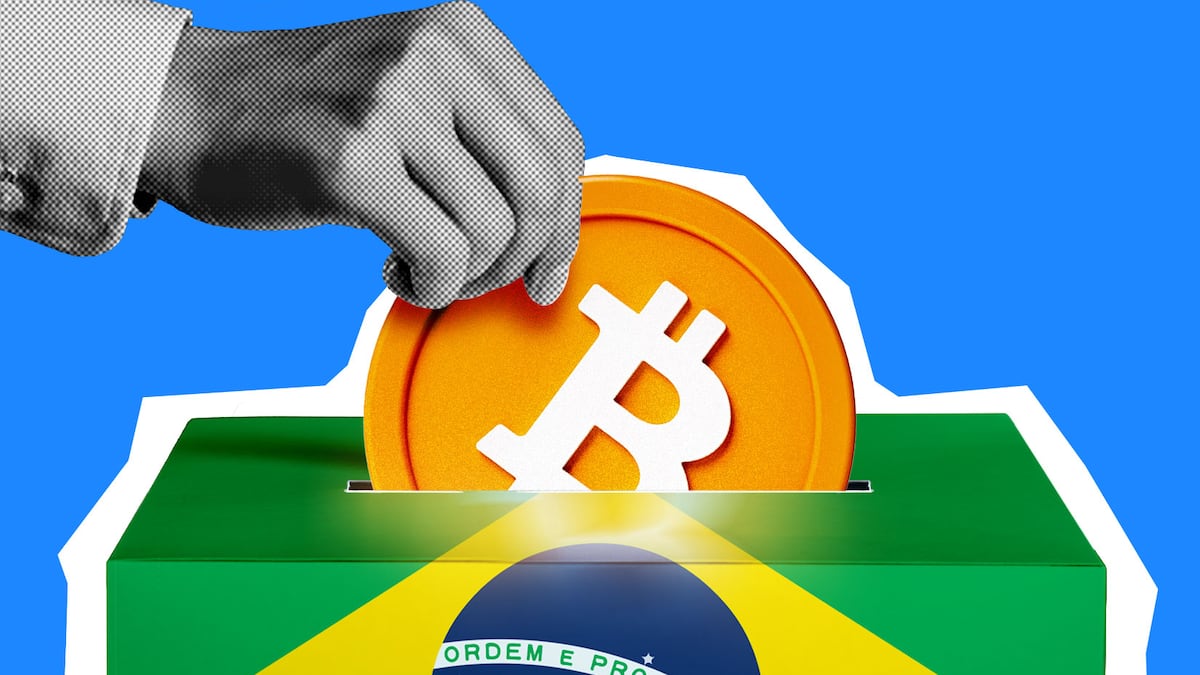
- Court to reveal its decision in March ahead of October 3 elections.
- Judges most recently upheld ban in February 2024.
- Bans on crypto donations are becoming harder to sustain, says lawyer.
A Brazilian Supreme Federal Court judge reviewing a ban on the use of crypto in election campaigns signals that reforms are in the cards in Brazil and beyond, according to legal experts.
Nuno Marques, the vice president of the court-supervised electoral committee, is set to finalise a comprehensive review of election rules, including the long-standing crypto ban, ahead of the October general election, Brazilian media outlet Livecoins reported.
“What is changing now in Brazil and beyond is a growing recognition that blanket prohibitions are difficult to sustain as digital assets become more mainstream,” Jennifer Ouarrag, the head of legal at the staking provider Twinstake, told DL News.
As the popularity of crypto continues to grow in Brazil, more politicians are embracing adoption ahead of this year’s election — where digital assets are poised to become a deciding factor for some voters.
Renan Santos, a prospective presidential candidate, recently pledged to create a national Bitcoin reserve if elected. Crypto community leaders say they would back his bid if he develops crypto-friendly policies.
Last year, the volume of crypto transactions rose by 43% in Brazil, the crypto exchange Mercado Bitcoin wrote in a report last month, with the average Brazilian trader spending more than $1,000 on crypto.
Room for change
While Marques has not spoken directly about crypto funding in elections, he has suggested there may be room for reform.
As things stand, Article 62 of the Brazilian electoral code explicitly forbids the use of crypto as a donations tool.
In comments about “campaign financing,” Marques said candidates and parties were welcome to challenge the present rules if they “present justifications for the change,” Brazilian media outlet Ultimo Segundo reported.
The court says it will listen to public proposals from citizens, companies, and political parties until the end of the month. It will then follow up with public hearings in early February before finalising rules in March.
The reasons why Brazilian authorities banned crypto in 2019 are largely technical, Ouarrag said.
“In Brazil, [electoral rules] emphasise donor identification, contribution limits, source-of-funds controls, and transparent valuation at the time of donation,” she said. “Crypto challenged that framework not because it is inherently opaque, but because it did not fit neatly into reporting and oversight systems designed around bank transfers and fiat currencies.”
All this helps explain why Brazil “initially opted for an outright prohibition rather than incremental accommodation,” Ouarrag explained.
Regulations changing worldwide
Brazil could soon follow in the footsteps of the US, where crypto is beginning to play an increasingly large role in politics.
The Federal Election Commission approved Bitcoin donations in 2014. Last year, Bloomberg reported that crypto firms have raised $263 million from industry players to back pro-crypto candidates in the 2026 midterm elections.
Ouarrag said similar “reassessments” about the use of crypto donations are underway in parts of Europe and Asia, where regulators are “being forced to engage more directly with crypto’s inherent volatility, “rather than trying to fit it into frameworks designed exclusively for cash or bank transfers.”
She said electoral commissions are likely to “adapt, rather than abandon” existing safeguards to ensure electoral funds remain traceable and transparent in the digital age.
Brazil’s Supreme Court last reviewed election rules in February 2024, when it decided to uphold the ban.
At the time, it said the decision was made “to ensure transparency and the proper tracking of donations made to political campaigns.”
Tim Alper is a News Correspondent at DL News. Got a tip? Email him at tdalper@dlnews.com.