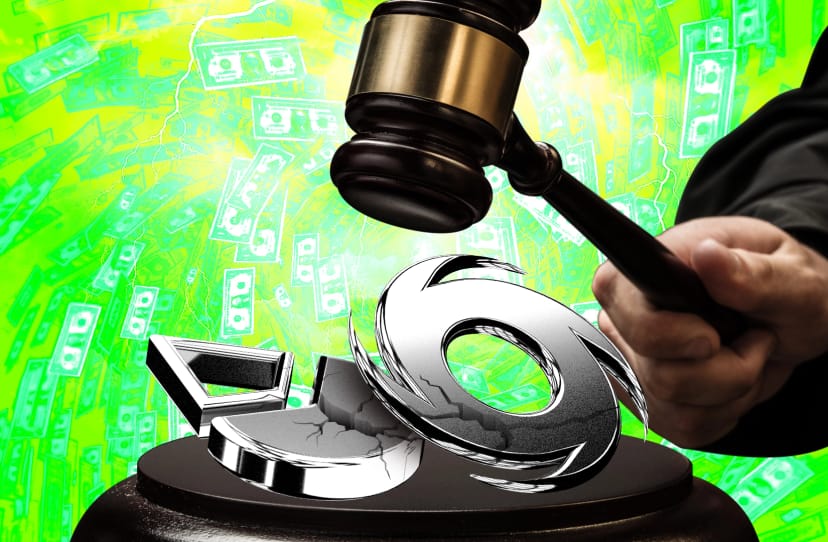




- A judge heard arguments in Roman Storm’s motion for acquittal on Thursday.
- If successful, prosecutors would be forced to decide whether to double down on a case that has been scrutinized by Department of Justice superiors.
- But if Storm fails, he faces a retrial later this year.
The fate of Tornado Cash co-founder Roman Storm landed back in the hands of a federal judge on Thursday.
Last year, a jury convicted Storm of conspiracy to operate an unlicensed money transmitting business. But jurors couldn’t agree on more serious charges of conspiracy to launder money and conspiracy to evade US sanctions.
Judge Katherine Polk Failla now has several weeks to decide whether to acquit the embattled software developer, as he requested shortly after his month-long criminal trial.
At a hearing on Thursday, Storm’s attorneys said that prosecutors had improperly dragged the case into New York. Moreover, prosecutors failed to prove that Storm had committed a crime, his attorneys said.

One of those attorneys, Cooley partner Brian Klein, noted the US Treasury Department considers crypto mixers like Tornado Cash to be legitimate businesses.
“Maintaining your cryptocurrency mixer … that would also be legal,” Klein said. “I think that’s an important starting point here.”
Prosecutors, in turn, defended the evidence they presented during a multi-week trial last year.
If Failla sides with the government, it would pave the way for a retrial later this year. If she sides with Storm, prosecutors would be forced to decide whether to double down on a case that has been scrutinized by superiors at the Department of Justice, including acting Attorney General Todd Blanche.
Tornado Cash is a so-called mixer that makes it difficult to trace the movement of crypto across Ethereum and other blockchains. That has made it popular with those seeking privacy on blockchains.
But the protocol is also popular with cybercriminals like the Lazarus Group, a hacking outfit affiliated with North Korea. Lazarus used the protocol to launder hundreds of millions of dollars in crypto stolen during a massive hack in 2022.
Prosecutors in the US and the Netherlands took note, charging Storm and another co-founder, Alexey Pertsev. Their defence has become a cause célèbre among cypherpunks and DeFi proponents, who say that US and Dutch prosecutors tragically misunderstand crypto technology.
Their advocacy appeared to pay off last year when Blanche issued a memo meant to curtail the prosecution of software developers who build crypto mixers.

Pertsev is appealing a five-year prison sentence. Storm faces up to five years in prison on the money transmission charge and decades in prison on the money laundering and sanctions evasion charges.
A testy hearing
Storm’s attorneys have argued there is no evidence he intended for Tornado Cash to be used by criminals.
At times during Thursday’s hearing, Failla appeared sympathetic to Storm’s argument.
During one particularly tense exchange, Failla asked Ban Arad, an assistant US attorney, whether merely creating Tornado Cash was a crime.
It was not, Arad replied.
What about merely maintaining Tornado Cash, Failla asked.
Arad appeared to suggest that was indeed a crime, noting that mixers like Tornado Cash are more effective at obfuscating the flow of illicit crypto when they contain large sums of “clean” crypto.
Therefore, Arad continued, any attempt to serve even law-abiding users could be viewed as an attempt to facilitate money laundering.
“You were doing better before you started talking,” Failla said, dismissing the argument.

At the outset, however, the judge cautioned anyone against attempting to use her questions to divine the outcome of Thursday’s hearing.
“Don’t read too much into my questions,” she said. “If my mind was made up one way or the other, I wouldn’t drag you all in.”
Indeed, at the end of the hearing, Failla proposed several dates for a potential retrial at the end of the year.
“It was good to see the judge digging in and asking detailed questions, but there is no way to predict how she will rule on Storm’s motion,” Amanda Tuminelli, director at the nonprofit DeFi Education Fund, told DL News in a statement. Tuminelli was among a handful of Storm supporters who attended Thursday’s hearing.
“Given that she was focused on dates for the retrial at the end of the hearing, I think we can expect to see the case continue.”
Many of Failla’s questions on Thursday came back to whether merely keeping Tornado Cash afloat or pushing software updates amounted to criminal behaviour. But other questions addressed the trial’s location.
Storm lives in Washington state, but was tried in New York. Prosecutors cited payments to a business partner with a Manhattan bank account and messages exchanged with an investor while the investor was in New York.
Storm’s attorneys say there was no evidence those payments went to the Manhattan bank account, and that messages to the Tornado Cash investor were completely unrelated to any of the alleged crimes.
Failla is expected to issue a decision in several weeks. If she were to side with Storm, it wouldn’t be the first time a convicted crypto criminal convinced a judge to overturn a jury’s decision.
Last year, a judge acquitted notorious crypto trader Avraham Eisenberg. Prosecutors are appealing the judge’s decision.
Aleks Gilbert is DL News’ New York-based DeFi correspondent. You can reach him at aleks@dlnews.com.