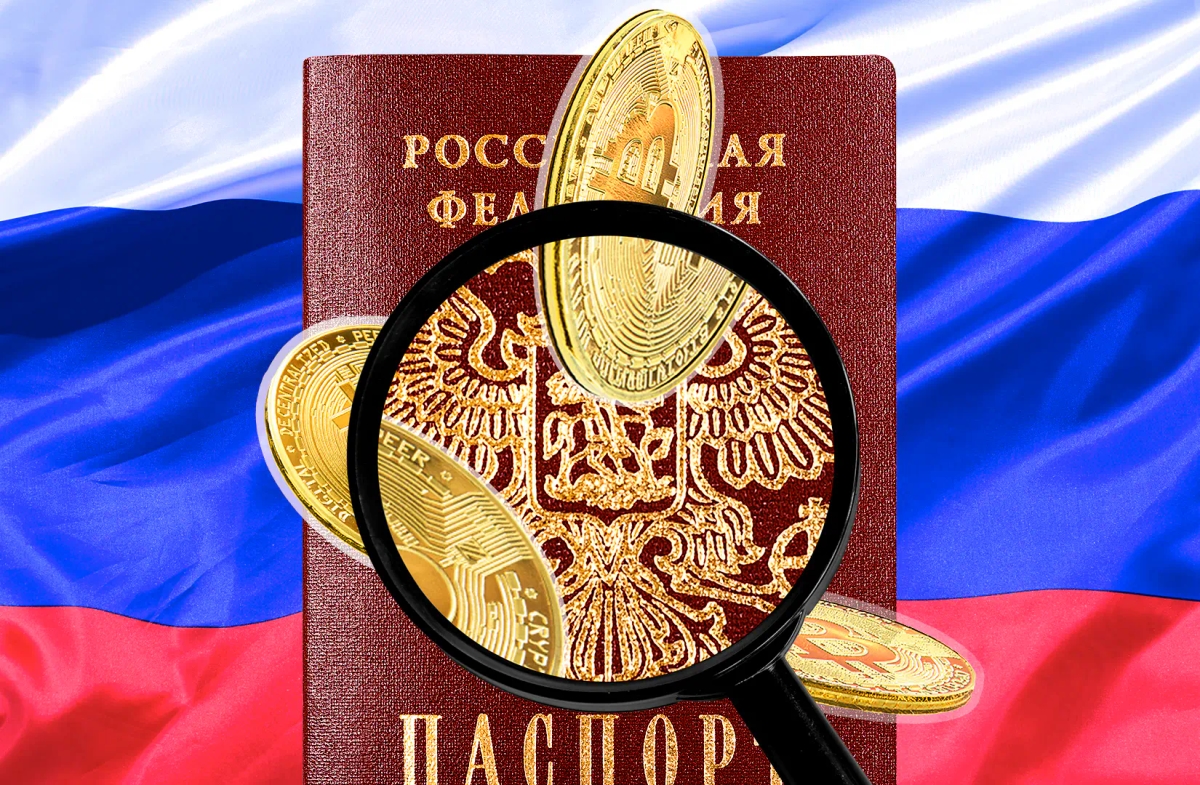
- Central bank wants Russians to declare their overseas crypto holdings.
- Transparency will help avoid risk, bank deputy chair says.
- Cypherpunks value their privacy and object to government control.
The Kremlin wants to know who is trading crypto in Russia.
The Russian central bank wants to block citizens from withdrawing crypto from wallets operated by domestic firms unless they complete identity checks.
The bank wants to force domestic exchanges to use know-your-customer protocols to de-anonymise Russian crypto transactions as part of a package of crypto regulations set to come into force in July.
And the regulator also wants to keep tabs on its citizens’ offshore crypto holdings.
“No one is trying to stop Russian individuals and legal entities from continuing to hold cryptocurrency in foreign wallets, Vladimir Chistyukhin, the bank’s first deputy chair, told Russian media outlet RBC. “The only fundamental requirement we have is that they declare [these holdings] to the Federal Tax Service.”
The Kremlin is still reeling from poor economic results in the first few months of the year, but the bank will bid to reverse Russia’s financial fortunes in the months ahead when it launches its blockchain-powered digital ruble.
The proposed background checks risk running counter to many crypto traders’ ideals. Privacy has been a key tenet across the industry ever since early cypherpunks dreamed up the asset class.
Stemming capital outflows
Russia’s crypto exchange sector is still completely unregulated. But that is set to change this summer, with lawmakers currently working on broad-ranging crypto-related legislation.
The central bank is aware that most Russian crypto traders currently keep their coins in wallets based overseas. But Chistyukhin’s comments suggest the bank wants to stem — or at least monitor — Russian capital outflows.
He said the bank will not move to block crypto transfers from “permit-holding Russian intermediaries” to global exchanges such as Binance or Bybit.
However, Chistyukhin said the Kremlin wants to outlaw the transfer of crypto from Russian custodial crypto wallets “to non-custodial wallets abroad.”
Custodial wallets are managed by third parties, such as crypto exchanges, which manage private keys and secure assets on their customers’ behalf.
Non-custodial wallets, by contrast, hand control over private keys to their users. These do not allow anyone other than the coins’ owners to access the wallets.
The new rules, meanwhile, will ensure that crypto traders will not be allowed to move their crypto from overseas exchanges into a non-custodial wallet without first moving it to “official Russian cryptocurrency depositories and exchanges.”
These official channels will be legally obliged to verify the identities of all of their customers — provided the central bank gets its way.
“From a compliance standpoint, we want [Russian crypto service providers] to be as transparent as possible,” Chistyukhin said. “This will help ensure Russian intermediaries do not put themselves at risk.”

Crypto industry’s plea
The bank said it was not interested in seizing Russians’ crypto.
“Nothing will happen to [Russian citizens’] coins,” the central bank executive said. “They belong to Russian residents, and that will remain to be the case. There will be no penalties for possession, and no restrictions on the use of these coins.”
Chistyukhin said crypto industry representatives had asked the central bank not to make any distinctions between custodial and non-custodial wallets for withdrawals.
However, he said the central bank “believes it is especially difficult to establish a control mechanism for non-custodial wallets” that could comply with anti-money laundering and KYC rules.
What Russians do with their crypto only becomes a concern if the funds move to wallets based in Russia, Chistyukhin said.
“If a Russian individual, with funds in a custodial wallet abroad, transfers those funds to a non-custodial wallet outside the Russian Federation, we won’t be involved,” the executive said. “That is the sole responsibility of foreign legislation and foreign regulators.”
Tim Alper is a News Correspondent at DL News. Got a tip? Email him at tdalper@dlnews.com.