
One of the most nostalgic and still widely referenced periods in crypto is DeFi Summer. It was a period of rapid TVL growth that laid the foundation for the 2021 bull market. Much has been written about what made it possible, but one aspect that rarely gets attention is that crypto at the time was actually slow.
At the time, transactions on Ethereum took a long time to be confirmed, often anywhere from several seconds to minutes, and could take even longer if you didn’t pay enough in fees when network activity was high.
That observation sits at the centre of the SlowFi thesis. DeFi does not need faster chains to thrive; it needs slower ones. In this piece, we explore what SlowFi means and how OP_NET is building DeFi on Bitcoin with that thesis in mind.
DeFi Summer: High fees, slow blocks, but record growth
To understand the SlowFi thesis, we first have to take a time machine back to one of the most explosive growth periods that DeFi has ever seen, DeFi Summer. This period, roughly between June 2020 and October 2020, was the first time DeFi felt real to a large number of participants.
The main catalyst was a liquidity mining program for COMP tokens launched by Compound in May 2020. This was essentially a way for a protocol to reward users with free tokens for using its platform, for example, by lending or borrowing assets. It was one of the first times users could earn meaningful extra returns just for participating, which quickly attracted a lot of attention and capital.
From that point, many now-established protocols followed the same playbook, offering similar incentives to draw in users.
Most famously, Yearn Finance, developed by Andre Cronje in early 2020, made it easier for users to maximise these rewards. Instead of manually moving funds between different platforms, Yearn automatically did it for them, helping users earn higher returns with less effort and pulling even more capital into the ecosystem.
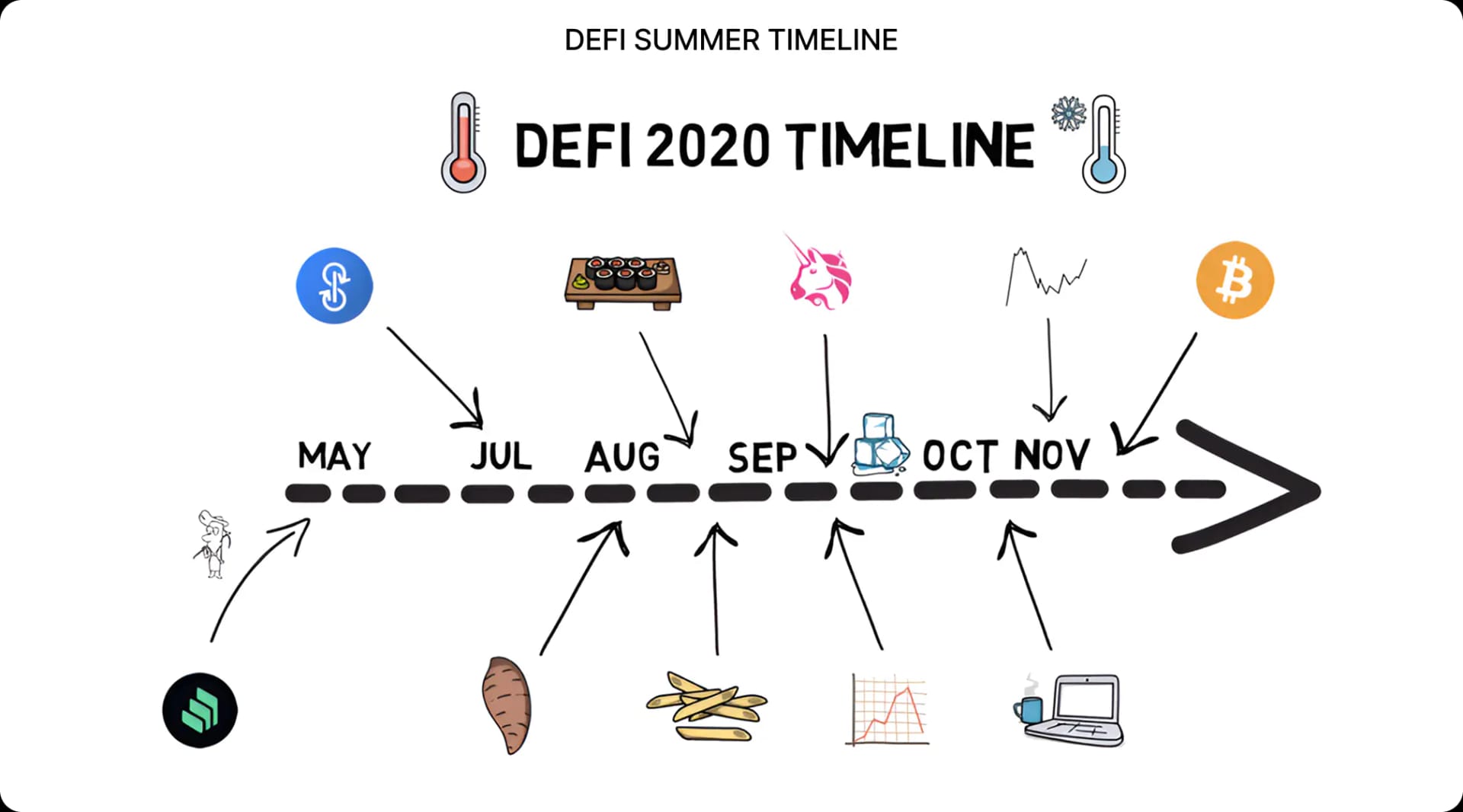
Then came SushiSwap, a decentralised exchange launched at the end of August 2020 by an anonymous team.
The protocol introduced what became known as a “vampire attack”, a strategy designed to pull users and their funds away from a competitor. At the time, Uniswap was the largest DEX, meaning it had the most trading activity and user deposits. SushiSwap incentivised users to switch by offering its own token, SUSHI, as a reward to those who moved their funds over.
This worked because liquidity providers were primarily seeking higher returns. They deposit their assets so others can trade and earn a share of the trading fees, but SushiSwap added an extra layer of rewards on top of that. By offering additional token incentives, it gave users a strong reason to leave Uniswap and move their capital.
Uniswap quickly responded by launching its own token, UNI, along with a liquidity mining program across several pools to attract users back.
What followed was a powerful feedback loop. Protocols competed by offering increasingly attractive rewards, which drew in more users and capital. More capital led to more trading activity, which made the platforms more profitable and appealing, reinforcing the cycle.
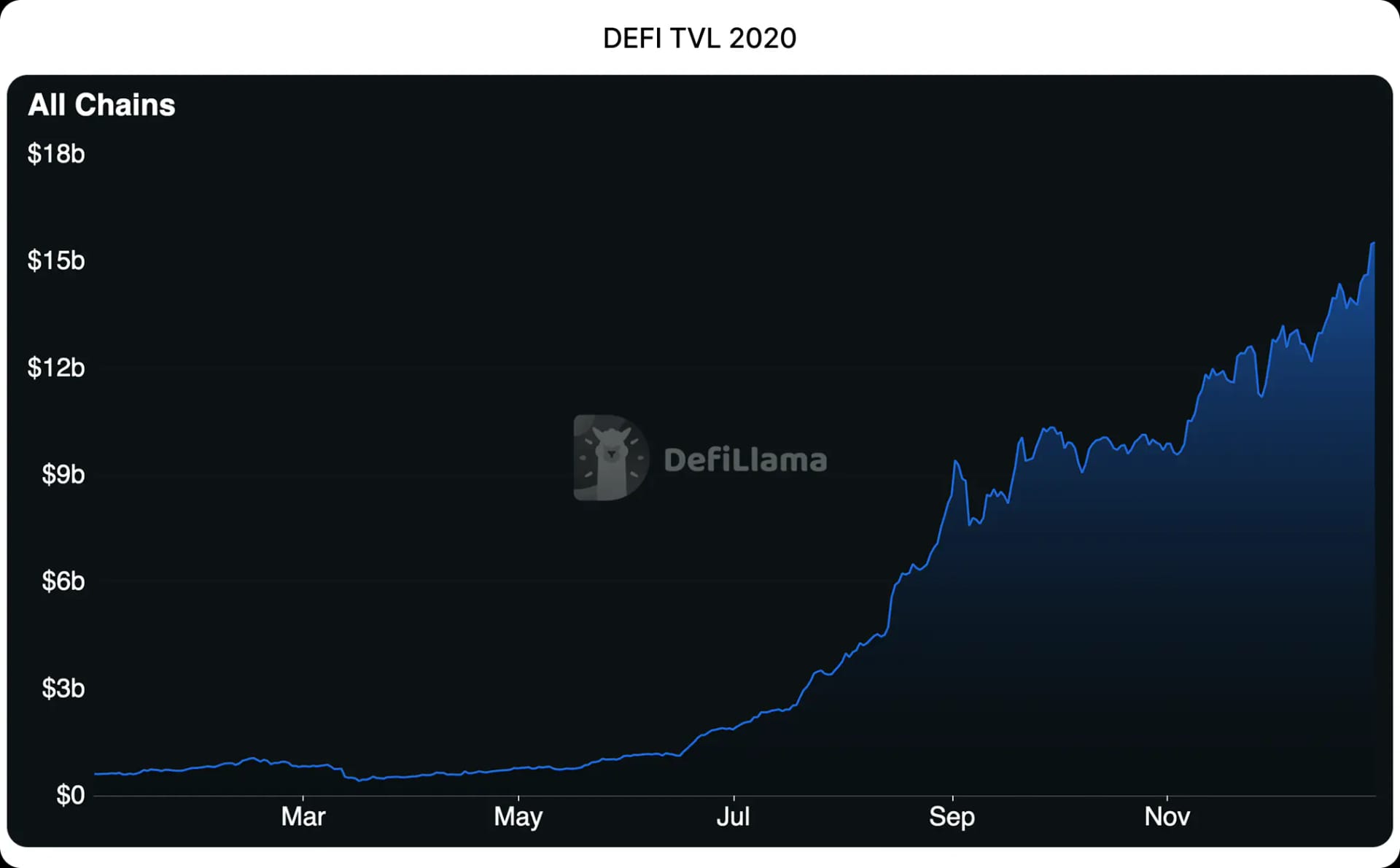
The data reflects how powerful that cycle was.
Total value locked across DeFi grew from roughly $1B at the start of June 2020 to $10B by the end of September, a 10x expansion in just a few months.
Conditions of DeFi Summer
To really understand how DeFi Summer was possible, three structural conditions need to be considered.
- The first is Ethereum dominance. At this time, DeFi activity was almost entirely concentrated on Ethereum, with the chain consistently accounting for more than 95% of total DeFi TVL throughout the second half of 2020. That concentration kept liquidity sticky.
- The second was early-stage user and protocol behaviour. DeFi and liquidity mining were still new, and protocols were paying heavily to attract users. Compound distributed roughly 2,880 COMP per day, while Uniswap committed 20 million UNI to liquidity mining over two months, and users were genuinely excited to try new things. That combination kept fresh capital flowing in throughout the entire period.
- The third was execution constraints. Ethereum ran on roughly 13-second block times and highly variable fees, but during peak congestion, getting a transaction confirmed at a reasonable cost could take hours or even days. During peak activity in September 2020, transaction costs could rise to tens of dollars and, in some cases, over $100, making it expensive to move quickly. This meant capital could not exit instantly, and large-scale withdrawals were naturally staggered. Liquidity was forced to stay in place longer than it would have in a faster, cheaper environment.
The first and second points are widely understood and have been covered extensively in prior research. The most overlooked one is the third. The same slowness and cost that made Ethereum difficult to use also introduced friction that prevented liquidity from leaving all at once.
That observation sits at the core of the SlowFi thesis. In certain market structures, slower can be better.
Understanding the SlowFi thesis
DeFi Summer made clear that slower execution and higher costs can influence how capital behaves onchain. Building on this, OP_NET introduced the SlowFi thesis. So what is it actually about?
SlowFi and exit velocity
The SlowFi thesis starts from a simple idea. The duration of a DeFi cycle depends not only on how effectively a protocol attracts capital, but also on how quickly that capital can leave once conditions begin to weaken.
DeFi protocols are reflexive liquidity systems at their core.
Most users deposit their funds into DeFi protocols to earn yield. These funds are used as liquidity, which allows others to trade. The more liquidity a protocol has, the easier it is to support larger trades, which leads to more trading activity and more fees earned by those providing the liquidity.
As those returns increase, more users are attracted to deposit capital. As long as new money coming in is enough to offset the money leaving, the cycle continues. The stress point comes when more capital starts leaving than entering.
Once yields compress, token prices drop, or a better opportunity emerges elsewhere, participants start looking for the exit.
In a market where liquidity can be unstaked, sold, and rotated almost instantly, that transition can happen very quickly.
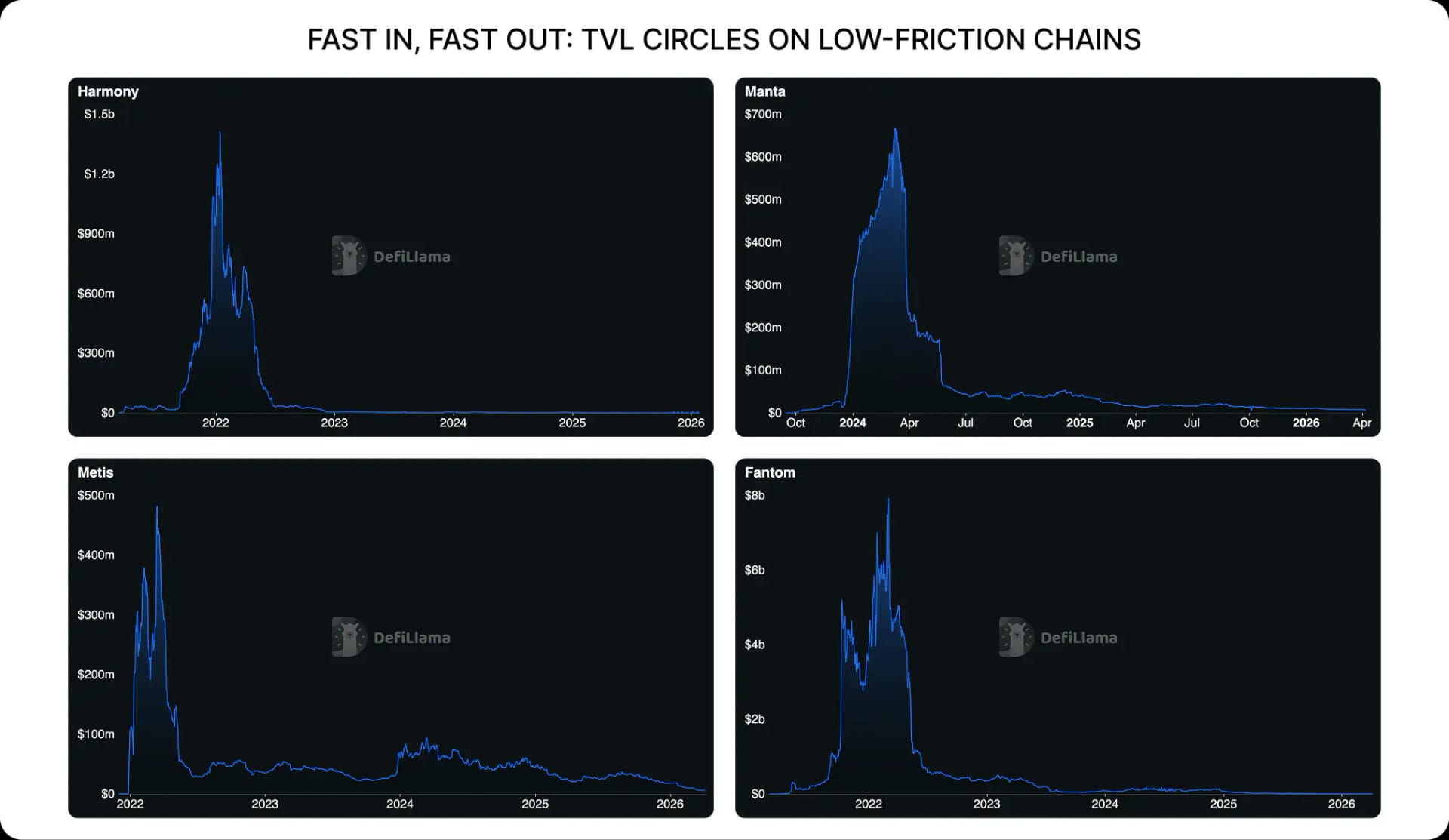
The pattern can be observed across multiple high-throughput chains. Periods of rapid inflows are often followed by equally sharp outflows, with TVL retracing quickly once incentives fade or market conditions shift.
Indeed, this is not purely a function of block time. Many of these ecosystems relied heavily on liquidity mining, airdrop incentives, or bridge-driven inflows, all of which attract highly mobile capital. In these environments, the combination of low fees, fast settlement, and easy cross-chain movement makes it structurally easier for liquidity to rotate out as quickly as it entered.
A modest decline in price or yield triggers withdrawals, which weakens the economics further, and the cycle starts feeding on itself. What looked stable during the growth phase can unravel much faster than expected once outflows begin to accelerate.
When block space is limited, fees rise during periods of volatility, and confirmations take longer; liquidity can’t leave the system all at once. Exits still happen, but they happen more gradually, giving protocols more time to absorb volatility and retain TVL.
For a long time, the mantra in crypto has been that chains must be faster and cheaper, with new networks competing to offer lower block times and minimal fees to improve user experience and reduce friction.
Seen through the lens of SlowFi, the picture is more nuanced. Speed clearly matters for certain use cases, but for DeFi protocols where retaining liquidity is what sustains the flywheel, some degree of friction can actually be beneficial. A slower and more expensive chain can discourage rapid exits, helping capital stay in the system for longer and reinforcing the cycle of activity.
SlowFi beyond crypto
While earlier we discussed DeFi Summer as an example of how slower-moving markets allowed DeFi to thrive, the SlowFi thesis is not unique to crypto.
A clear example of this comes from traditional finance. In Securing Passive Liquidity: The Impact of Europe's First Asymmetric Speed Bump, researchers studied what happened when Eurex introduced a small order delay for French equity options in 2019.
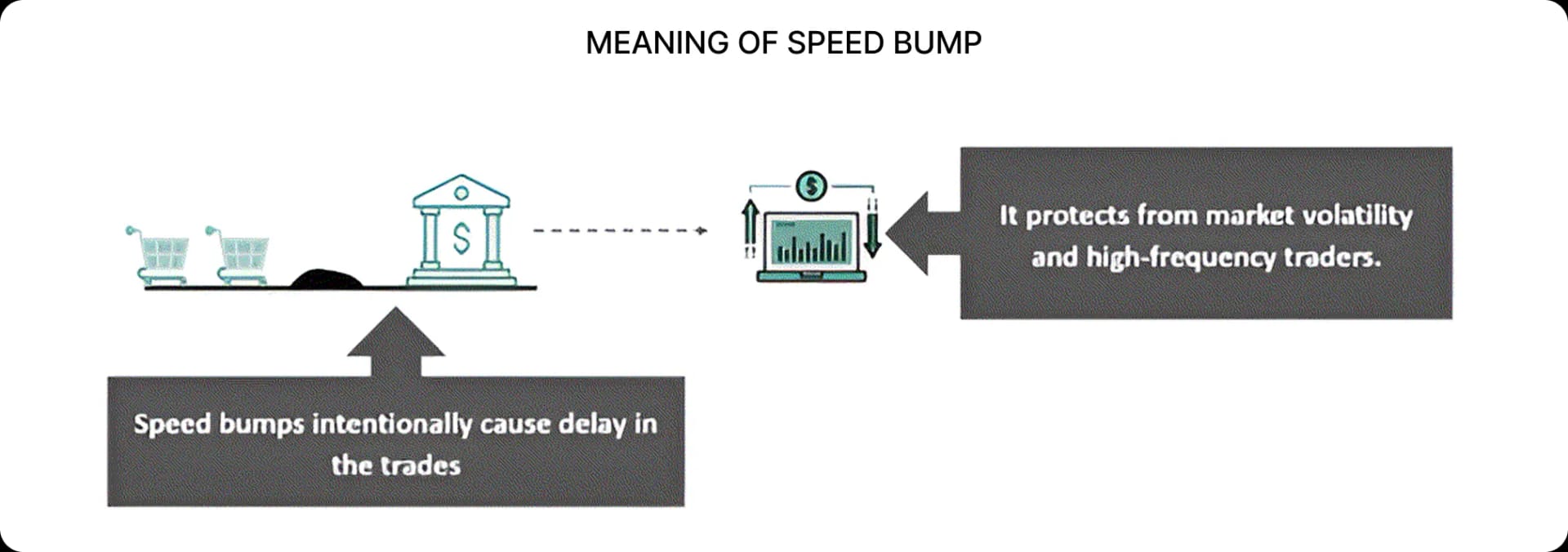
The result was better liquidity across the board. For cross-listed options on Eurex, spreads decreased by 3.98 basis points and market depth increased by 6.8%. By giving liquidity providers a brief window to update their quotes before faster traders could act against them, the market became less reflexive and more stable for everyone participating in it.
Real estate is another market where the same principles apply. Buying or selling a property involves search costs, legal due diligence, and closing timelines that stretch across months. Research on housing markets shows that these frictions are precisely what prevent prices from collapsing all at once during downturns.
Because sellers cannot exit instantly, the market adjusts gradually rather than repricing in a single move, which is what keeps it stable even when sentiment turns sharply negative.
A look at the data: Slow vs. fast chains
One way to examine whether the SlowFi thesis has any merit is to look at how long chains have been able to sustain TVL near their peak, and how much they have lost since. If slower chains genuinely produce stickier liquidity, that should show up in the data.
To measure this, we looked at two things: how many days each chain spent within 10% of its all-time high TVL, and how many days it spent within 25% of it. The first captures how long a chain held its peak. The second captures how gradually or sharply liquidity left once it started moving. The results show a clear pattern.
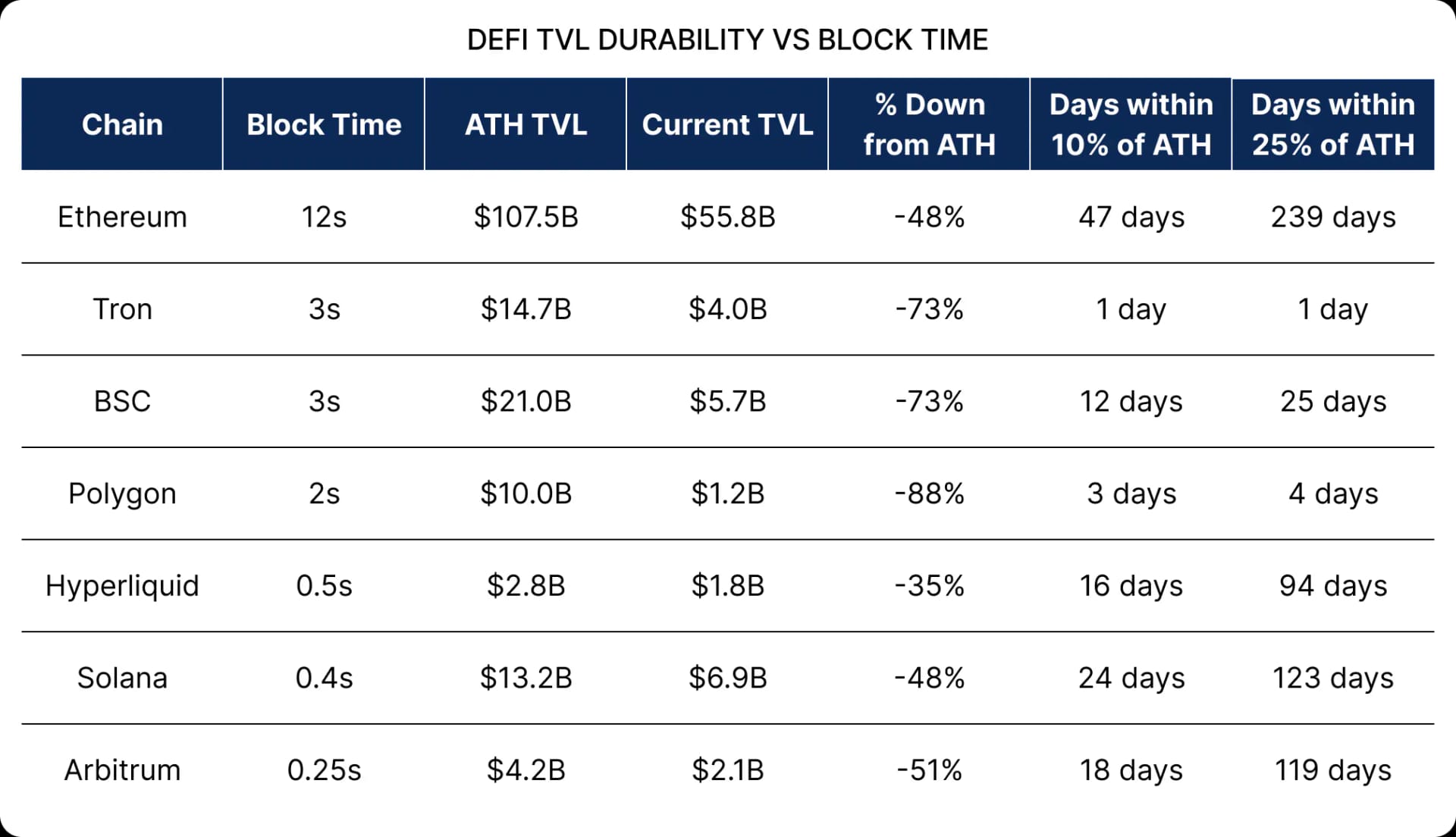
The pattern that emerges broadly supports the SlowFi argument. Ethereum, the slowest chain in the dataset, spent 47 days within 10% of its all-time high and 239 days within 25% of it, more than any other chain by a significant margin. The fastest chains tell a different story. Polygon managed 3 days near its peak before collapsing 88% from its high. The most extreme example is Tron, which was not able to stay close to its peak for more than 1 day.
Speed is obviously not the only variable at play here. Ethereum's dominance, the maturity of its ecosystem, and the quality of its protocols all contributed to how long liquidity stayed. But when you look at the largest chains in the dataset, a directional pattern is hard to ignore.
The chains where capital has proven most durable are also the ones where moving it carries more friction. The chains where TVL collapsed the fastest are the ones where exiting costs almost nothing and settle in under a second. That relationship is not a coincidence, and it is the foundation of what OP_NET is now building on.
OP_NET: Bringing programmable DeFi to Bitcoin
OP_NET has built its entire infrastructure around the SlowFi thesis. For the first time, fully expressive smart contracts can run directly on Bitcoin Layer 1, without relying on bridges or wrapped tokens, and without requiring any changes to Bitcoin’s base protocol.
What is OP_NET
Bitcoin was never designed for smart contracts. Satoshi intentionally kept the scripting language limited, and for good reason. The same complexity that enables smart contracts also introduces new attack surfaces. Every major attempt to bring programmability to Bitcoin before OP_NET has worked around this constraint rather than solving it directly.
Bridged BTC on Ethereum, wrapped tokens on Solana, and metaprotocols like BRC-20 and Runes all point to the same thing. There is real demand for Bitcoin-based assets. At the same time, they highlight the limitations of existing approaches. Some require trusting a custodian, while others depend on off-chain indexers to track balances and activity.
BRC-20 and Runes were early attempts to bring tokens to Bitcoin in a way that felt native. Anyone could mint them by paying transaction fees, which aligned with Bitcoin’s permissionless culture and helped drive rapid adoption. But once trading began, a deeper issue became clear.
These assets trade primarily on PSBT marketplaces that function like simple order books. A seller can only exit a position if there is a buyer on the other side. When demand fades, liquidity disappears with it. There is no pool to sell into, which means tokens can become effectively unsellable at any price.
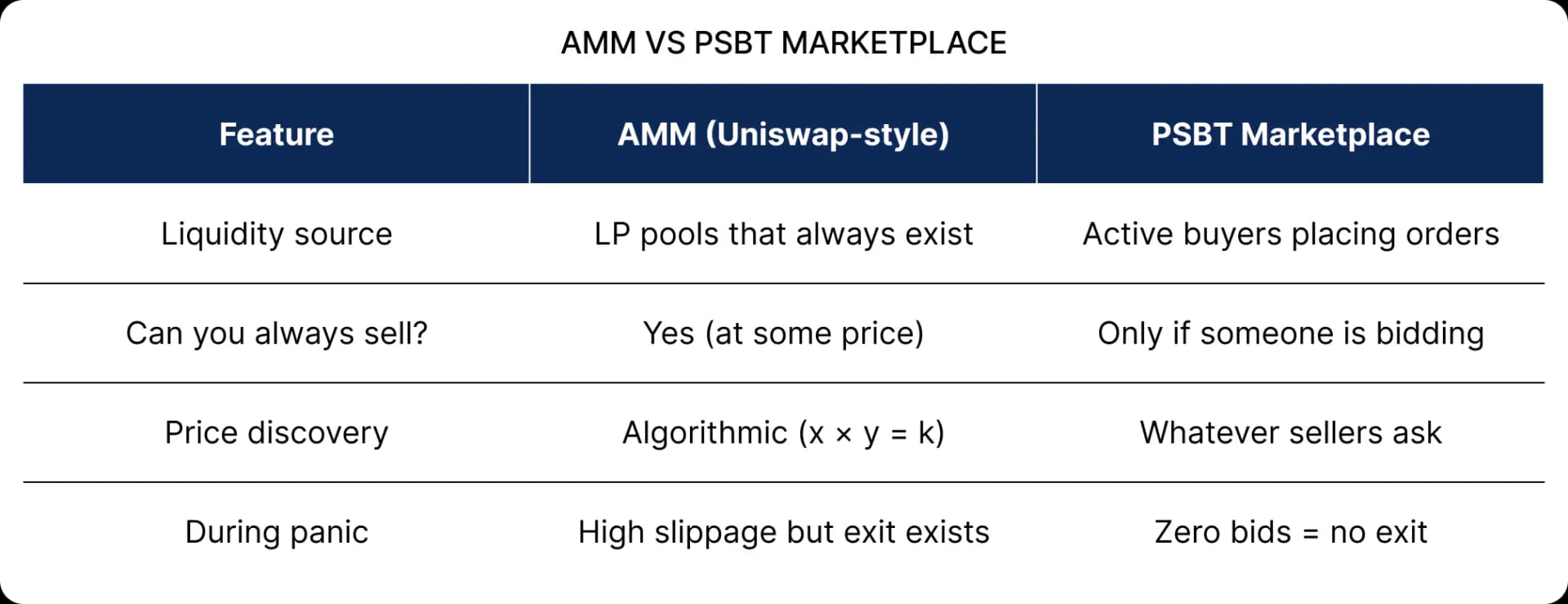
OP_NET takes a different approach. It introduces a consensus protocol that embeds smart contract calls directly into Bitcoin transactions. Bitcoin acts as the data availability layer, while OP_NET nodes handle execution, run the contracts, and agree on the resulting state. Every node executes the same code, arrives at the same result, and that result can be independently verified by replaying Bitcoin blocks.
On top of this system, OP_NET enables token standards like OP-20. Unlike BRC-20 and Runes, which rely on order book style trading, OP-20 tokens can trade through AMM pools where liquidity remains available, and prices are maintained through arbitrage.
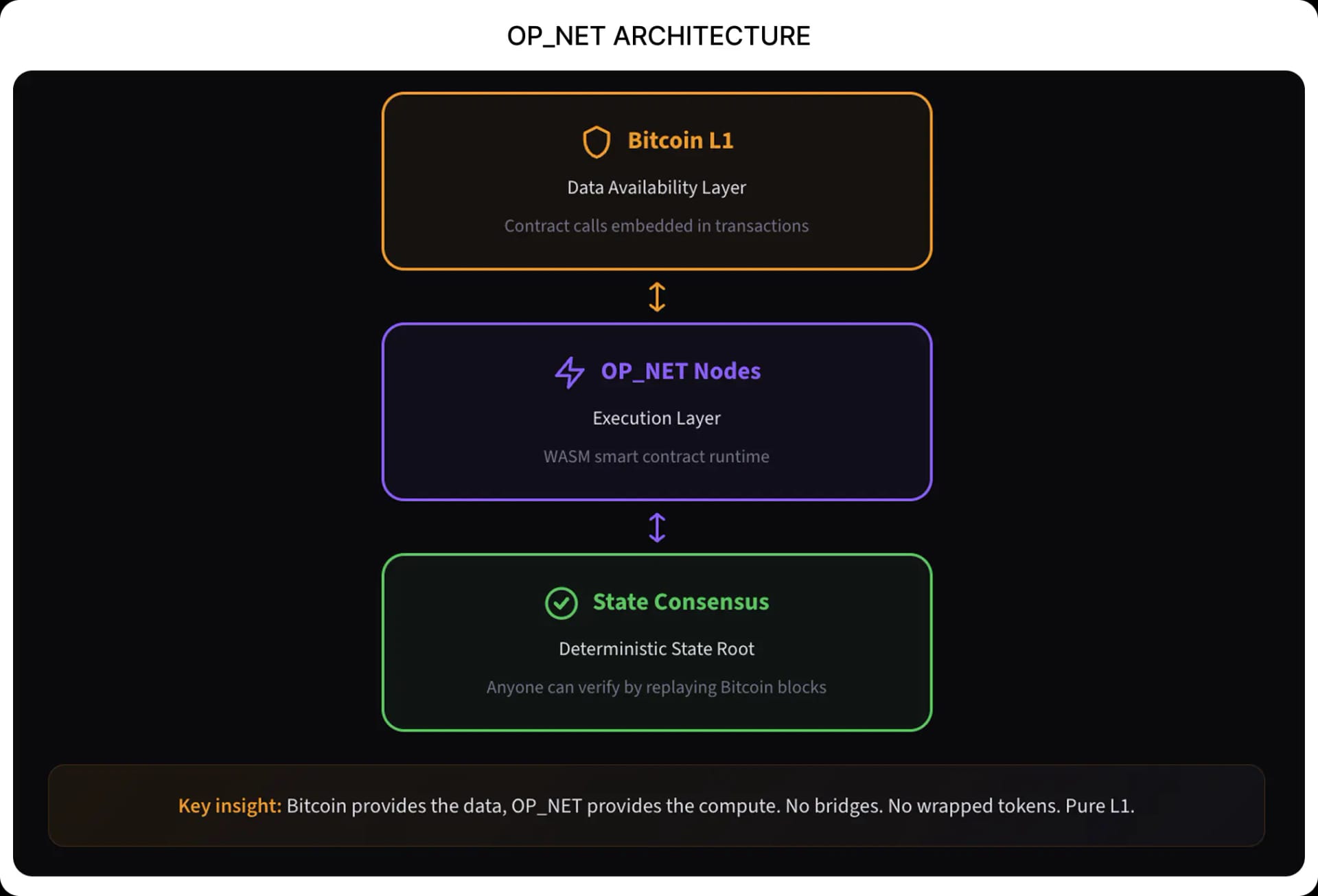
There is no separate bridge or custodian that holds your assets. Instead, fees are paid in BTC, assets remain on Bitcoin, and the security model does not change.
This matters because exit friction only works if capital is genuinely constrained by Bitcoin’s design. When demand for Bitcoin block space increases, fees can climb well past $50–100, making it economically irrational to exit a position.
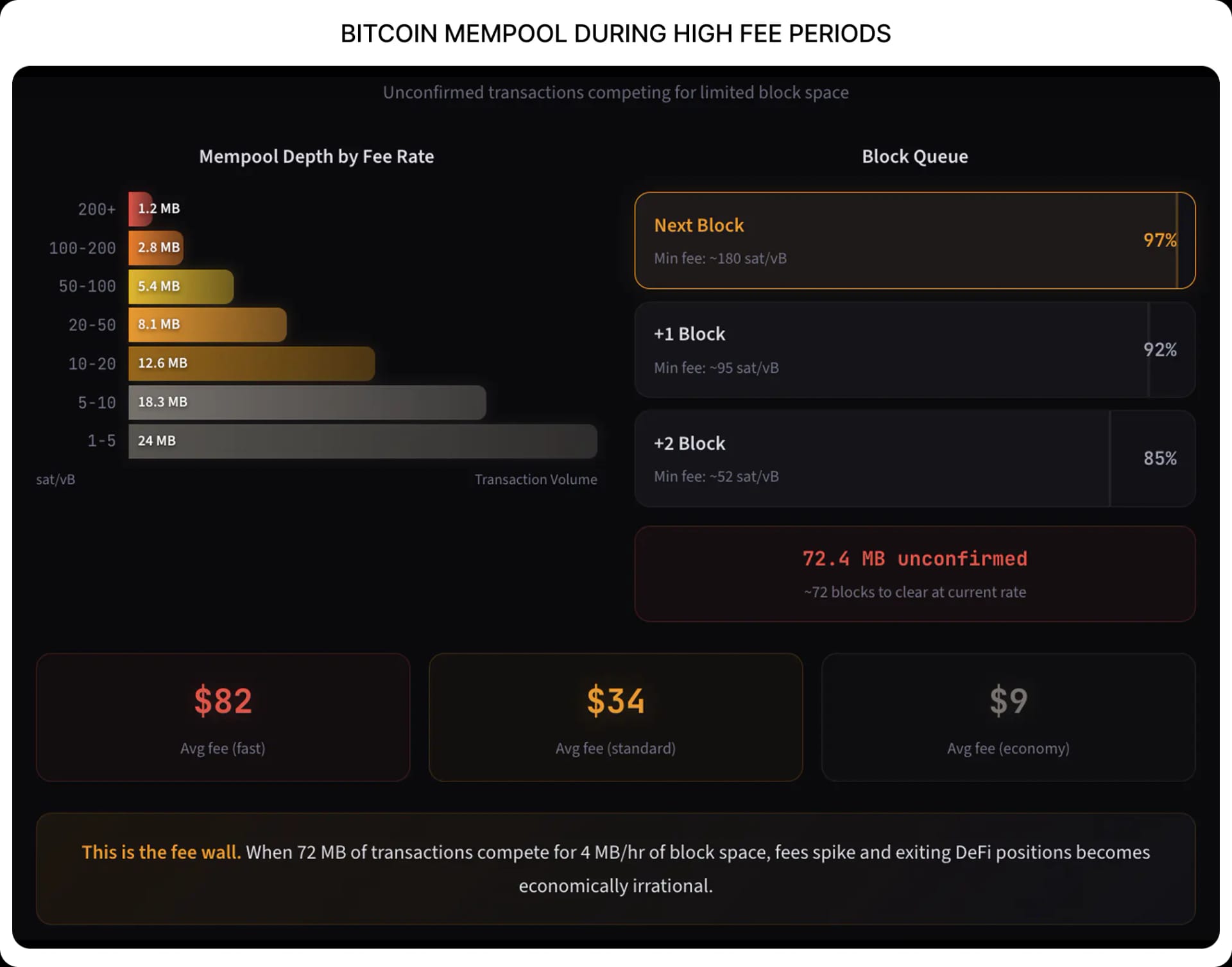
That reality disappears the moment BTC is wrapped and moved to another chain or an L2, where the underlying fee market no longer applies and capital can leave just as freely as on any other fastchain.
What’s now possible
Thanks to OP_NET's design, a complete DeFi stack is now live on Bitcoin Layer 1 for the first time, enabling use cases that were simply not possible before.
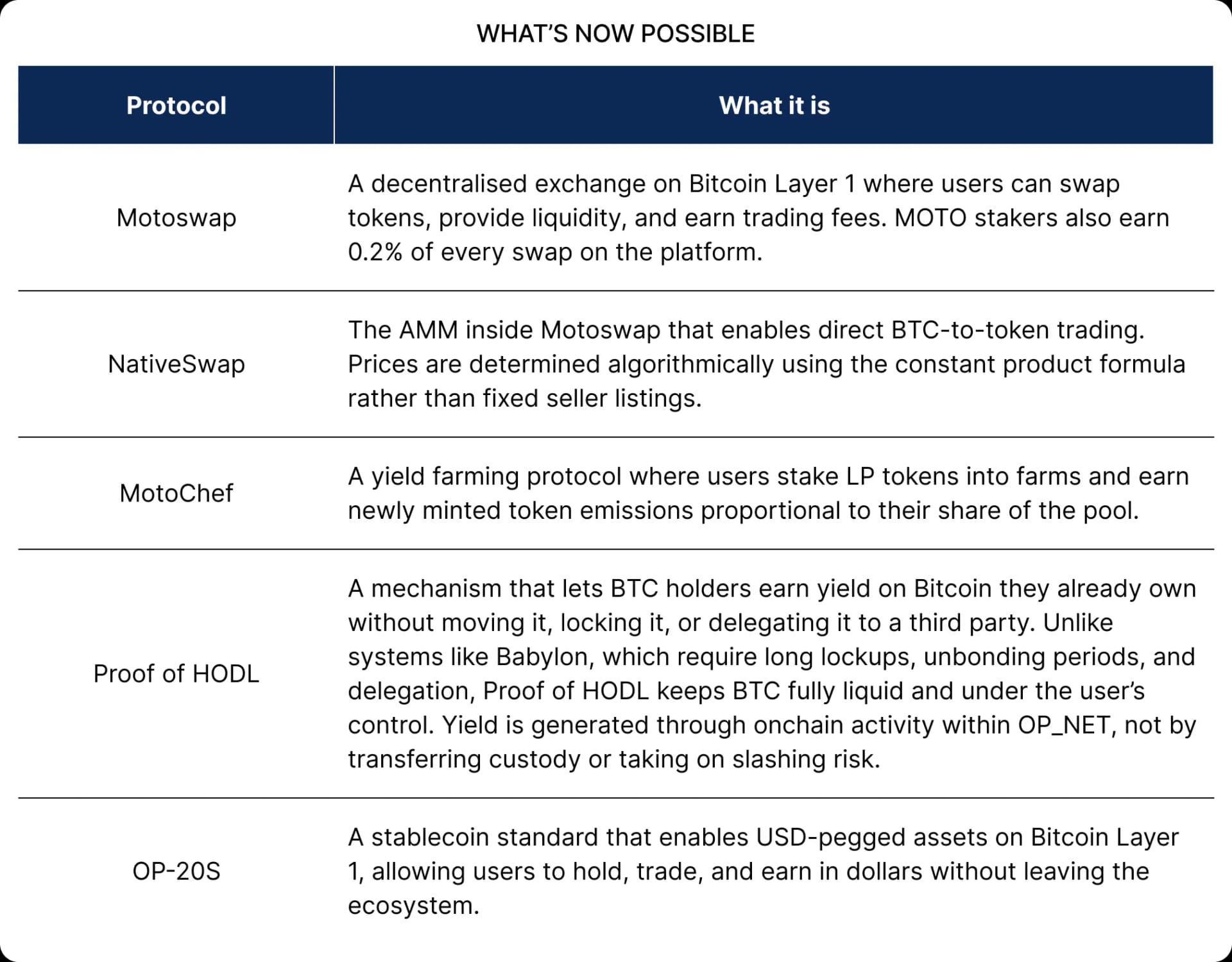
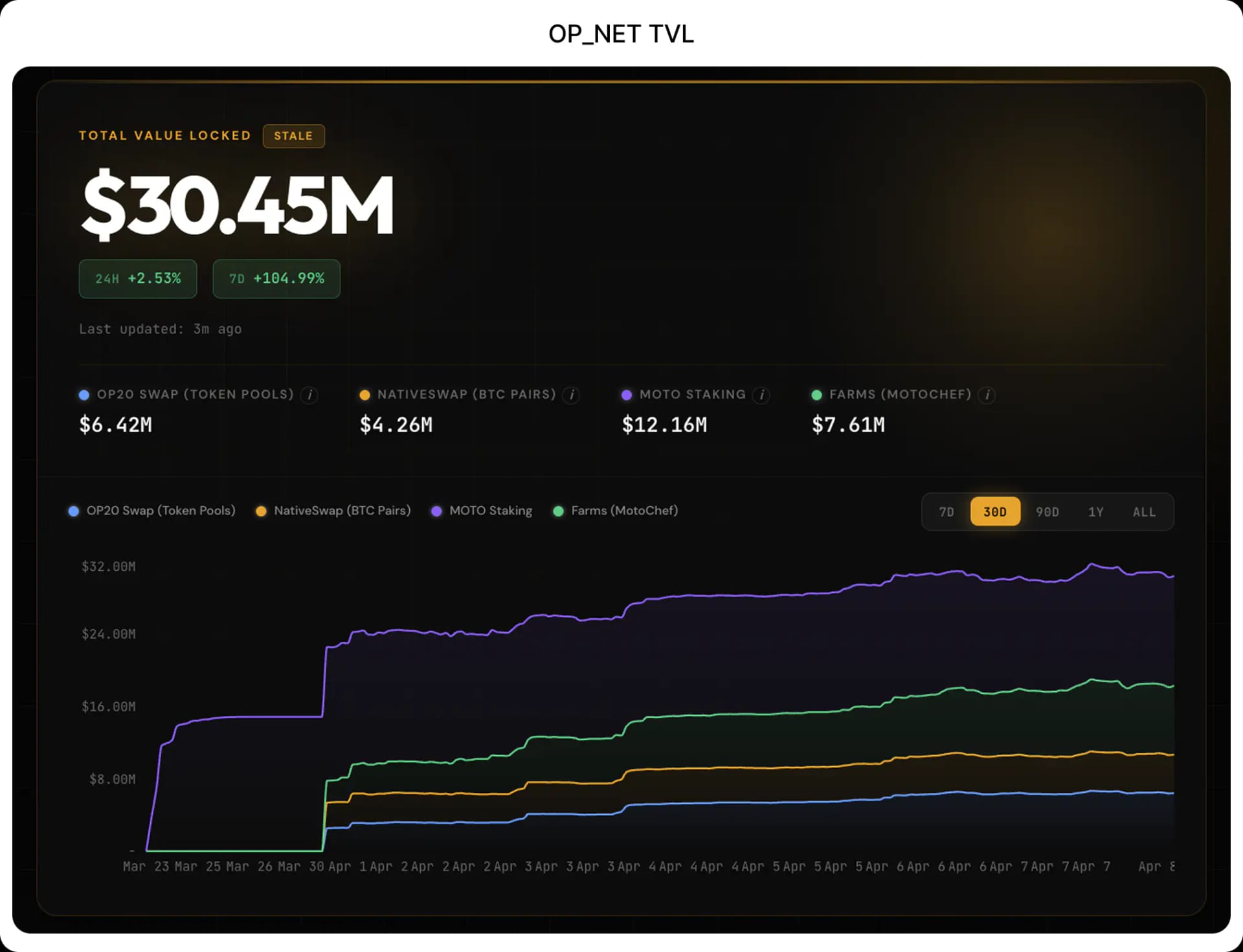
With the launch of OP_NET, these use cases are now possible on Bitcoin, introducing new forms of on-chain activity to an environment traditionally defined by its slower, more constrained design. Since its launch, OP_NET has already reached a TVL of $30.32M on Motoswap, according to DefiSloth.
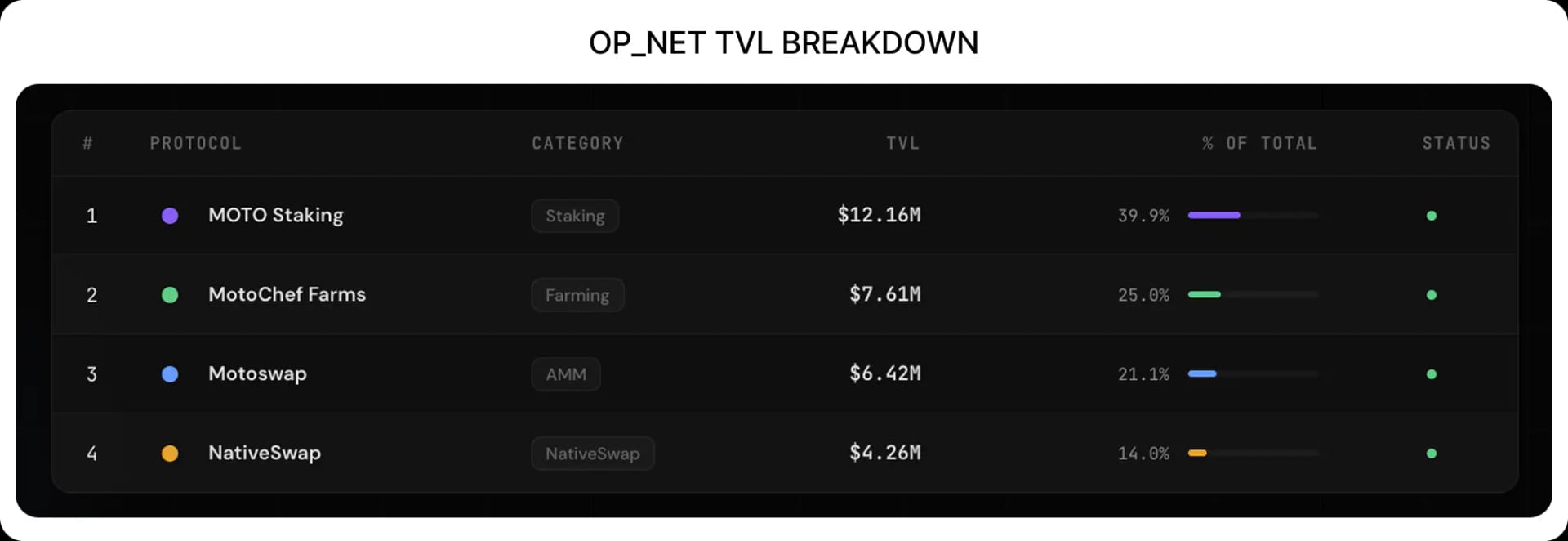
The TVL distribution is spread across Staking, Farming, AMM, and NativeSwap, with the majority allocated to MOTO staking at 40.1%, while the MotoCHEF farms represent the second-largest share of TVL.
With Bitcoin's slowness acting as a natural brake on capital exits, the ingredients for a sustained DeFi cycle are now in place for the first time on the most liquid and widely held asset in crypto.
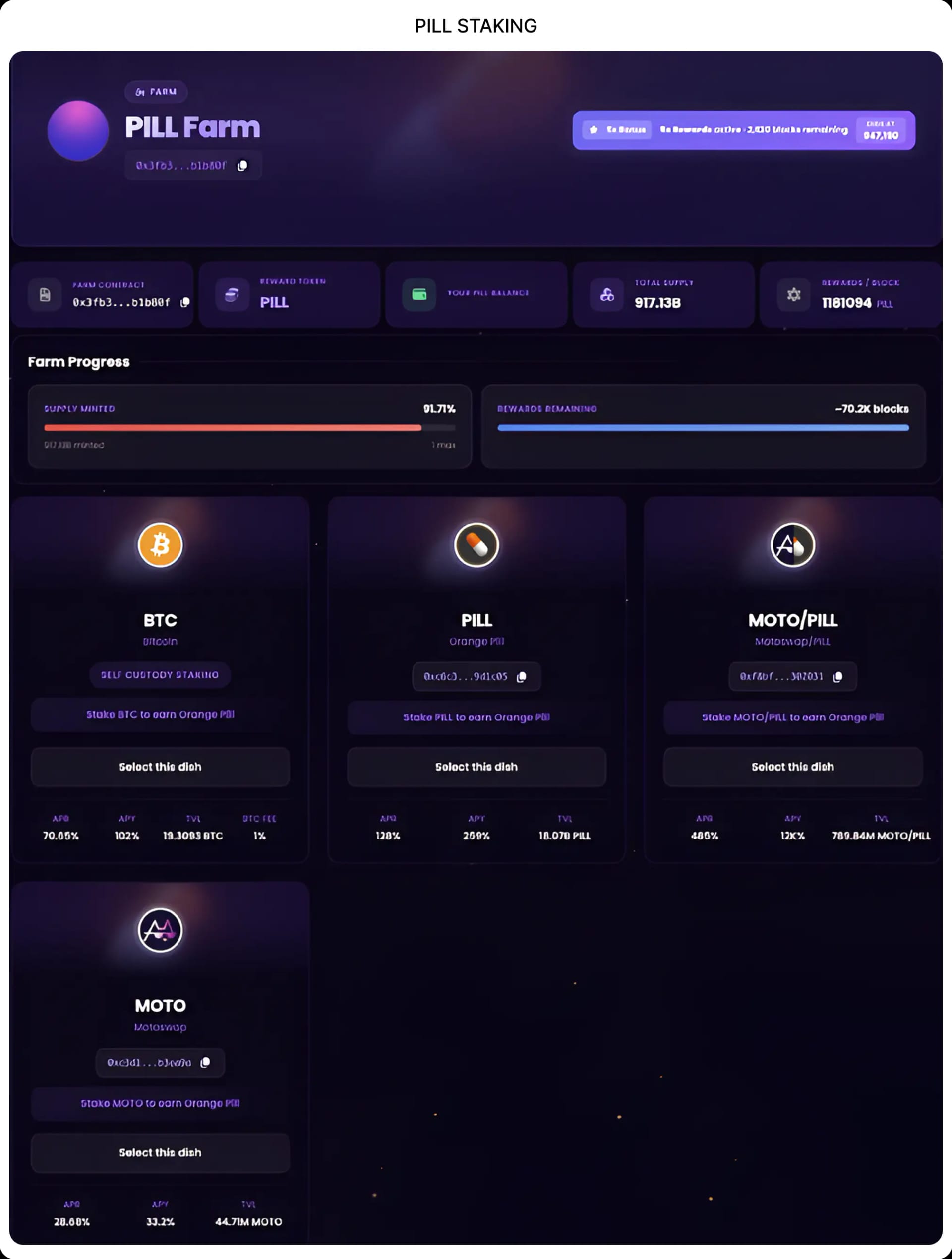
$PILL is the early incentive token of the OP_NET ecosystem, designed specifically to bootstrap liquidity and kickstart onchain activity on Bitcoin-native DeFi. In practice, it rewards users for supplying liquidity, staking assets, and participating in core protocols like Motoswap, acting as the fuel that attracts capital in the network’s early phase.
Higher incentives are directed toward LPs to deepen markets. Currently, the ~2,629% APY for MOTO/PILL LP farming, compared to about ~102% for BTC staking, ~259% for PILL staking, and ~33% for MOTO staking, shows how PILL incentives are being distributed across pools, with particularly strong emphasis on sustaining both single-asset PILL staking and core liquidity pairs rather than extreme LP bootstrapping.
Concluding thoughts
The SlowFi thesis will not resonate with everyone. The prevailing view in crypto is still that faster and cheaper is always better, and for many use cases, that is true. But the evidence in this piece suggests that for DeFi protocols where retaining liquidity is what keeps the flywheel going, friction may matter more than the industry has given it credit for.
OP_NET is now the most direct test of that argument. It launched on mainnet on March 19, bringing a fully native DeFi stack to Bitcoin Layer 1 for the first time, doing something that has genuinely never been done before.
The blocks are slower than anything else in the market. The fee market prices out panic exits under demand. And much of Bitcoin is held by whales who have never used DeFi, many of whom have been reluctant to move off Bitcoin, and until now had no way to deploy their capital directly on the chain.
If the SlowFi thesis is right, Bitcoin is the most compelling place for it to play out. OP_NET is the one putting that to the test, and it is worth watching closely.