

- Three-month-old protocol Yield Basis activated its fee switch on Thursday.
- Crypto protocols have faced increasing pressure to share revenue with investors.
- “You will inevitably have the token performing very badly if you don’t have closed-loop economics,” founder Michael Egorov said.
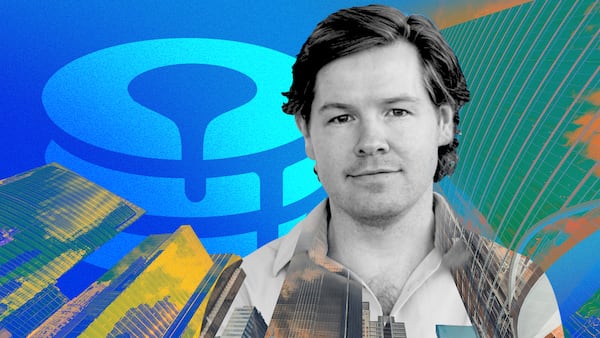
Yield Basis, a protocol developed by Curve Finance founder Michael Egorov, activated its fee switch on Thursday, becoming the latest crypto protocol to direct revenue to tokenholders.
Certain Yield Basis users have four weeks to claim more than 17 Bitcoin accumulated since the protocol’s launch in September. That Bitcoin was worth almost $1.6 million on Friday.
The proposal to activate the fee switch was approved unanimously on Wednesday by Yield Basis tokenholders.
Protocol developers often launch tokens in order to reward investors and to transfer management responsibility to their users. But users have shown little interest in taking the reins, with votes at decentralised autonomous organizations, or DAOs, often failing to reach a quorum.
Protocols have come under increasing pressure to show their tokens have value beyond voting rights. While some protocols have long shared revenue with their users — Curve turned on its fee switch in 2020 — the trend has accelerated this year.
Several major DAOs, including Uniswap, Ethena, Aave, and Jito, have approved token buybacks or fee switches, attempting to drive more value to frustrated token holders.
“More recently, it became a little bit safer for US-based projects to do it,” Egorov told DL News.
Impermanent loss
As of Friday, investors have deposited Bitcoin worth more than $130 million in Yield Basis. The protocol was designed to eliminate impermanent loss, an issue that has bedeviled decentralised exchanges since their inception.
Decentralised exchanges such as Curve allow users to swap crypto assets within a pool featuring the asset they want to sell, and the asset they want to buy. In order to lure liquidity providers, the exchanges allow them to take a small cut of every swap.
While providing liquidity can be lucrative, it also has an opportunity cost during times when crypto values are rising. Impermanent loss refers to the profit that liquidity providers would have earned had they held onto their tokens, rather than depositing them in liquidity pools.
Yield Basis uses a leveraged trading strategy to address impermanent loss in Curve’s Bitcoin-crvUSD pool. Investors who hold its token, YB, can lock that token in order to claim a portion of revenue set aside by the protocol.
Yield Basis investors have indeed profited from trading fees while avoiding impermanent loss on their Bitcoin, Egorov said. The protocol will eventually expand to other cryptocurrencies, he added, starting with Ethereum.
Closed-loop economics
While increasingly popular, schemes to boost token valuations have faced criticism.
In October, crypto market maker Keyrock found that many buyback programs were “broken,” overspending when prices are high and underspending when they drop while diverting funds from marketing and growth initiatives. In March, Messari found they have little impact on token price.
And in June, Morpho founder Paul Frambot said he would not seek to flip the protocol’s fee switch.
“Would a high-growth startup distribute revenue to shareholders instead of reinvesting in expansion? The answer is almost universally no,” he said.
“It even took many of the largest tech companies, including Meta and Alphabet, 10 to 20 years before they started distributing dividends.”
Egorov dismissed those concerns, arguing that reinvesting in protocol growth often comes in the form of token incentives. And those incentives will struggle to attract users when the tokens themselves have little value beyond governance rights.
“You will inevitably have the token performing very badly if you don’t have closed-loop economics,” he said.
“To close the loop, you must do some form of fee distribution, if you want to use token incentives at all.”
Disclaimer: The two co-founders of DL News were previously core contributors to the Curve protocol.
Aleks Gilbert is DL News’ New York-based DeFi correspondent. You can reach him at aleks@dlnews.com.