- A lawsuit filed by Justin Sun goes out of its way to portray World Liberty as a struggling company.
- It singles out co-founder Chase Herro as a businessman with a checkered past.
- But some of the lawsuit’s claims appear purely speculative.
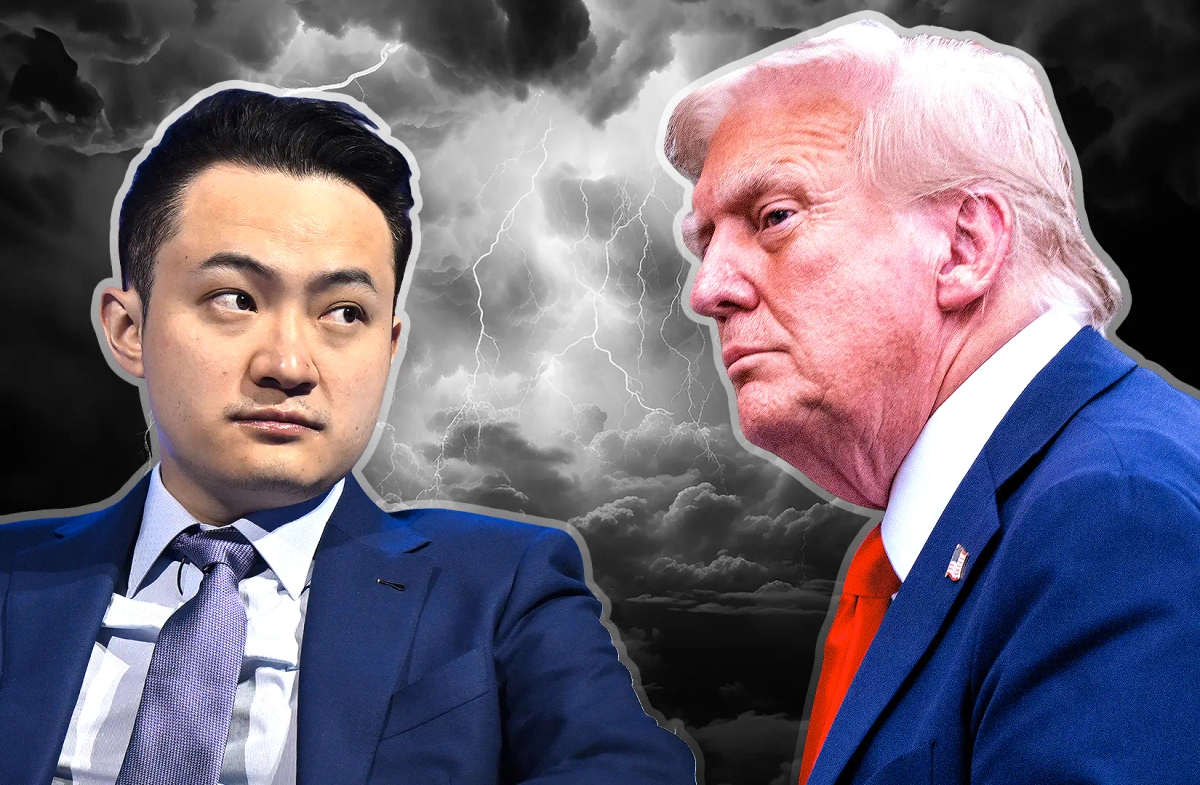
Crypto mogul Justin Sun wants to stay on Donald Trump’s good side. But he’s going scorched earth against the president’s business partners.
In a lawsuit filed on Tuesday, Sun accused executives at World Liberty Financial of fraud, theft, and other crimes.
But the accusations aren’t couched in soporific legalese. Instead, the lawsuit goes out of its way to portray World Liberty as a struggling company facing “collapse and potential insolvency.”
And Sun saved the most damning details for one person: World Liberty co-founder Chase Herro, whom the lawsuit describes as an inveterate scammer and tax dodger.
Some of these details have been previously reported. Some, like World Liberty’s impending collapse, are pure speculation. Still, it will provide plenty of ammunition for the company’s critics, a coalition that ranges from angry investors to opposition lawmakers who smell blood in the water.
When reached for comment about the lawsuit on Wednesday, a World Liberty spokesperson pointed to social media statements from the company’s co-founders.
CEO Zach Witkoff described the lawsuit as a “desperate attempt to deflect attention from Sun’s own misconduct.”
Herro, meanwhile, did not address the lawsuit directly. Instead, he shared a motivational Rudyard Kipling poem and Witkoff’s statement and wrote, “Building is never easy and often riddled with triumphs and failures mixed into a giant maze you need to traverse.”
Here are the four most notable claims and details in the 52-page lawsuit.
Herro’s past
Profiles of Herro in the mainstream press have detailed a checkered past, including a jail stint, inflammatory comments, questionable business practices, and his involvement in a DeFi protocol that lost nearly all its crypto in a hack in 2024.
The lawsuit includes all of that. But it also appears to include fresh details.
“Mr. Herro’s business misconduct was so egregious that in or around 2010, spurned customers and partners started a website called ‘ChaseHeroScam.com,’” the lawsuit reads.
That website was inactive on Thursday, and DL News could not confirm that it contained certain posts referenced in Sun’s lawsuit.
Herro has also been subject to tax liens on four separate occasions and a tax deed on a Florida property, according to the lawsuit.
The lawsuit also claims that Herro has “publicly boasted” about visiting Little Saint James, the private island owned by disgraced financier Jeffrey Epstein. But the lawsuit doesn’t provide any evidence of the purported boast, and DL News could not immediately confirm whether Herro had ever made such comments.
“Secret” upgrades
From the get-go, owners of World Liberty’s governance token, WLFI, had relatively limited control.
They had no say in running World Liberty, according to company documents. But they could vote on upgrades to its underlying technology.
Sun alleges World Liberty executives broke that promise when they quietly pushed a pair of upgrades last year “unilaterally and without any governance vote or disclosure to $WLFI holders.”
Those upgrades allegedly gave World Liberty the power to freeze and seize WLFI tokens — a power they used against Sun. He painted the upgrade in apocalyptic terms.
“While the upgrade is technically visible on the public blockchain, World Liberty buried it in the code without alerting token holders to its existence or implications,” the lawsuit reads. “In the dark of night, the company thus created a ‘blacklisting’ function that it could wield at will.”
World Liberty has said that it only uses the freeze function to protect its users.
“He engaged in misconduct that required World Liberty to take action to protect itself and its users,” Witkoff said in his statement. “World Liberty will continue to take all necessary steps to protect its community.”
Trump’s memecoin
Publicly, World Liberty has been coy about Sun’s alleged misconduct. But Sun says company executives gave a more detailed explanation in private.
The justifications include executives’ belief that Sun caused a 40% drop in the price of WLFI by selling his tokens, that Sun had improperly bought some of his tokens on others’ behalf, and that he had otherwise violated a “Token Purchase Agreement.”
But they also cited another reason, according to the lawsuit: Trump’s memecoin.
“World Liberty also claimed that it had frozen Plaintiffs’ $WLFI tokens because World Liberty was upset that Mr. Sun had purchased $100 million in $TRUMP tokens (which were sold by a different Trump-backed project),” the lawsuit reads. Part of the next sentence is redacted, but it finishes by stating that something — most likely the purchase of TRUMP — “was pre-approved by a Trump family member who is a partner in both projects.”
The lawsuit does not state why World Liberty would be upset by the purchase of TRUMP memecoins.
Money transmitter law
Last year, two crypto developers were jailed for running an unlicensed money transmitting business. Another was convicted on the same charge, though he has yet to be sentenced.
The lawsuit alleges World Liberty broke that same law.
By giving itself the power to move tokens on others’ behalf, World Liberty became a money transmitter, according to the lawsuit.
“World Liberty’s sweeping centralized control over $WLFI tokens — besides being the antithesis of DeFi — makes it hard to deny that World Liberty is acting as an unregistered and unlicensed money transmitter in violation of various federal and state criminal laws,” the lawsuit reads.
[Redacted]
The most salacious details in the lawsuit may be hidden.
Some sections are heavily redacted, including one in which Sun alleges World Liberty attempted to extort him “into providing additional capital” after his initial $45 million investment.
Other heavily redacted passages appear to cover Sun’s “obligations to World Liberty” and specific details within the “Token Purchase Agreement” that the billionaire had to sign when he bought his WLFI.
Aleks Gilbert is DL News’ New York-based DeFi correspondent. You can reach him at aleks@dlnews.com.