
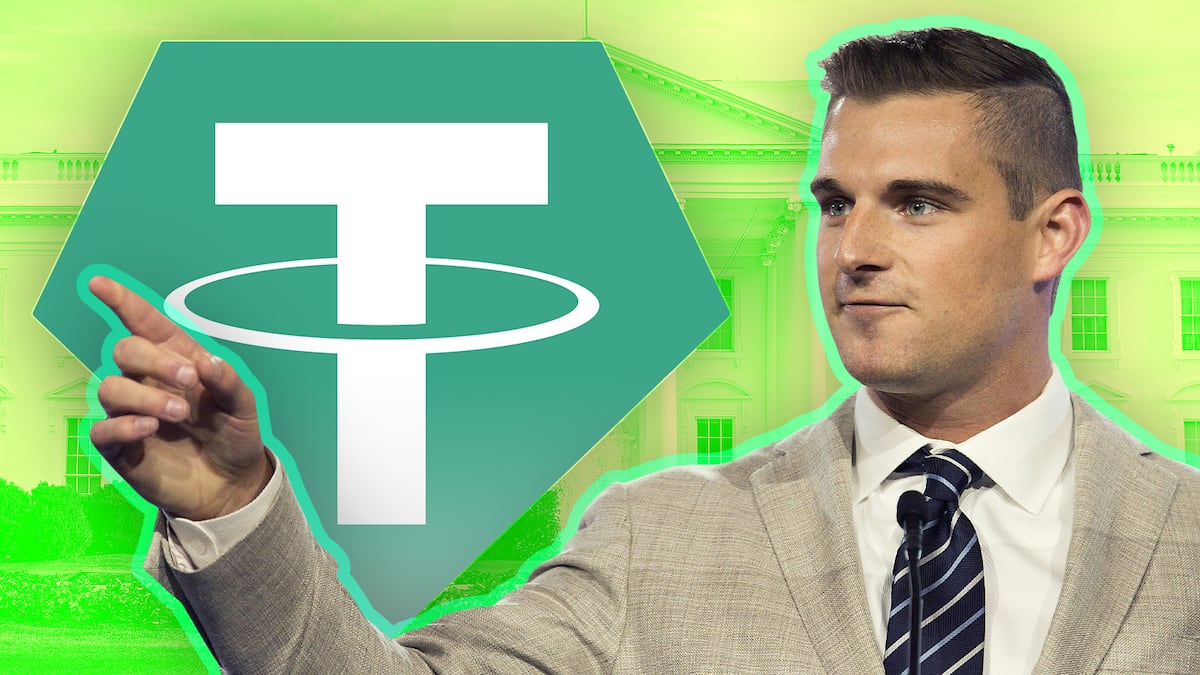
- Tether's USAT is now available to US users through major exchanges.
- The stablecoin is issued by Anchorage Digital Bank under the GENIUS Act framework.
- It enters a hot market: Circle's CEO estimated stablecoin adoption could grow 40% annually.
Tether is finally coming to America.
On Tuesday, the world’s largest stablecoin issuer launched USAT, marking its official entry into the US market after years locked out by regulatory uncertainty.
USAT is a federally regulated, dollar-backed stablecoin designed to operate under the Genius Act.
“USAT is now available to US users seeking a dollar-backed token built to operate within the US’ dedicated federal regime,” Tether said in a statement.
The move takes a direct shot at Circle, which has largely dominated the US stablecoin market. And while Tether’s flagship USDT stablecoin commands a $186 billion market cap globally — dwarfing Circle’s $71 billion USDC — it wasn’t available to US customers.
USAT changes that.
The launch follows Congress passing the Genius Act last summer, which established a federal framework for stablecoins.
Adoption for stablecoins by traditional institutions is also coming. At the World Economic Forum last week in Davos, Switzerland, Circle CEO Jeremy Allaire said that stablecoin adoption could see 40% annual growth, while US Treasury Secretary Scott Bessent has predicted the sector will grow tenfold by 2030.
White House connections
Bo Hines is USAT’s CEO.
The 29-year-old former Republican congressional candidate previously ran the White House’s crypto council with crypto czar David Sacks before joining Tether last September.
Hines played a key role in several of the landmark crypto initiatives pursued by President Donald Trump’s second administration, including the Genius Act.
During discussions around the Genius Act, Hines’s became more familiar with Tether.
“One name kept coming up, and that was Tether,” Hines said last September, recalling his conversations with Sacks. “And we said to ourselves: ‘How can we be the crypto capital of the planet without having the most impactful company in the space operating here in the United States?”
Some of Trump’s top aides already had deep ties to the stablecoin company.
Cantor Fitzgerald, which manages USAT’s reserves, was until recently led by Howard Lutnick — Trump’s pick for Commerce Secretary.
Lutnick, who has an estimated net worth of $3.3 billion, defended Tether during his Senate confirmation hearing in January of 2025, comparing criticism of USDT’s use in money laundering to “blaming Apple because criminals use Apple phones.”
Meanwhile, Cantor holds a 5% stake in Tether and manages billions in US Treasuries backing the company’s reserves. The financial giant is one of 24 primary dealers authorized to trade government bonds directly with the Federal Reserve.
Besting banks
Tether is a giant.
The company is the 17th-largest holder of US Treasuries globally — ahead of Germany, South Korea, and Australia. The company made more than $13 billion in profits in 2024 from interest on those holdings.
But even though it is one of the most profitable companies in the world, Tether has had to deal with heavy scrutiny over USDT’s role in illicit finance.
In 2024, the UN Office on Drugs and Crime reported that $17 billion in USDT was connected to underground crypto exchanges and criminal activity. The company has frozen about 1,800 cryptocurrency wallets linked to illicit activities since 2014.
Tether has spent over a year emphasising its commitment to compliance as it prepared for US entry.
Pedro Solimano is a markets correspondent based in Buenos Aires. Got a tip? Email him at psolimano@dlnews.com.