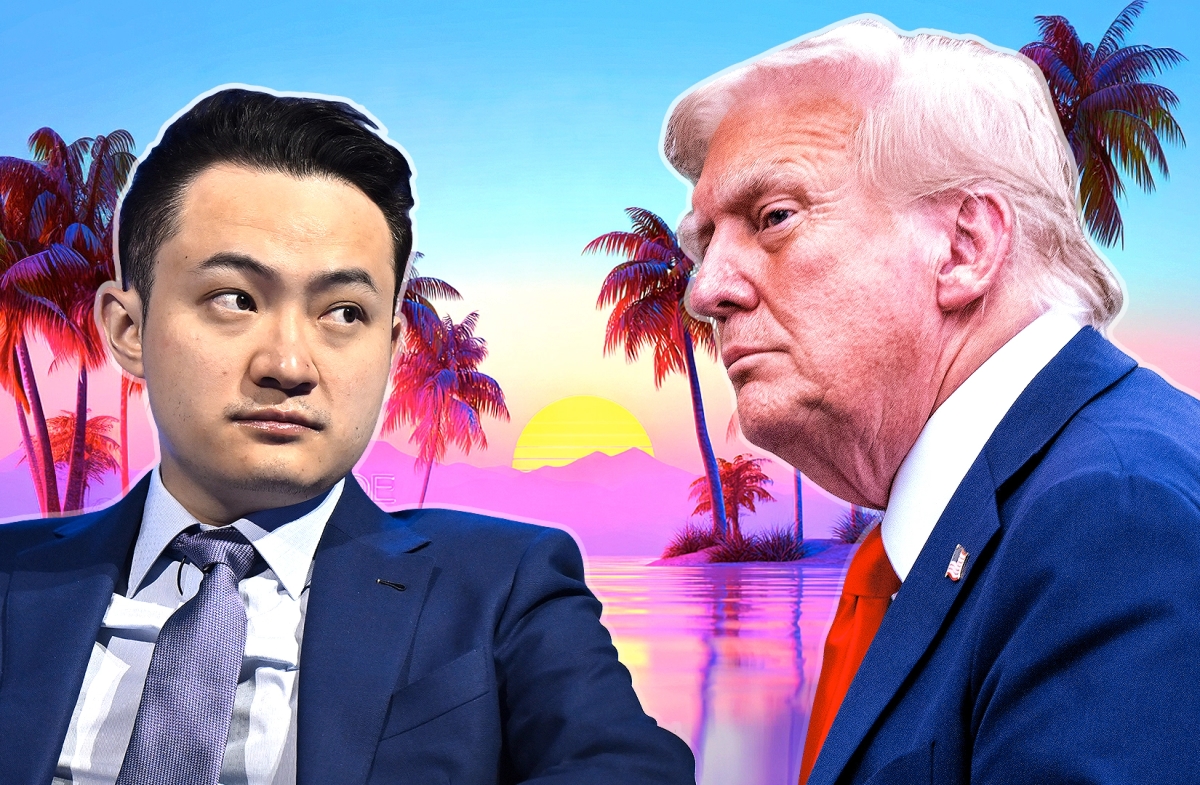
- Justin Sun has sued a crypto project linked to Donald Trump.
- The lawsuit accuses the project of extortion, insolvency and “fraud.”
- World Liberty Financial has hit back against the claims.
World Liberty Financial, a company backed by Donald Trump, defrauded its backers and now faces “collapse and potential insolvency,” crypto mogul Justin Sun alleged in a lawsuit filed on Tuesday.
But he’s still a fan of the president.
“Mr. Sun has long been (and remains) an ardent supporter of President Trump and the Trump family,” the lawsuit reads.
“But as Mr. Sun unfortunately has learned, World Liberty’s operators, including Chase Herro, see the project as a golden opportunity to leverage the Trump brand to profit through fraud.”
The lawsuit is the culmination of a months-long feud between the company and one of its biggest supporters.
Sun purchased 3 billion WLFI tokens in 2024 and 2025 for a combined $45 million, a vote of confidence that gave the struggling company new life. Still, World Liberty Financial executives wanted more, the lawsuit alleges.
World Liberty Financial executives quietly gave themselves the ability to freeze, transfer, and destroy the company’s tokens — power they threatened to use against Sun, according to the lawsuit.
“In the months preceding World Liberty’s power grab, its principals had been trying to pressure Mr. Sun to increase his investment in the company’s products,” the lawsuit said.
‘A desperate attempt’
The lawsuit comes amid mounting scrutiny over World Liberty Financial’s plan to unlock billions of tokens and a series of controversial transactions that prompted accusations of self-dealing.
It also provides another attack line for the president’s political opponents, who have used the Trump family’s crypto dealings to criticise the White House. The White House has repeatedly denied any wrongdoing.
But it's a bold move from an entrepreneur who has also faced allegations of wrongdoing — allegations that company founders hinted at when they responded on Wednesday.
“Justin Sun’s recent lawsuit against [World Liberty Financial] is a desperate attempt to deflect attention from Sun’s own misconduct,” Zach Witkoff, World Liberty Financial co-founder and CEO, said on X.
“His claims are entirely meritless, and World Liberty looks forward to getting the case thrown out promptly.”
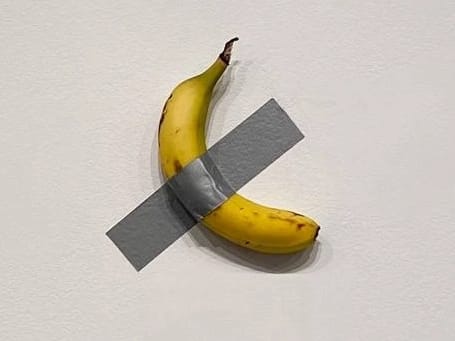
"The only thing more ridiculous than this lawsuit is spending $6 million on a banana duct-taped to a wall,” Eric Trump, the president’s son and a World Liberty co-founder, said on X. “We are incredibly proud of the [World Liberty Financial] team.”
Sun famously purchased Maurizio Cattelan’s artwork The Comedian in 2024 and then filmed himself eating it.
A World Liberty Financial spokesperson pointed to those statements when contacted by DL News.
Trump family company DT Marks DEFI LLC once held a 75% stake in World Liberty Financial. Today, the World Liberty Financial website states DT Marks holds a 38% stake in the company.
DT Marks and certain members of the Trump family received 22.5 billion WLFI tokens, and DT Marks gets 75% of the proceeds from the sale of WLFI tokens.
The investment
Sun said he purchased WLFI tokens because of the company’s association with Trump and its promise to promote decentralised finance.
“No one’s ever going to tell you that your account is shut down,” the company said at the time, according to the lawsuit. "No one’s ever going to tell you who and why and what money you can send.”
The tokens were initially locked and marketed as a means of participating in the project’s development. Tokenholders were told they could vote on proposals to upgrade company technology, for example.
“Despite the boilerplate disclaimers, the reality was that users would not spend significant sums of money — World Liberty initially aimed to raise $300 million — to acquire digital assets that had no economic upside,” the lawsuit reads.
Still, the tokens were a dud. World Liberty Financial sold just $22 million in tokens in its first month, falling well short of its stated goal.
“That all changed when Mr. Sun came onto the scene,” the lawsuit reads.
He purchased 2 billion WLFI tokens in November 2024 for $30 million and was promptly named a company adviser, a title that came with an additional 1 billion tokens, according to the lawsuit. He purchased another billion in January 2025 for $15 million, bringing his total investment to $45 million.
After that, World Liberty Financial “took off,” according to the lawsuit, eventually raising $550 million.
Those purchases were subject to a “Token Purchase Agreement” that stated World Liberty “would have no centralised authority over $WLFI tokens,” the lawsuit alleged.
The company would break that promise in less than a year, according to Sun.
Lackluster stablecoin
In March 2025, World Liberty Financial said it would issue a stablecoin, USD1. But it faced “underwhelming retail demand,” according to the lawsuit.
Between April and July 2025, World Liberty leaders tried to convince Sun to mint 200 million USD1 tokens, according to the lawsuit. That would have meant handing World Liberty Financial $200 million, money it could invest in US Treasury bonds or other low-risk assets.
Company executives also asked Sun to invest in World Liberty’s holding company, according to the lawsuit.
“Mr. Sun’s polite and noncommittal responses at these social events were treated by World Liberty as binding commitments,” the lawsuit reads. By July, however, its executives realised he wouldn’t invest.
That month, tokenholders voted to unlock 20% of their tokens. As the September 1 unlock date approached, however, the company quietly upgraded the token’s smart contract, giving itself the power to block transfers, according to the lawsuit.
“Through a subsequent investigation, [Sun] learned that World Liberty had placed addresses holding $WLFI tokens into at least 19 categories subject to varying restrictions” the lawsuit reads. Sun’s was the only address in a category that included a total freeze.
Sun complained publicly that his tokens had been frozen. Without naming Sun, World Liberty Financial said in a statement that it had frozen tokens in 272 wallets, including one that it had flagged for “misappropriation of other holders’ funds.”
Witkoff appeared to confirm on Wednesday that the company had been referring to Sun.
“He engaged in misconduct that required World Liberty to take action to protect itself and its users,” Witkoff said in his statement. “World Liberty will continue to take all necessary steps to protect its community.”
In his lawsuit, Sun called the notion “false and defamatory.”
Extortion
On September 24, World Liberty Financial co-founder Chase Herro ratcheted up the pressure and demanded that Sun announce he was destroying all of his tokens, according to the lawsuit.
If Sun resisted, Herro said he would ask tokenholders to approve the destruction of those tokens — “a vote that would likely be approved, Mr. Herro claimed, given that, at the time, the World Liberty leadership team controlled a meaningful percentage of the outstanding $WLFI tokens in circulation, and would thus be able to effectively control the outcome of any such vote,” the lawsuit reads.
Herro also suggested there were issues with know-your-customer documents Sun had to submit when he first purchased the tokens, according to the lawsuit.
“Herro repeatedly threatened to report Mr. Sun to US criminal authorities over these unspecified KYC issues — which Mr. Herro and World Liberty have refused to explain in anything other than the broadest terms despite repeated requests from Plaintiffs for additional information,” the lawsuit reads.
Sun and World Liberty Financial leadership privately negotiated a potential end to their dispute, but those talks fell apart in February, according to the lawsuit.
Sun has accused the company of fraud, breach of contract, theft, and unjust enrichment, and he asked the court to bar the company from freezing or destroying his tokens.
Aleks Gilbert is DL News’ New York-based DeFi correspondent. You can reach him at aleks@dlnews.com.